Every morning, the paperwork arrived before the trucks could get on with their day. At a European logistics provider described in a TechnePlus case study, employees spent two to three hours entering information from bills of lading. Thousands of documents, different formats, urgent routing decisions. The business moved freight. Its morning bottleneck was reading.
TechnePlus says it built a document-processing pipeline, connected it to enterprise systems and trained the model on more than 5,400 bill-of-lading variations. The published engagement lasted four months. The revealing detail is the number of variations: the job demanded attention to thousands of ways the same kind of information could arrive.
- TechnePlus connects enterprise systems, automates workflows and builds data and AI applications.
- Its published projects span banks, logistics operators and a multinational consumer-goods business.
- The practical thread: make information usable where the next person needs it.
The expensive space between applications
A company can own capable software and still depend on someone copying a number between screens. That gap helps explain TechnePlus. Its public offering combines digital consulting, integration, hyperautomation, application services and AI. Customers buy engineering and implementation work around their existing operations. The company is best understood as an enterprise services partner.
Consider its UAE logistics engagement. The client had grown through mergers and acquisitions. Each acquired business brought terminal systems, repositories and reporting tools. Corporate ownership had come together; information had stayed apart. Planning and reporting required manual handling across a collection of systems that reflected the company's acquisition history.
TechnePlus describes an eight-month project: assess the estate, map dependencies, design the integration architecture and implement Boomi with automated data pipelines. The intervention followed the connections. Instead of requiring every terminal to become identical, it created a common way for information to travel between them. Growth had made coordination harder; integration addressed that consequence.
“From strategy to deployment, we stay with you through the build.”
TechnePlus, describing its delivery approach
Teach the machine the paperwork
The European logistics project brought the same problem down to document level. Bills of lading contained the information downstream systems needed, but people had to translate it first. Rising shipment volumes made that translation a recurring constraint. Less-than-truckload shipments added time-sensitive routing and exception handling to the morning workload.
The published stack is pleasingly concrete: Microsoft Flow, PowerApps and Tesseract OCR. TechnePlus describes parallel processing, routing recommendations, automated queue review and posting into ERP systems. Exception management remained part of the design. This is a useful picture of hyperautomation: several tools arranged around a complete task, from incoming document to operational record.
The lesson a reader can borrow is the sequence. Identify the recurring delay, collect the variations and decide where exceptions go. Only then does the tool list become useful. An attractive demonstration using tidy documents would answer a smaller question than the operating business was asking.
A chatbot with somewhere to send the question
At a Jamaican bank, the object moving between systems was an employee inquiry. Staff searched disconnected platforms, response times stretched and complaints increased. TechnePlus says it first classified inquiries into three paths: self-service, instant front-office and expedited back-office. Classification gave the subsequent automation a job to perform.
The four-month engagement combined Microsoft Power Platform workflows, a WhatsApp chatbot connected to existing systems and more than 50 BI dashboards. Employees gained a familiar interface; management gained visibility into inquiry traffic. The instructive detail is underneath the chat window: a question needed an answer source, a route and a way to see whether service was improving.
Eighty dashboards need one dependable foundation
For a multinational consumer-goods company, the fragments were product, sales, inventory and financial data spread across markets. TechnePlus describes a nine-month modernization using Azure Data Lake, Azure ML and Power BI. High-priority datasets moved first, followed by incremental consolidation. Manufacturing and distribution had to keep running throughout the migration.
The company reports delivering more than 80 dashboards and building models for product affinities and demand forecasting. Here, AI sits downstream of the less glamorous work of gathering and reconciling information. The constraint shaped the delivery: a staged migration allowed the data estate to change while the operating business continued.
A Bermuda bank case adds a wrinkle. It already had dashboards, but teams used them inconsistently and lacked standardized reporting. TechnePlus describes a communication platform for BI leaders, a common roadmap and performance monitoring. Buying another visualization tool would have addressed only part of that problem. Shared practices mattered alongside the data architecture.
Its application work extends the pattern into banking infrastructure. In a six-month ASEAN digital-bank engagement, TechnePlus describes reusable service APIs, eligibility and KYC workflows using CRIF decisioning, and Java Spring Boot services on Azure and Kubernetes. The ambition was faster product releases without interrupting daily operations. Across these examples, the recurring design problem is how to change one part of a business while keeping the rest functioning.
The partner behind the platform
TechnePlus occupies a familiar but consequential part of the market: the implementer between software vendors and enterprise operations. Buyers could use internal engineers, another specialist partner or a large consultancy. Its pitch brings integration, data and automation into the same delivery conversation. Those capabilities are available elsewhere; the case studies show how TechnePlus combines them around particular workflows.
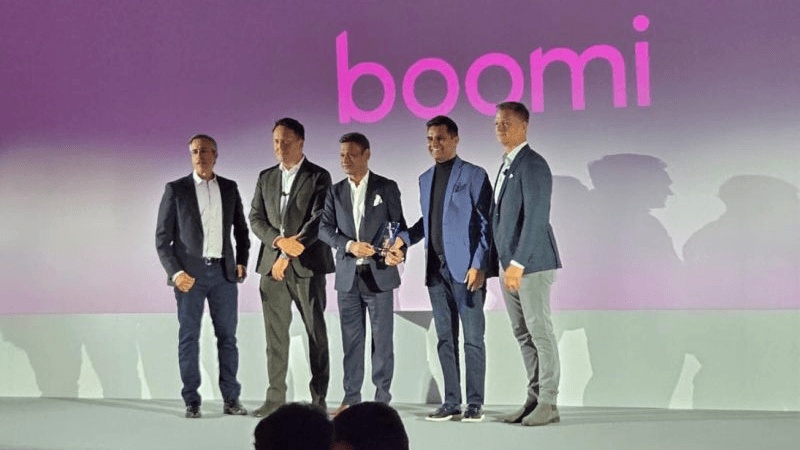
That partner award provides an external reference point for the integration practice. The operating examples provide a more useful buying lens. A fit depends on access to the underlying systems, representative data, clear exception ownership and teams willing to change routines. A small, isolated task may need much less machinery.
The business case belongs at that same practical level. Implementation effort, platform licenses, cloud usage and continuing maintenance belong in the calculation alongside time saved. TechnePlus's projects suggest a sensible starting question for a buyer: where does information repeatedly stop, and what would it take to keep it moving?