Selling a company ought to buy a decent holiday. Malcolm Cowley and his colleagues barely took one. After the sale of buy.at, the affiliate network they had helped build, they were already planning another business in the same industry. There was unfinished work behind the exit. The network had connected advertisers with publishers. Their next company would help advertisers manage those connections for themselves.
AOL bought buy.at in 2008. Two years later, Performance Horizon Group began. It would eventually become Partnerize, with Cowley as co-founder and founding chief executive. The interesting part of this sequence is the change in his commercial argument. Having helped build an intermediary, he returned with software that let customers take more responsibility for the relationship. Experience had supplied both the opportunity and a reason to question the old arrangement.
A sale, then a second set of plans
Cowley came from Newcastle upon Tyne and later worked from San Francisco. His earlier job at buy.at was co-founder and president. That background matters because the next venture grew from familiarity with the everyday business of affiliate marketing: a publisher sends a customer to an advertiser, a sale happens, and a commission becomes due. A tidy arrangement, until people need to know which activity was valuable and how to repeat it.
The ambition behind Performance Horizon was already clear in 2012, when its product was called ExactView. Cowley described software through which brands and publishers could bring relationship management inside their own businesses. Customers could use its APIs to build tools around their requirements. Tracking, data and financial administration belonged in the same conversation. A relationship that produces revenue still requires someone to settle the bill.
He also described a period spent getting the platform right before pushing ahead. That detail is more useful than a polished origin myth. The founders had industry experience and a previous sale; they still had to make the new product work. Their confidence rested on a practical proposition: make the work between brands and publishers easier, and customers would have a reason to keep using the software.
“Transparency is key to driving the best possible results from your partnerships.”
Mal Cowley, on the Skimlinks integration, 2019
When distribution becomes an obstacle
By May 2014, the company had grown from seven employees at its 2010 start to nearly 60, with offices in London, Newcastle, New York and Sydney. Its customers had included Sony and T-Mobile. Cowley was explaining a particular stage in an advertiser’s development: a network could provide useful initial distribution, but a growing business eventually wanted a closer view of the publishers producing its sales.
More volume brought more data. The tools that had helped get a program started could then make it harder to act on that information. Cowley’s answer was a single platform that a brand could use across markets, with direct publisher relationships and information arriving quickly enough to support a decision. He was selling the ability to run a more complicated operation without giving up the details.
For a marketer, the distinction is concrete. Learning that sales rose last week is useful; understanding a particular partner’s contribution while a campaign is running gives the team something to do today. The appeal of Cowley’s pitch was the possibility of bringing that decision closer to the people responsible for it. Software would carry the administrative load while the advertiser retained a hand on the controls.
softwarePartner
Direct relationships. Tracking, insight and payments in the middle.
There was plenty of operational work beneath the idea. Onboarding partners, reconciling results and paying across borders are less photogenic than a product launch. They are also the tasks that determine whether an international program can function. A commission statement is unlikely to become anyone’s favorite reading. It does, however, attract close attention when the amount is wrong.
The growth had plumbing underneath it
In 2016, Performance Horizon placed 28th in the Deloitte UK Technology Fast 50, with 603 percent growth, and was the North East regional winner. The numbers made visible a business whose work largely happened behind other companies’ sales. They also offered a useful reminder that a Newcastle technology company could build for customers operating well beyond its home region.
Deloitte Fast 50
UK ranking
The international ambition depended on rather literal translation. The company’s 2016 account described partner payments in 50 currencies and customer support in more than 80 languages. A global strategy acquires substance when money reaches the right recipient and somebody can answer a question. Those capabilities made the proposition more credible to a brand trying to administer partnerships across countries.
Cowley’s product interests also extended beyond recording completed sales. He discussed connecting activity across channels and using artificial intelligence to help customers anticipate performance. In 2017, the company was talking publicly about predictive tools for partner marketing. The useful question was what a customer could decide with the information: where to investigate, where to invest, and which relationships deserved closer attention.
He described listening carefully to customers and prospective customers before deciding what to build. Alongside that came an emphasis on employees being able to make ambitious decisions. It is an unromantic combination, in a helpful way. Customer conversations put boundaries around an idea; a team still needs enough freedom to turn the problem into a working product.
A name catches up with the idea
On July 10, 2018, Performance Horizon became Partnerize. Cowley’s announcement set out a broader view of the market: affiliate publishers were part of a field that also included loyalty programs, influencers, referral arrangements, technology companies and alliances between brands. The old name had become an awkward fit for the range of relationships the business wanted to support.
The announcement was unusually attentive to the dull questions a rename creates. Existing logins would work. Support addresses would work. Contracts and business arrangements would continue. Product enhancements would arrive alongside the new identity. Here was a company promising to make partnerships easier, taking care to explain how its own change would affect the people already using it.
On August 8, Partnerize reported more than 300,000 integrated partners, including over 5,000 publishers and brands added since the rename. That total described participants in its ecosystem, rather than a customer count. The range was the point: consumer brands, technology providers, loyalty partners, influencers and publishers could all sit within the same commercial picture.
The 2019 Skimlinks integration supplied a smaller, revealing example. More detailed information would let brands examine the domains and content publishers producing results. Transparency had a specific application: advertisers could assess performance more closely, and publishers could receive commissions for referrals. Better visibility meant something to both sides of the transaction.
- 2008buy.at sold to AOL
- 2010Performance Horizon founded
- 2018The Partnerize name arrives
- 2024TaxScouts joins Taxfix
Camels are poor umbrella prospects
Ask Cowley about work and the answers become pleasingly plain. In 2018 he described himself as focused, singled out resilience, and said LinkedIn was the tool he used most. His favored sales advice came from colleague Pete Mycock: “Don’t sell umbrellas to camels.” It is a serviceable rebuke to anyone confusing a large prospect list with a suitable customer.
His account of company culture included Desk Surf, a program that paid for eligible employees to spend two weeks learning in another office. He was also reading Team of Rivals, interested in the management problem of bringing different people behind shared goals. The connection with his business is easy to see: relationships require working arrangements, whether the participants are colleagues or commercial partners.
In January 2020, Partnerize secured a $50 million growth investment from Accel-KKR, advised by GP Bullhound. The announced uses included organic expansion and possible acquisitions. Cowley’s ambition now had capital behind it and another set of decisions ahead: which opportunities to pursue, which capabilities to add, and how to grow an operation that already crossed borders.
Later in 2020, Matt Gilbert took over as Partnerize’s CEO. Cowley’s place in the story remains the founding one: he helped establish the company, develop its commercial proposition and lead it through the change from Performance Horizon to Partnerize. The distinction matters in a career that continued beyond the business most closely associated with his name.
The next relationship came with a tax return
In 2023, Cowley became CEO of TaxScouts, succeeding co-founder Mart Abramov. By July 2024, when he announced that TaxScouts was joining Taxfix Group, he was approaching his first anniversary. His public thanks went to the team, board and investors, followed by the people he would work with in the acquiring business. Another transaction, and another list of relationships to make work.
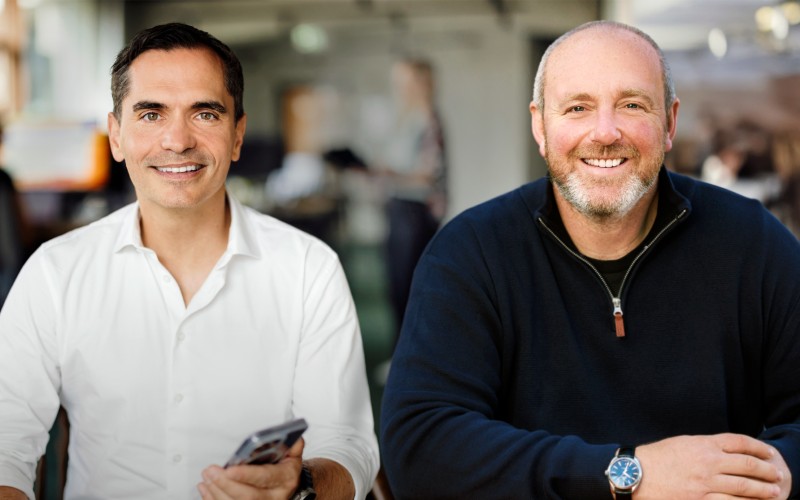
The acquisition brought TaxScouts’ work in the UK and Spain into a group also operating in Germany and Italy. Its 40-person team would work with Taxfix, while the announcement said Cowley would continue leading TaxScouts. The business combined software with access to accountants. It was a change of industry, but the operating question was familiar: how could a platform help people complete complicated work together?
That is a useful way to read Cowley’s career. A network sale led to software for direct partnerships; years later came a business connecting customers with professional expertise. Across those chapters, the work kept returning to the arrangements between people. Someone has to understand the job, make the handoffs sensible, and ensure the payment arrives. There is a business in making all of that less troublesome.