Ian Brodie's founder story begins with an immaculate piece of market research: a product nobody wanted to promote. In 2020, Brodie and his university friend Rob Schab put a bargain-priced affiliate-recruitment service on Fiverr. More than 100 inquiries arrived within days. Demand, splendidly, existed. Then one of their first clients turned out to sell dog food dewormer, and finding creators keen to discuss it was about as easy as making intestinal parasites trend.
The detail is funny because it contains the whole education. A market can answer yes in the abstract and no in the particulars. Customers can want an outcome without wanting the tool designed to produce it. Distribution can matter more than elegance. Brodie would spend the next several years collecting those distinctions, first at Grovia, then at Levanta.
Today he is the Seattle-based co-founder and CEO of Levanta, a platform that gives ecommerce brands the machinery for working with creators and affiliates: discovery, links, attribution, reporting, commissions and payments. The company launched in early 2023 around Amazon sellers, then widened to more marketplaces and storefronts. Its origin, however, is less a flash of inspiration than a chain of corrected assumptions.
Two business students walk into a venture pitch
Brodie and Schab met at the University of Washington. Brodie studied at the Foster School of Business, joined its Lavin Entrepreneurship Program and majored in entrepreneurship. The pair shared a specific ambition: build a software company. After graduation, Brodie worked at software company Apptio, moving through business development and product marketing. Schab worked at Seattle affiliate-tracking company TUNE. When the pandemic arrived in March 2020, both quit their jobs to start something together.
They approached investors with an affiliate-recruitment software idea. Their pitch had enthusiasm, two freshly graduated business people and no engineer. It did not have a product. Brodie later said they were laughed out of a couple of rooms. The rebuff pushed them toward a practical compromise: perform the service manually, make money and eventually hire someone to build the software.
The Fiverr test became Grovia, short for “grow via partners.” Its work came in three parts: discover potential affiliates, recruit them and help activate them into revenue-producing relationships. The founders soon moved beyond tiny clients and found their first important distribution partner in Refersion, an affiliate-tracking platform. Refersion sold the tracking software; Grovia supplied the recruiting service its clients still needed. Similar relationships followed with other platforms.
This was Brodie's first repeatable lesson in partnerships as distribution. Instead of finding every customer alone, Grovia stood beside software vendors that already had the right buyers. The arrangement filled a gap for those vendors and gave Grovia a stream of referrals. The company grew to 26 employees and roughly $3 million in annual revenue within two years.
The software was useful. The model was wrong.
Grovia eventually hired a technical leader and built the software Brodie and Schab had pictured from the start. The result helped discover partners, manage outreach and track a recruiting pipeline. Customers liked seeing the activity. Grovia's team liked using it. Yet customers did not particularly want to operate it themselves. They preferred that Grovia's staff do the searching, recruiting and follow-up.
That is a brutal product distinction, and a valuable one. Software may improve a service without becoming a self-service business. Grovia marketed the standalone tool for months, but traction remained thin. Brodie accepted the evidence: the company was a technology-enabled service. The dream had not disappeared, but the noun had changed.
In May 2022, Acceleration Partners acquired Grovia. The fit carried a tidy bit of narrative symmetry. While planning their young company, Brodie and Schab had read Performance Partnerships by Acceleration Partners founder Robert Glazer. Brodie called the book their startup guide and the firm a north star. Two years later, that north star bought them. Brodie stayed on as vice president and head of Grovia.
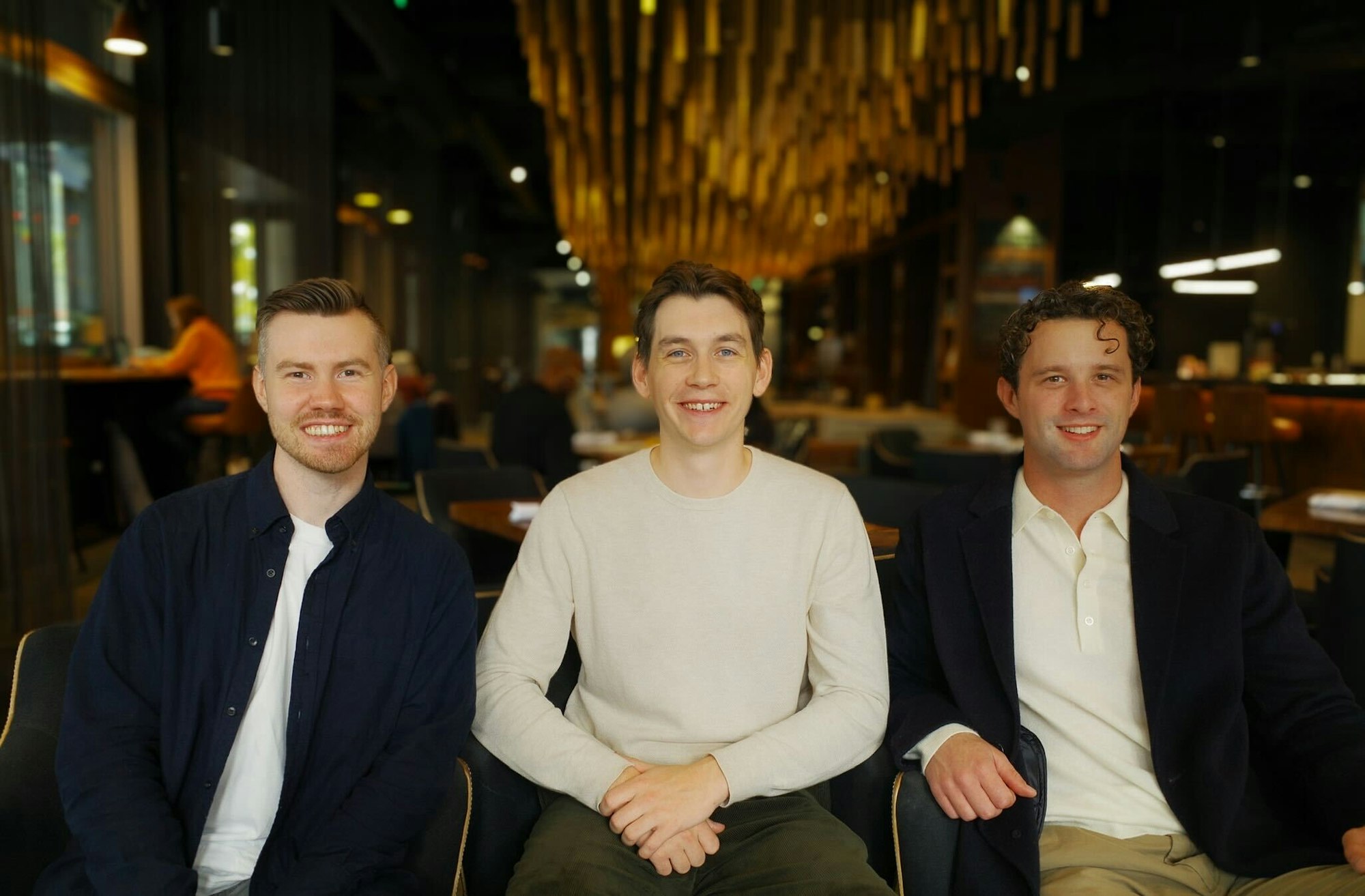
Recognition arrived around the exit. Brodie was selected for Puget Sound Business Journal's 2022 40 Under 40 class. Forbes included him and Schab in its 2023 30 Under 30 list for marketing and advertising, noting Grovia's role in connecting brands with affiliates and influencers. Awards make a fine mantelpiece. More consequentially, the sale gave the pair time and capital for another attempt at the software company they had wanted all along.
The next idea was hiding inside the old work
At Grovia, the team had helped a large Amazon aggregator recruit affiliates. Amazon's Attribution API allowed that client to connect off-Amazon marketing activity with clicks and sales. The technical measurement existed, but the working system for affiliate relationships did not. Sellers still needed to find partners, create links, set commissions, track performance and handle payments.
Brodie and Schab saw the outline of a platform that could combine Amazon attribution with the functions common in direct-to-consumer affiliate software. They did not rush to code. The earlier self-service miss had made customer validation less ceremonial. Schab spent months speaking with Amazon sellers, aggregators and affiliates. A third co-founder, engineer Spencer McKenney, joined as CTO. Levanta raised a $430,000 pre-seed round and moved from incorporation to beta in about three months.
The first customer strategy reflected the founders' operating knowledge. Amazon aggregators could bring scores of brands onto the platform in one agreement. Affiliate agencies offered another two-sided advantage: they served sellers and worked with creators. Levanta gave agencies a new Amazon-related offer; agencies brought Levanta customers and marketplace participants. Brodie said the company spent nothing on paid marketing in this early stretch.
By December 2023, nine months after launch, Levanta had passed $230,000 in monthly recurring revenue. Brodie reported more than 650 brands and 2,500 affiliates on the platform. There is no fairy dust in the mechanism. The company chose intermediaries whose incentives already touched both sides of its marketplace. Distribution was not a loudspeaker attached to the product. It was part of the product's plumbing.
From Amazon wedge to a wider commerce map
In November 2024, Levanta announced a $20 million Series A led by Volition Capital. Existing investors Long Run Capital and OpenSky Ventures also participated. At the time, the company worked with about 1,000 sellers and more than 7,000 creators, and said the platform was on track to generate $286 million in annualized gross merchandise value for sellers.
The money financed a broader ambition. Levanta's product now spans affiliate and creator programs across Amazon marketplaces, Walmart and Shopify. Its tools cover partner discovery, product samples, paid placements, links, performance reporting and payouts. By August 2026, company documentation listed Amazon support in the United States, United Kingdom, Canada, Germany, France, Mexico, Italy, Spain and the Netherlands, alongside Walmart and Shopify in the United States.
Brodie's recent updates suggest the company has become a more complex operation. He said Levanta hired its 100th full-time employee in 2026 and crossed $50 million in monthly GMV during May. He also wrote that non-Amazon revenue had tripled as the marketplace expansion accelerated. The company remains fully remote, but Brodie treats gathering in person as an operating investment; Levanta flew its team to Aruba for a 2026 retreat after that record month.
The note reveals something of his management vocabulary. He celebrates numbers, then pivots to people. He described the retreat as time to slow down, rebuild energy and enjoy a team of “good people” and “happy people.” This is not enough evidence for a grand theory of leadership, but it matches the career pattern: relationships are not decorative around Brodie's businesses. They are the system through which customers arrive, marketplaces fill and teams hold together.
Watch · 49 minutesLevanta: From Fiverr Side Gig to $3M ARR SaaSThe useful thing to steal
Brodie's story is often packaged around speed: Grovia's two-year exit, Levanta's nine-month revenue climb, the two-week pre-seed raise. Speed is visible and flattering. The more useful trait is his willingness to let awkward information change the plan. Investors did not believe the first software pitch, so the founders sold a service. Customers would not operate the first tool, so they called Grovia what it was. A client workflow exposed a new opportunity, so they interviewed the market before returning to code.
He has cited a line from Rand Fishkin's Lost and Founder about good ideas growing from mediocre ones through iteration, humility and survival. Brodie's companies give the line a practical shape. Grovia was neither a detour nor a disguised version of Levanta. It was a real business with its own customers, staff and buyer. It also happened to provide the market access and operating scar tissue that made the next company more precise.
There is a temptation to admire software because it removes people from a process. Brodie learned to admire the process first. The service showed where judgment lived, which work customers avoided and which partners controlled distribution. Only then did the software have a fair chance. The resulting lesson is modest enough to fit on a sticky note and difficult enough to build a career around: learn the work before abstracting it.