Mahendra Alladi had hired a team in Hyderabad to build the software he could already picture. From the United States, he could see the work arriving. He could also see that it was drifting from what he meant. The difficulty was translating an idea well enough for other people to make it. His response was to move to India and work beside the team.
For a founder making tools to simplify complicated work, it was an instructive complication. A specification can travel farther than an understanding. Alladi had spent years inside software testing, first as an engineer and then as an entrepreneur. He knew the frustrations he wanted ACCELQ to address. Getting that knowledge out of his head would require more than sending it across an ocean.
The move gives his career a useful point of entry. Again and again, he has gone closer to the problem: into customers' testing systems, into the details of product design, into the work of explaining why a feature should exist. His companies grew from that proximity. The polished product came later.
A prototype with a day job
Alladi grew up in Hyderabad and went to Bengaluru for his master's studies at the Indian Institute of Science. His company biography records an All India first-place result in the Graduate Aptitude Test for Engineers. Campus recruitment brought him his first American job. It was a route into industry built on technical credentials, well before entrepreneurship became his occupation.
At Sanchez Associates, he worked on a proprietary database engine. Then came i2 in Dallas and Travelocity. These were technical roles, and at Travelocity he began noticing testing problems that appeared to recur beyond one employer. He built a small prototype while still working there. A solution intended for a particular setting seemed to have a wider use.
He left and co-founded Gallop with Manohar Reddy. The early business combined services with a developing product. That arrangement put his ideas in contact with customers' actual systems. A tool can look wonderfully tidy until it meets somebody else's software. Services supplied that meeting, repeatedly, and made the commercial problem easier to understand.
“More importantly, it exposes you to the real world.”
Mahendra Alladi, on starting with services
When yesterday's tests need a translator
Gallop found an opening in a particularly unglamorous corner of technology: helping customers move away from an ageing testing tool. HP's WinRunner was being retired. Companies had accumulated tests in it, and moving to a newer platform meant dealing with code that would not simply carry across. Buying the replacement tool did not finish the replacement job.
Alladi's account of Gallop's answer is technical and practical. The company built a reverse compiler to translate existing test code for newer platforms. A partnership with HP brought access to its customers and gave him a much wider view of their difficulties. An apparently narrow migration task became an education in how enterprises test software.
In May 2013, Cigniti announced its acquisition of Gallop. The purchase price was undisclosed. Contemporary reporting put Gallop's 2012 revenue above $9.5 million and its worldwide workforce at 200. Alladi became Cigniti's chief technology officer, taking responsibility for technology leadership as the combined business invested in intellectual property and testing tools.
Gallop acquired by Cigniti; Alladi becomes CTO.
Describes ACCELQ as bootstrapped, with close to 200 customers.
ACCELQ announces a second consecutive AI Breakthrough engineering award.
The next company began with unfinished business
The acquisition provided an exit, but the customer visits had left him with more questions. He had seen organisations struggle with tools that required substantial effort to make automation work. Each installation had its own vocabulary and history. Underneath, the difficulties sounded familiar. He wanted room to reconsider the product from the beginning.
ACCELQ became his second startup. He financed its early development from the proceeds of his previous exit. He would later describe the first version with little ceremony, saying it looked laughable in retrospect. Two years of development and unsuccessful early pitches sit between the initial conviction and the business that followed.
The first subscription payment was $300 from a customer in Africa, covering six months. Larger customers eventually included United Airlines. That first check is a pleasingly modest detail in an enterprise software story. It bought very little runway. It did, however, establish that someone outside the company wanted the thing enough to pay.
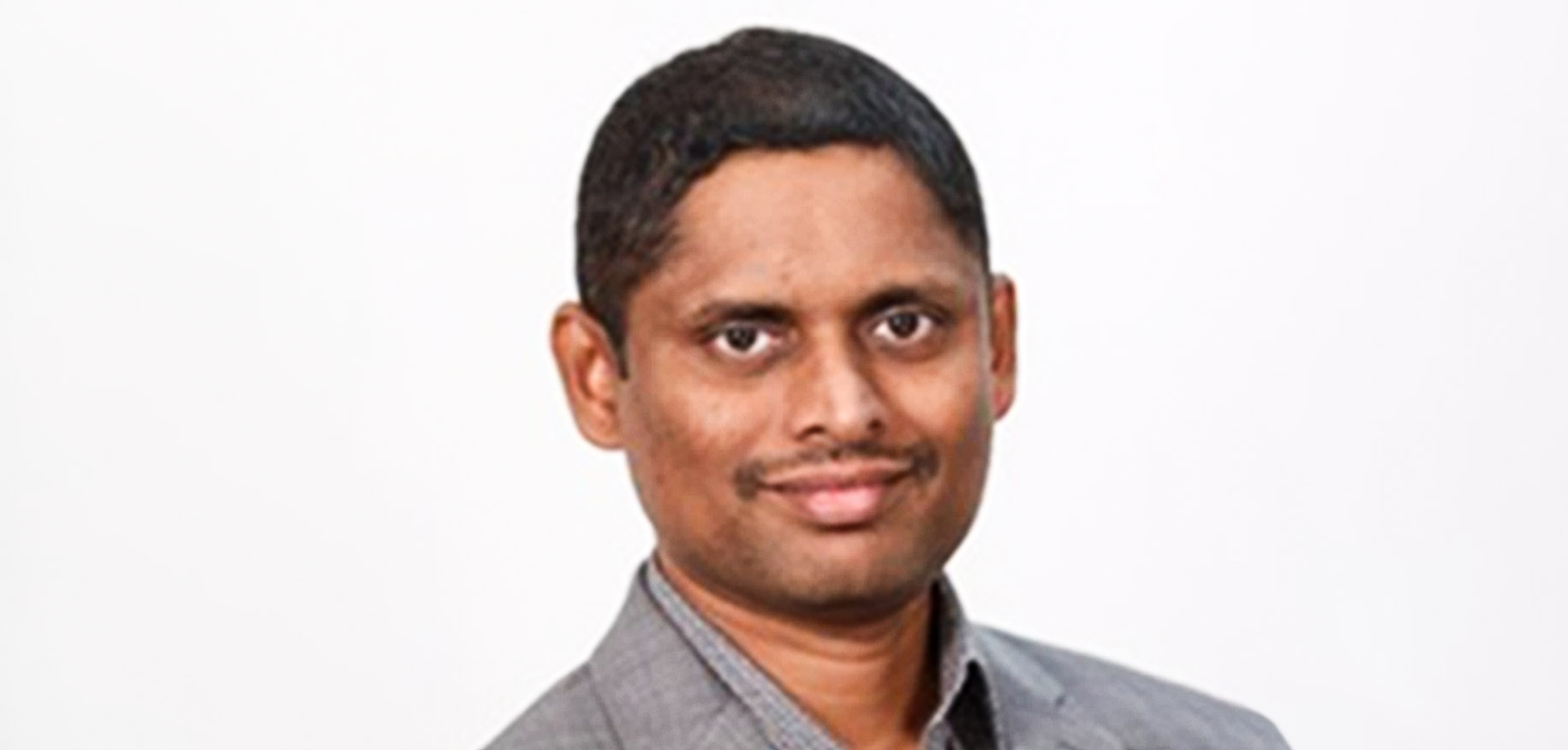
His early product experience also complicates the usual tale of an entrepreneur who sees the future clearly. He recognised the difficulty before he had a finished answer. The work involved finding the answer, revising it and persuading people to try it. Even a second company came with a first version.
The people who know what should happen
Alladi's product argument centres on participation. A manual tester or business analyst may understand exactly how an application ought to behave without being the person best equipped to construct an automation framework. ACCELQ's natural-language approach aims to let that knowledge enter automated testing more directly. The distinction matters whenever specialist business knowledge and programming skill live in different people.
In his 2019 explanation of the company, he described a platform spanning interfaces, APIs, back-end systems and middleware. The ambition was to test a business flow across those boundaries. A successful click on one screen is a limited victory if the transaction goes astray further along. Enterprise software has many opportunities to misplace the plot.
THE PRODUCT IDEA / A SHARED TESTING FLOW
A conceptual guide to ACCELQ's approach, rather than a performance measurement.
He has also described the design difficulty candidly: making an inherently technical activity simple enough to use while keeping it broad enough for different applications. Simplicity is an expensive demand to place on a product team. Every decision hidden from the user still has to be made somewhere.
Put the demonstration where the promise is
By April 2022, Alladi said ACCELQ had close to 200 customers and remained bootstrapped. He reported reaching $1 million in annual recurring revenue within its first year of selling, with roughly 10 to 20 customers. Those figures belong to that period, but they show how enterprise contracts changed the scale of the business after its small opening payment.
His selling method was grounded in a customer's existing troubles. He asked about bugs reaching production and releases being delayed. Then came a proof of concept using the customer's testing requirements. The proposed automation had to handle their technology and be usable by their people. The demonstration made the promise answerable to a particular workflow.
There is a discipline in selling that way. A feature list can let everyone imagine a slightly different product. A working test narrows the room for misunderstanding. Alladi's insistence on proving the flow echoes the earlier problem of communicating his own vision to the development team. Shared understanding becomes easier when people have something concrete to inspect.
ACCELQ Live, introduced in April 2022, extended that concern to cloud application platforms including Salesforce, ServiceNow and Workday. Those systems keep changing outside the customer's control. The offering was designed to keep testing aligned with platform updates, addressing the recurring maintenance work that follows the initial automation project.
At five, the inbox. Later, the whiteboard.
Alladi's description of his working day starts around five in the morning, catching up with colleagues and clients in other time zones. He favours informal discussions, reviews customer requests and tries product use cases himself. He also deliberately steps away from an idea during design, returning after a gap to notice what familiarity had concealed.
His evenings have included relearning school mathematics with his children. Asked about a worthwhile recent purchase, he picked a mesh router that let him move around while working. These are small details, but they suit someone whose professional attention rests on removing everyday friction. Even the founder needs the connection to hold.
“Clutter does not inspire new ideas.”
Mahendra Alladi, on product usability
The work habits suggest a useful balance between detail and distance. He stays close enough to inspect the experience, then creates enough separation to see it again. For a product intended to be understandable, that second look has an obvious purpose. Its creator already knows where everything is.
The problem survives the new vocabulary
In April 2025, ACCELQ announced enhancements to Autopilot, applying generative AI across test creation, validation, maintenance and analysis. The company's stated direction was autonomous testing that could adapt as applications changed. The language had advanced from codeless automation to AI agents; the practical concern with keeping tests useful remained recognisable.
Autopilot received an AI Breakthrough engineering award in June 2025. In September 2026, ACCELQ announced another award in the same category. Alladi's accompanying comments emphasised combining autonomy with governance. The announcement described agents handling discovery, design, execution and analysis, with test prioritisation connected to business risk.
For him, this is a continuation of an old ambition: software teams should be able to deliver changes without rebuilding their confidence from scratch each time. More automation increases the importance of understanding the intended result. A test still needs a reason to exist, however efficiently it is generated.
The telling decision remains the move to Hyderabad. Faced with work that was progressing without quite becoming what he intended, Alladi changed where he sat. Since then, his product argument has repeatedly returned to making technical work understandable to the people doing it. Before ACCELQ could help its customers close that gap, its founder had to cross it himself.