The garage was upside down. That was the problem. On March 6, 2025, Lunar Outpost’s small MAPP rover reached the Moon aboard Athena, an Intuitive Machines lander. The rover had survived. Its electronics could respond. But Athena had come to rest on its side in a crater, leaving MAPP’s garage trapped beneath it. A machine built to explore another world could not get out of the parking space.
- The product: lunar wheels for scientists, companies, and astronauts.
- The catch: a working rover still needs a working delivery chain.
- The next test: NASA’s $220 million Pegasus development award.
There is a useful way to understand Lunar Outpost in that predicament. Space businesses are often introduced with destinations. The Moon. Mars. Beyond. This company’s business begins with a more ordinary question: once you arrive, how do you move?
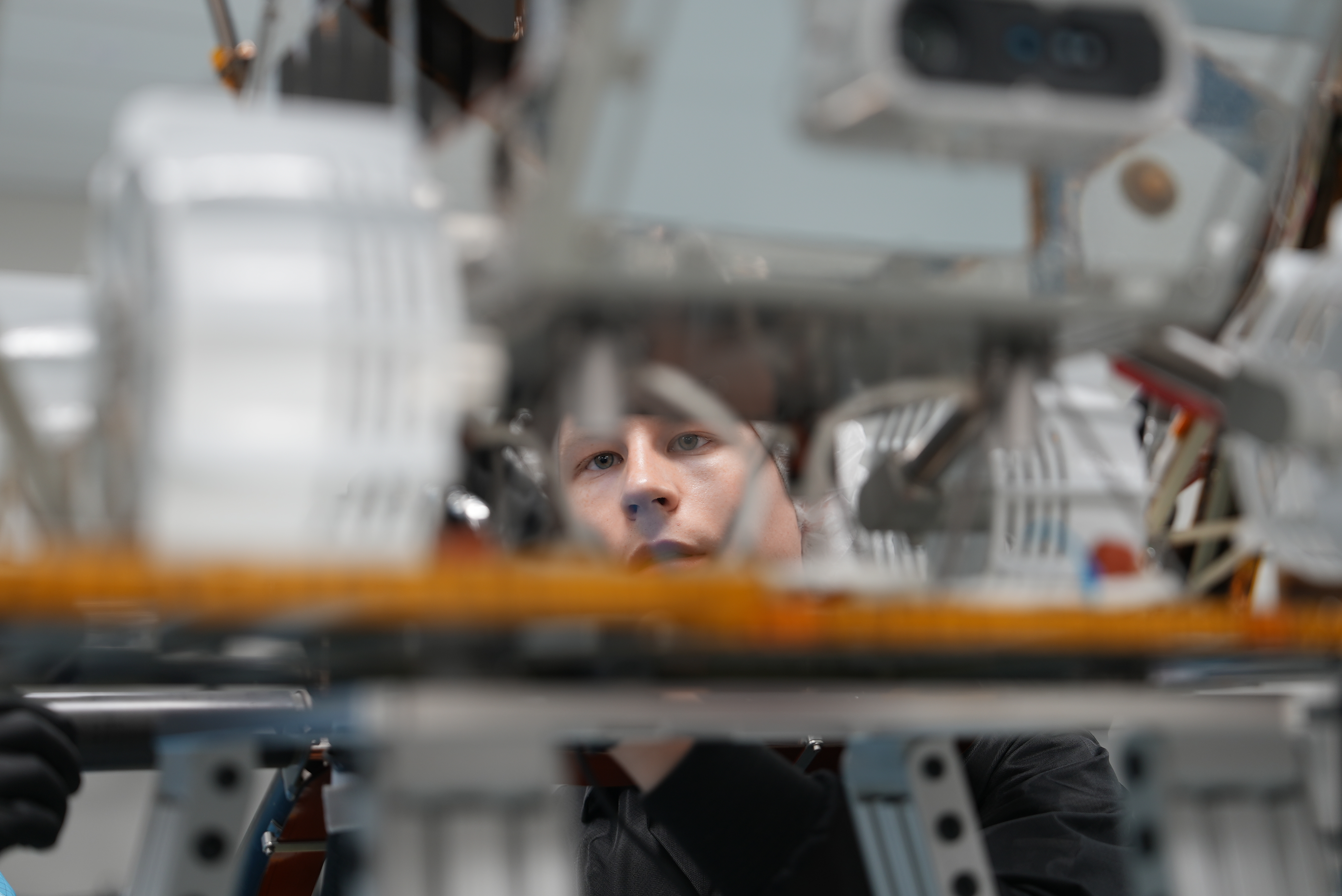
A dollar buys a different kind of experiment
In December 2020, NASA selected Lunar Outpost for a peculiar transaction. The company proposed collecting lunar regolith and transferring ownership to the agency for one dollar. The material would stay on the Moon. NASA wanted imagery, location data, and an in-place transfer of ownership.
The dollar was the price of that demonstration, not the cost of reaching the Moon. Its significance was commercial: a government customer was testing a purchase of resources gathered by a private company. A market needs a transaction before it can have a price list.
There was already a practical thread running through the company. Founded in 2017, Lunar Outpost developed an air-quality sensor for a Lockheed Martin lunar-habitat prototype under NASA’s NextSTEP program. The technology became Canary-S on Earth. Denver used the sensors near schools, including to measure the benefits of discouraging vehicle idling. Equipment intended for lunar dust found useful work beside school traffic.
Bring your instrument. Borrow the wheels.
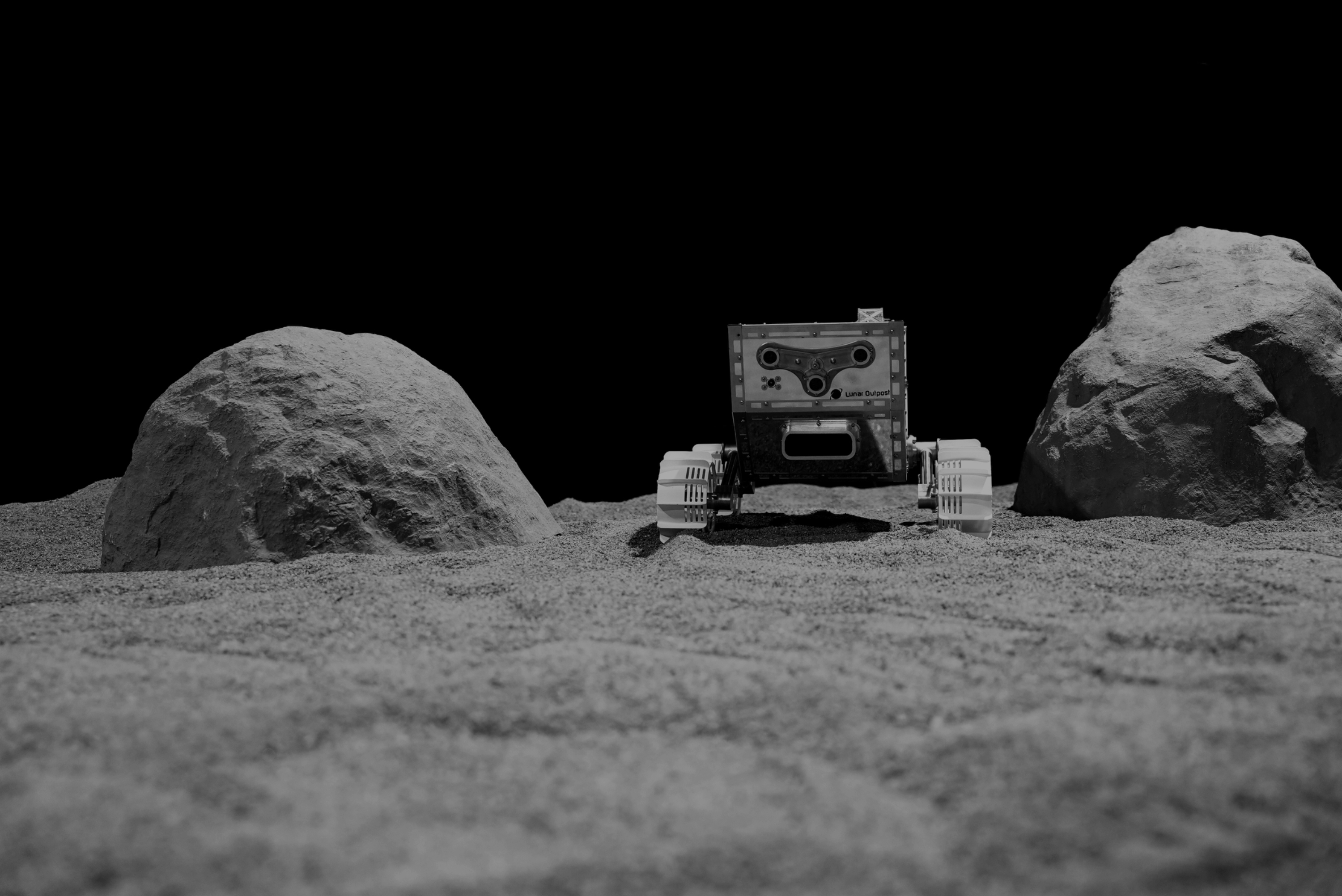
MAPP stands for Mobile Autonomous Prospecting Platform. The proposition is straightforward: a scientist or company can put an instrument on a shared rover rather than design an entire vehicle. Lunar Outpost supplies mobility, integration, and mission operations. Multiple partners can occupy the same mission.
That makes its customer list unusually varied. On Lunar Voyage 1, Nokia supplied hardware for a lunar LTE demonstration. MIT contributed a depth camera, a message wafer, and AstroAnt, a miniature robot carried on the larger rover. A rover with its own rover is an appealing engineering joke. It also shows how much coordination sits behind the phrase “payload space.”
The expertise is spread across four founders: CEO Justin Cyrus, CTO AJ Gemer, chief scientist Forrest Meyen, and COO Julian Cyrus. Meyen’s doctoral work contributed to MOXIE, the Mars oxygen experiment. Gemer’s background includes spacecraft instruments and aerospace engineering. Their public roles join scientific ambitions to the less photogenic work of integration and operations.
The commercial model follows the hardware. Government development contracts support new capabilities; research teams and companies reserve mobility for their payloads. Customers buy access to movement and measurements. They still have to match their instrument to the mission’s power, data, environmental, and scheduling constraints.
“MAPP was ready to drive.”
Lunar Outpost · Mission update · March 2025
Athena exposed the dependency in that arrangement. The lander’s orientation prevented deployment. Nokia subsequently said power limitations also prevented the first lunar cellular call. Components could function while the planned demonstration remained incomplete. For a customer, the distinction matters: a healthy instrument inside a trapped vehicle cannot perform its intended traverse.
The $220 million change of vehicle
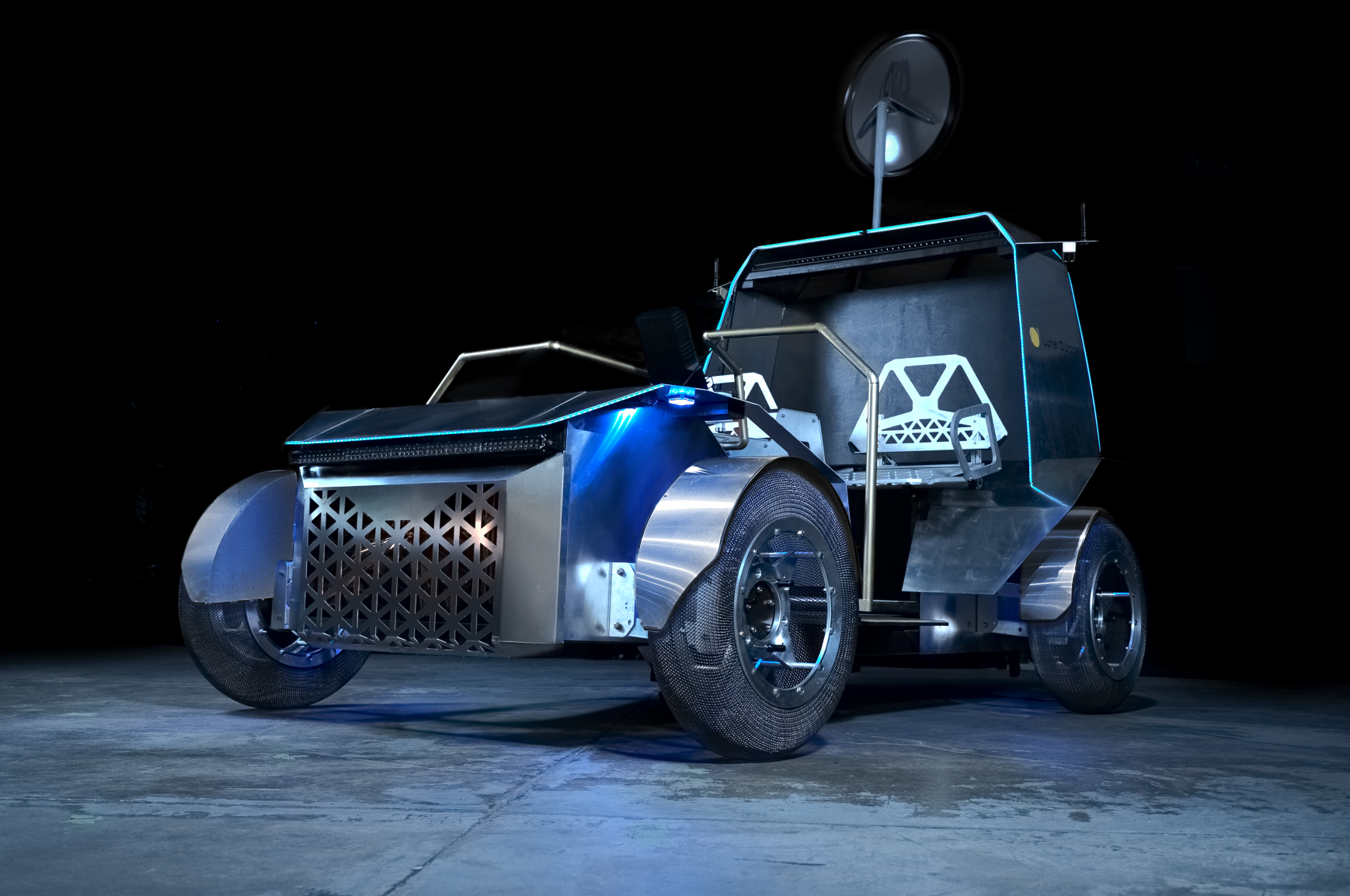
By May 2026, the stakes were larger. NASA awarded Lunar Outpost $220 million for Pegasus, a lighter evolution of its Eagle lunar terrain vehicle. The award uses fixed-price, performance-based milestones. Pegasus is designed for astronauts, remote operators, and autonomous driving, with lunar deployment targeted for 2028.
The change in vehicle has a documented explanation: NASA updated its requirements. Pegasus draws on Eagle development and earlier rover experience. It is specified for up to a year of operation. This is a product shaped around a customer’s revised job, with design qualification and crewed evaluations still ahead.
May 2026
Performance milestones
Investment funds the company. A contract comes with work to deliver.
The financing is a separate story. Lunar Outpost raised a $12 million seed round in 2022 and announced a Series A in 2024. Its $30 million Series B in May 2026 was led by Industrious Ventures. Those investments fund development and production; the NASA award brings contractual obligations.
Competition is tangible. Astrolab received a $219 million award for its own crewed rover. Intuitive Machines was also among NASA’s three original 2024 LTV selections, while serving as Lunar Outpost’s transportation partner on IM-2. In this market, a collaborator on one mission can lead a competing team on another.
The Moon has a bandwidth problem
The next layer is software. Stargate handles mission control. Starweave is being developed to coordinate different robotic systems as fleets. Spark is an AI operations assistant. In July 2026, Lunar Outpost announced NASA’s selection of a proposal to advance Starweave, extending the company’s work beyond individual vehicles.
That month’s NVIDIA collaboration made another constraint visible. Planned uses of Jetson computing include controlling LiDAR, processing sensor data, and compressing files before downlink. With limited communications, doing useful computation aboard the rover becomes part of getting useful work done.
- 01Land
- 02Deploy
- 03Move
- 04Measure
- 05Send data
The transferable idea is practical: share expensive infrastructure, reuse technical expertise, and sell a task a customer needs completed. The condition is equally practical. Transportation, deployment, power, and communications must cooperate. Lunar Outpost’s first rover reached its destination. Its business depends on making the journey after arrival repeatable.