Lulu Keszler Manley remembered the swim instructor. Years after her own childhood summers at camp, she could still recall how much the children liked him, and how much it meant to feel friendly with the counselors. In 2019, her daughter was preparing to attend the same camp. The instructor was still there. He told her the girl would be his first second-generation camper.
For someone who had recently started a camp business, it was a telling memory. The experience that stayed with her involved a person, a place, and the pleasure of belonging. Long before there were discussions of coding or robotics, somebody had made camp feel worth remembering.
Manley and her husband, Brendan, founded Innovators Camp in 2018. The program became iCAMP, offering children projects with both physical and digital tools. She brought sales and marketing experience; he brought a background in software development. They also brought the particular attention of parents who were looking around their community and imagining what else their children might enjoy.
Seven years later, AlphaBEST Education acquired the business. The distance between those two events can be measured in schools and programs. To understand Lulu’s part in the story, though, it helps to linger over that camp memory. A child remembers the adult who made an activity inviting. The equipment has to share the credit.
The counselor she still remembered
Her recollection of camp includes an appealing loop: a parent watching a child enter a place she knew as a girl. Continuity has its own attraction. Parents can spend a great deal of time arranging new experiences for their children while quietly hoping to pass along a few old ones.
The swim instructor anecdote also puts the technology business in perspective. iCAMP’s offerings include coding, robotics, digital art, and filmmaking. Yet a program reaches children through instructors who can turn an assignment into something they want to attempt. The human part of camp was already present in Manley’s account of her own childhood.
There is a small comedy in the contrast between the promise of new tools and the endurance of a familiar counselor. Devices change. A person who makes children feel comfortable trying something can remain a reference point for years. Manley’s enthusiasm for her daughter’s return suggests how much she valued that experience.
“They’re in camp, not school.”
Lulu Keszler Manley, 2019
A family business, twice over
Before iCAMP, there was real estate. Manley worked as a licensed salesperson with Douglas Elliman. A 2020 conversation with her mother, Michaela, and sister, Paulina, placed Lulu within a family team. Michaela said Lulu had been in the business for five years; Paulina had joined more recently.
The family’s discussion of work included a practical boundary. Their mother wanted family life to have subjects beyond real estate, especially at the dinner table. It is an understandable precaution when colleagues also happen to be relatives. A meal can otherwise acquire an agenda without anyone formally calling a meeting.
iCAMP brought another working partnership into Lulu’s life, this time with Brendan. Their backgrounds supplied different parts of the venture: software experience on one side, sales and marketing on the other. Parenthood gave them a shared starting point. They wanted a program they would choose for their own children.
Her professional education adds another thread. Manley attended the University of Miami from 2009 to 2013, with sociology and marketing listed as fields of study. Her public professional profile also lists English and German at native or bilingual proficiency. The picture is of a founder whose experience extended beyond the technical subjects her company would teach.
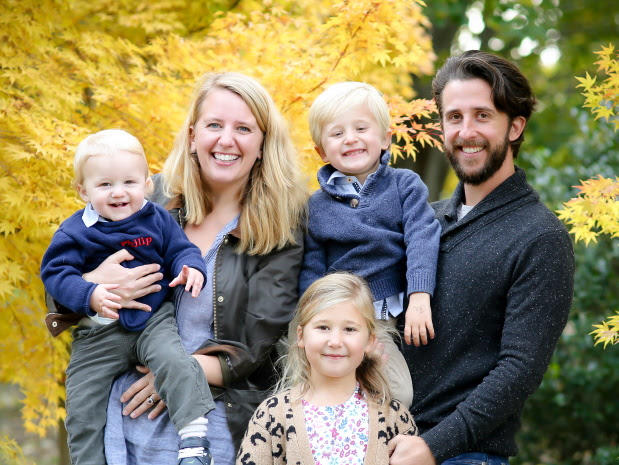
The children had other ideas
In the camp’s early years, woodworking became a favorite. The children liked it enough that the activity found a place in every week’s schedule. For a program introducing families to 3D printing, drones, and robotics, it was an instructive result. A piece of wood could hold its own.
That response fitted the original mixture. Innovators Camp offered technology alongside farming, gardening, art, and work with materials. Its Bridgehampton setting at Nova’s Ark Project gave children room to get outside. The intended experience allowed them to move among different kinds of making.
Manley described projects that children could finish, feel proud of, and regard as their own. Working in groups, campers could build computers, make music, or develop art projects. Adults guided the activity while children took on decisions within it. The object at the end of the week gave their effort a visible form.
This is a useful distinction within the long catalogue of educational activities. Knowing the name of a tool and having an idea for something to do with it are different stages of familiarity. A project supplies a reason to learn where a cable belongs or how a design will take shape.
The woodworking detail makes the approach feel less abstract. It leaves room for children’s preferences to affect what happens next. A schedule can announce a philosophy; a recurring activity shows one being used. The campers had expressed an opinion, with their attention, and the adults made room for it.
A playroom with a point of view
Manley’s 2022 holiday gift recommendations offer another view of the same interests. Her list included magnetic building tiles, a programmable drone, a robot mouse, materials for constructing forts, and an audio player. The objects invited several kinds of participation, from arranging a structure to choosing a story.
She described building tiles as familiar equipment both at home and at camp. The robot mouse offered an introduction to coding without a screen. Fort materials could become different constructions, including ones children could decorate. The list moved easily between devices and things that would occupy a generous portion of a living room.
There is a domestic practicality to those choices. Children can build together, rearrange pieces, or follow their own interests. A fort also has an unusually direct review process: its occupants will let you know if the architecture fails. No customer survey is required.
In 2024, Manley appeared on Hamptons Hustle & Heart with host Kim Lenar-Ehrhardt. The conversation was presented around creativity, running a camp, and raising four children under ten. The family dimension of the business had remained part of her public story as the company grew.
The ambition acquired an address book
The early ambition extended beyond summer. By February 2019, Manley was talking about a year-round space children could use, and about off-season programming at the Children’s Museum. Over time, iCAMP’s offer came to include holiday camps and before- and after-school classes.
A 2022 account placed its enrichment programming in schools including Columbia Grammar, Trinity, St. David’s, Allen-Stevenson, Fieldston Lower, and KIPP. The business was moving through institutions as well as serving families directly. A camp idea could now occupy a slot in the school week.
One later record supplies a particularly concrete measure of that work. In January 2024, Bridgehampton’s school board approved Lulu Keszler’s request on behalf of iCAMP to use seven classrooms from July 1 through August 23, with hours of 7:30 a.m. to 3:30 p.m.
Seven classrooms put a physical outline around expansion. They mean tables to arrange, materials to place, and a summer calendar with somewhere to happen. Business growth is often discussed at a height from which the furniture disappears. A classroom request brings the furniture back into view.
- 2018Lulu and Brendan start Innovators Camp.
- 2024Bridgehampton approves seven classrooms for summer.
- 2025AlphaBEST announces the iCAMP acquisition.
A larger home for the original question
On September 30, 2025, AlphaBEST Education announced the acquisition of iCAMP. It described the company as operating in New York and Connecticut, adding 100 schools and two states to its footprint. AlphaBEST was already serving more than 600 schools across 20 states.
The school setting also changes how the original idea travels. A family can choose a week of camp; a school can make an activity available within a familiar daily routine. That gives the same project a different place in a child’s life. An afternoon class may become the regular appointment where an interest develops, one attempt at a time.
The announcement identified coding, robotics, game design, and digital arts among the capabilities iCAMP would bring into the wider organization. The numbers mark a change in scale. The programs the Manleys began developing in 2018 had become valuable to a provider with a much broader network.
For Lulu, that chapter sits alongside a continuing association with Southampton. She has described it as the place where she and Brendan grew up and wanted to raise their family. Her roots there help explain the specificity of the original business question: what would improve the choices available to children in a community she knew?
The result made space for unfamiliar technology and familiar materials, for instructors and friends, for the satisfaction of finishing something. Her own camp recollection offers a fitting companion to that work. Years later, a child may remember what they made. They may also remember the person who made it seem possible.