The camp where the screen has homework
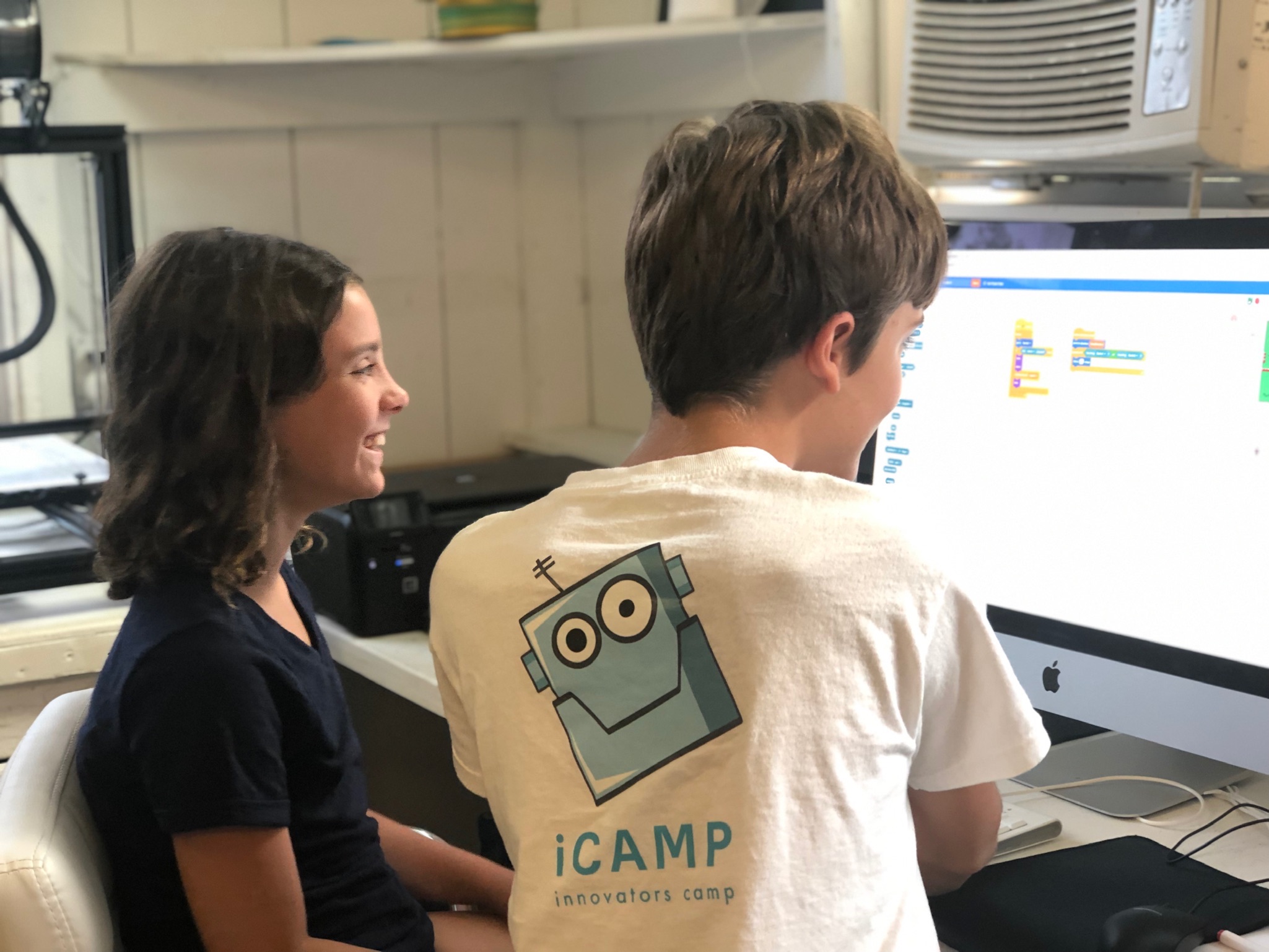
A child sits at a computer in an iCAMP shirt, a block of Scratch code glowing on the monitor. This is familiar territory until you notice what is missing: there is no lecture about becoming a software engineer, no solemn promise to mint a tiny founder. The child is making something. Nearby, another group may be fitting pieces onto a robot, waiting on a 3D print, storyboarding a film, or heading outside for a camp game. The computer is not the destination. It is one bench in a busy workshop.
That distinction explains the company better than the long list of subjects on its website. iCAMP runs STEAM summer camps, holiday camps, before- and after-school classes, and extended-day programs for schools. Its customers are parents who need summer care with intellectual substance, and schools that need enrichment without building a curriculum, hiring specialists, buying equipment, and answering every parent email themselves.
The product began as a parenting complaint
Lulu Keszler Manley and Brendan Manley founded iCAMP in 2018, shortly after their second child was born. They had moved back to the Hamptons to raise a family and wanted a program that treated creativity, confidence, and critical thinking as things children could practice. Brendan brought a background in software development; Lulu brought sales and marketing experience. Their early thesis was domestic and specific: build the place they wished existed for their own children.
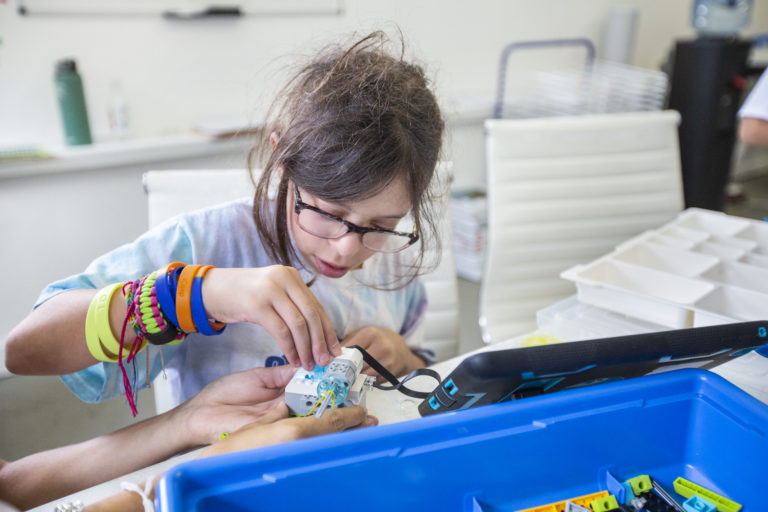
The result borrowed the social architecture of day camp - small groups, counselors, outdoor games, weekly rituals - and filled the workshop hours with coding, robotics, 3D printing, digital and studio art, science, filmmaking, drones, game design, and engineering. The founders' useful observation was that technology did not need to compete with creativity. A coding environment could be used like a paintbrush or hammer. Kids could learn a tool because they had an idea, not the other way around.
“A coding IDE is as much a tool for creativity as a paintbrush or a hammer.”iCAMP's company description
That framing also avoids a common trap in children's technology education: selling adult anxiety back to adults. iCAMP does not need to predict which programming language an eight-year-old will use in 2040. It promises a more durable loop - imagine, build, get stuck, ask for help, revise, show somebody. The Friday gallery walk, where campers display passion projects to peers and families, makes the loop visible.
What failed first was the calendar
iCAMP had only begun to find momentum when COVID-19 broke the ordinary camp model. Children could not gather normally. Schools closed. A business built around instructors, shared tools, and physical rooms suddenly had the wrong inventory for the moment. Brendan later described the timing plainly: the company was just gaining traction when the pandemic changed everything.
The response was not a grand digital pivot. After lockdown, the company offered small in-person formats with distancing, equipment sanitation, health checks, stable instructor assignments, and, where possible, family-provided devices. That worked because it matched the actual problem in front of families. Parents were not merely buying a robotics lesson. They wanted their children safely occupied, socially engaged, and mentally awake after months of disruption.
Demand changed the company's sense of what it was selling. The workshop topics mattered, but delivery reliability mattered just as much. The school business made that lesson permanent. Today iCAMP can provide one club or manage an extended day: instructors, curriculum, supplies, enrollment, parent support, homework help, and on-site supervision. Its site says a new program can begin in as little as two weeks after the introductory call, depending on the assignment.
A camp for families, an operating layer for schools
This is a two-sided education-services business without pretending to be a marketplace. Families buy weeks of camp or individual classes. Schools, PTAs, recreation departments, and community groups buy anything from a Lego Robotics club to full aftercare management. The same curriculum engine earns money across summer, holidays, and the school year, while the school relationship lowers the cost of finding each family one by one.
The price reflects real-world inputs. iCAMP needs venues near outdoor space, equipment that survives children, prepared instructors, counselors, insurance, scheduling, and parent support. Its New York City camp page offers a 50 percent deposit, a 10 percent early-bird discount, and a 5 percent sibling discount. Embedded site metadata has carried a broad range from $60 to $1,150 per week, though actual prices vary by location, dates, age, and program. School contracts are quoted to fit scope.
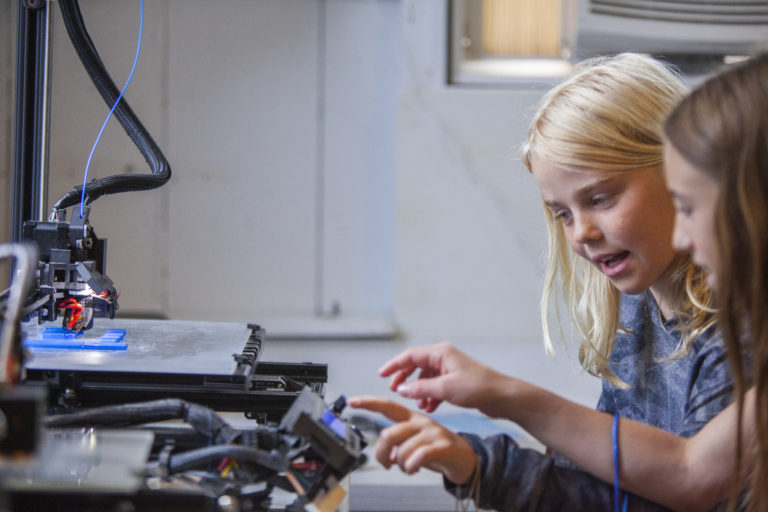
The differentiator is not access to a 3D printer. Competitors such as Code Ninjas, iD Tech, Lavner Education, Engineering for Kids, local recreation camps, tutors, and school-run clubs can all teach technical subjects. iCAMP's edge is the combination: broad creative tools, the texture of traditional camp, specialist instruction, low ratios, and a turnkey service for administrators. A child can go deep without spending an entire August under fluorescent lights.
A deliberately mixed day
The acquisition was a distribution deal
By 2025, iCAMP said it had taught more than 20,000 children. Its school network had passed 100 partners in the Greater New York area, and summer locations stretched from Bridgehampton through Manhattan, Westchester, Connecticut, and New Jersey. LinkedIn listed 67 employee profiles, though the formal company-size band was 11 to 50 and seasonal staffing naturally moves.
On September 30, 2025, AlphaBEST Education acquired the company for an undisclosed amount. AlphaBEST said iCAMP added about 100 schools and two states to a network already serving more than 600 schools in 20 states. The fit is easy to read: iCAMP had a regional brand, a catalog of hands-on STEM programs, trained people, and school relationships. AlphaBEST had national operating reach. The valuable object was not a robot kit. It was a repeatable way to put that kit, a capable adult, and a roomful of children together at 3:15 p.m.
What another operator can steal
The copyable part is not the catalog. Anyone can put “Minecraft” and “drones” on a flyer. The stronger moves sit underneath the flyer.
Design each session around something a child can build, test, revise, and show. A visible artifact does more marketing than a vocabulary list.
Use groups, games, outdoor breaks, showcases, and counselors. New subject matter feels safer inside a recognizable format.
Schools do not only need a class. They need staffing, enrollment, supplies, supervision, and parent communication to stop being separate problems.
Subject knowledge is not classroom control. iCAMP says instructors receive a 20-hour classroom-management course during their tenure.
The harder thing to copy is trust density. A 5:1 ratio or better, as the company promotes on its about page, is expensive. Real teachers are harder to recruit than generic facilitators. Independent-school venues and school partnerships are earned relationship by relationship. The model compounds locally: a school introduces families, families recognize the camp, and the camp gives the school a tested provider.
Where the playbook breaks
It is a poor fit when low price is the only buying criterion, when a region cannot supply skilled seasonal instructors, when facilities lack storage or outdoor access, or when a school wants a completely bespoke program without paying for customization. It also weakens online. The value comes from tools, nearby adults, small groups, and the social pressure of making something in front of other children.
The useful modesty of making
iCAMP sits in a crowded market between childcare, tutoring, summer camp, and educational technology. Its answer is not to pick one category. It bundles the practical promise of care with the emotional promise of camp and the developmental promise of a studio. Parents get a place their children want to return to. Schools get an operator. Children get permission to be beginners with serious tools.
There is a refreshing limit to that proposition. A week of robotics will not determine a career. A gallery walk will not reveal every child's hidden genius. But a child who turns a blank screen, a pile of parts, or a half-formed idea into an object has crossed a small and important distance - from user to author. iCAMP built a company in that distance, then found a larger network willing to carry the workshop farther.