The useful thing about a child who wants to become a lawyer is that he gives his father a very specific problem. In 2001, Jackson Chow’s seventh-grade son wanted public-speaking and debate instruction. Chow went shopping around Cupertino. The options, the company’s history says, were few and very expensive. So he did the ordinary parental thing and the unusual entrepreneurial thing at once: he organized a public-speaking camp himself.
The camp found demand. Communication Academy followed, formally founded in 2002. Today its catalog includes prepared and impromptu speaking, several forms of debate, mock trial, academic and creative writing, reading, Common Core math, Math Olympiad and AMC 8 preparation. There are quarter-length classes, holiday camps, summer camps, live online sessions and private groups. The center of gravity remains the same small experiment Chow began with - put a student in a room, give the student something to say, and make sure the student actually says it.
01 · The product hiding inside the class
Confidence needs witnesses
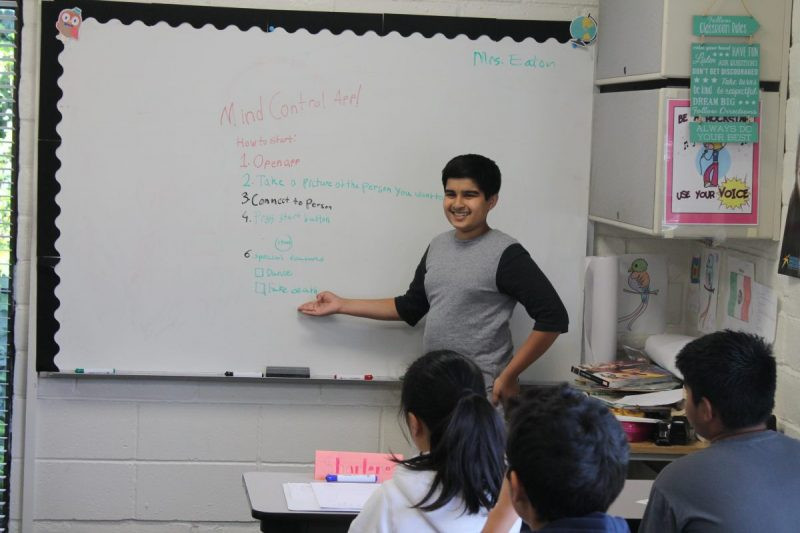
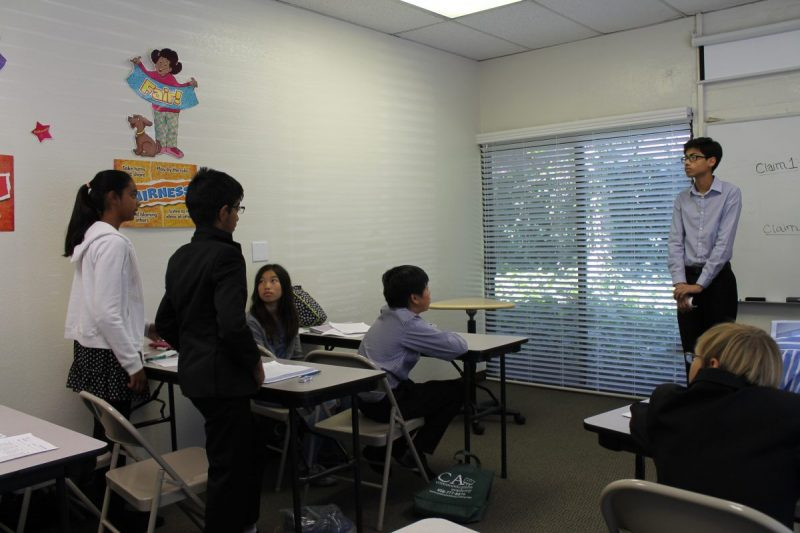
Confidence is a tricky thing to sell because nobody can place it on a kitchen scale. A family can, however, watch a child make eye contact, structure an argument and finish a two-minute speech without disappearing into the carpet. Communication Academy’s design turns an invisible aspiration into a series of observable moments. Most classes and camps are capped at 12. Students practice regularly. In public-speaking courses for ages nine and up, final presentations may be recorded for parents.
That maximum of 12 is doing two jobs. It promises personal attention, but it also creates the right amount of social pressure. A private tutor supplies feedback without an audience. A school assembly supplies an audience without much repetition. A dozen classmates supply both. The room is small enough for every child to get airtime and large enough for a speech to feel like a performance.
“Communicate, Connect, Succeed!”Communication Academy’s compact promise
For the youngest students, public speaking does not mean a tiny lectern and a miniature keynote. Junior Speakers uses role play, games and short presentations. Older students move through themes such as informative speaking, persuasion, spontaneous speech and theater. Debate adds evidence and rebuttal. Writing makes students arrange thought on the page before they defend it aloud. Even competition math fits the pattern better than it first appears: understand a hard problem, organize the reasoning and explain what happened.
02 · A campus without all the campuses
Borrow the trusted doorway
Communication Academy is a local education company, but it has behaved like a network. Its own site names partnerships with recreation departments in Cupertino, Palo Alto, Los Gatos, Fremont, Milpitas, Dublin, San Mateo, Foster City, Burlingame and San Leandro, as well as schools and homeschool communities. That list explains more about the business than a glossy mission statement could.
A family does not need to discover an unfamiliar education brand on the other side of the Bay. It can find a class in a city recreation catalog it already uses. Communication Academy gets a classroom, a local enrollment channel and borrowed trust. The city or school gets a specialist curriculum without building one from scratch. This is the quiet machinery behind the company’s reach.
How one curriculum reaches another neighborhood
The quarter system helps. Fall, winter, spring and summer carry different topics, and students can begin without completing a long chain of prerequisites. That lowers the commitment for a curious family and gives returning students a reason to come back. A five-minute questionnaire asks what each student wants from public speaking, writing, debate or Math Olympiad, giving instructors a modest tool for adjusting a standardized class to a particular child.
The model has limits. It depends on enough families living close together, enough instructors who can manage a room and enough community partners with available space and functioning registration systems. Small groups also constrain revenue per hour. The class cap is a selling point only if the price covers the teacher, curriculum, room and administration.
03 · What families pay for practice
The price is public, the outcome is personal
Recent schedules make the economics unusually visible. Spring 2026 multiweek partner courses in Fremont and Palo Alto appeared around $300 to $395. A half-day school-break camp was listed at $445; a full-day public-speaking and writing combination camp was $765 plus a $40 materials fee. Winter in-person Math Olympiad was $390, while comparable live online sections were $330. Private groups require at least five one-hour meetings and list $65 for the first student plus $30 for each additional student.
Published examples, not a universal price list. Fees vary by location, length, format and partner.
That is not trivial household spending. It also clarifies the original frustration. Chow did not merely notice that speaking classes were scarce. He noticed they were scarce at a price a parent could accept. The company’s answer was not to eliminate cost; it was to distribute expert attention across a deliberately small cohort and offer multiple entry points: one subject, a combination camp, a private group or a live online class.

04 · The idea worth copying
Make progress performable
The transferable lesson is not “open a speech school.” It is to take a vague promise and design a public proof. If the promise is confidence, create a presentation. If the promise is reasoning, create a debate. If the promise is clearer writing, create a newsletter, story or essay that did not exist before. Then keep the group small enough that nobody can remain an observer for the entire course.
The second lesson is distribution. Communication Academy’s partnerships place a specialist service inside institutions families already trust. A business copying that move needs reusable curriculum, instructor training and enough consistency that the partner’s reputation is safe. It also needs modules that work independently. The academy’s rotating quarters make the front door available four times a year rather than only at the beginning of a long sequence.
It works when
Practice is frequent, the outcome is visible, instructors can coach different personalities and local partners can fill a small room.
It strains when
A class is too large for airtime, students are unwilling to participate, partner logistics wobble or the price outruns the family’s sense of progress.
There is a pleasing modesty to the result. Communication Academy did not remove the nervousness from public speaking. Nervousness is part of the material. It built a smaller room in which a child could meet that feeling repeatedly, with a teacher nearby and 11 or fewer witnesses. The first camp answered one father’s complaint. The durable company came from recognizing that many other parents had been having the same quiet argument with the market.
Keep going