The first clue was absence. Lulu Keszler Manley had returned to the Hamptons, where she and her husband had grown up, to raise a family of their own. She knew the beaches, farms and peculiar rhythm of a place that changes tempo with the season. She also knew what she could not find: a children’s program where technology, art, physical making and time outdoors lived under the same roof.
This was 2018, when “tech camp” often suggested a room full of glowing rectangles. Manley’s picture was more unruly. A child might code, fly a drone or handle a 3D-printing project, then go outside, work with wood, tend a garden or make art. Technology mattered, but so did knowing when to set it aside. She and her husband, software engineer Brendan Manley, called the idea Innovators Camp. It soon became iCAMP.
The division of experience made sense. Brendan brought software development. Lulu brought sales and marketing, along with years spent as a licensed real estate salesperson at Douglas Elliman. Real estate is an education in how people describe what they want, then reveal what they need. Parenthood supplied the sharper brief. The Manleys were not inventing a theoretical child. They were trying to create the program they wanted in the world for their own children.
“Everything is really project-based. The kids are learning but we want it to be fun. They’re in camp, not school.”- Lulu Keszler Manley
The useful mess
The distinction between school and camp sounds simple until someone has to design for it. A worksheet can wear shorts and still be a worksheet. iCAMP’s answer was the completed project: build the computer, finish the art, print the object, make the film. The child should leave with evidence of having crossed a small frontier. Manley said the goal was for campers to feel proud and take ownership of what they completed.
That ownership changed the instructor’s role. Workshop leaders guided while children made decisions. Small groups mattered because a fiddly project becomes theatre when one adult performs it for a crowd. A camper has to touch the cable, test the mechanism and recover from the mistake. The learning sits in the stubborn minute between “it should work” and “it works.”
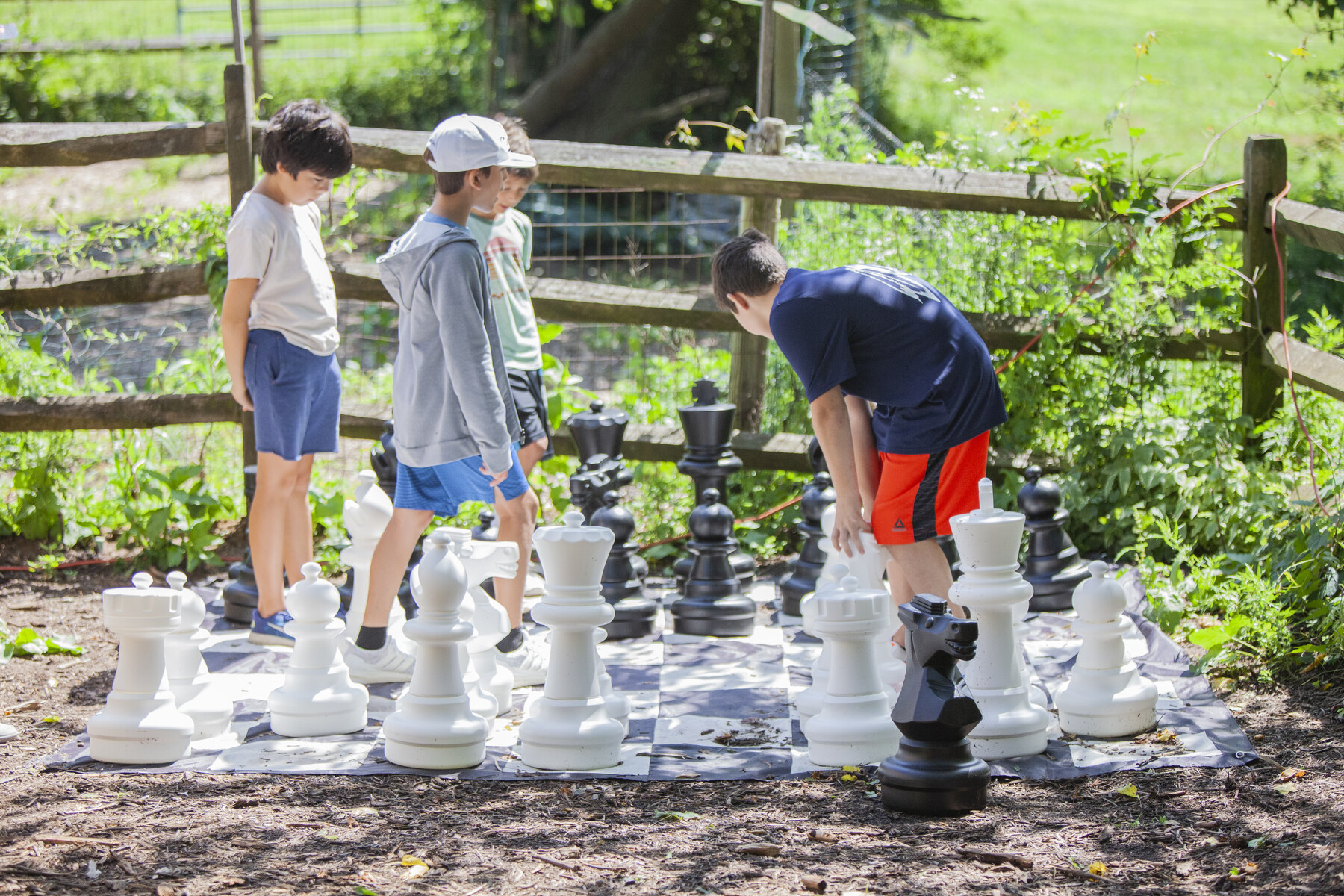
The pilot produced its own market research. Woodworking, hardly the obvious headline act at a technology camp, was a surprise hit. The team kept it and folded it into every week. For children drawn to art rather than devices, 3D printing created a bridge. For children happiest with a screen, the outdoor setting and physical projects created another. Curiosity refused to stay in the departmental boxes adults had prepared for it.
Coding · Robotics
Film · Graphics
Wood · 3D Prints
Farms · Outdoors
There is a fine comic tension in founding a tech program partly to reduce screen time. Manley addressed it directly: parents heard “tech camp” and imagined children on iPads all day; iCAMP tried to keep them engaged enough to want non-tech activities too. The ambition was technology beyond the consumer level. Do not merely tap the finished thing. Understand it, take it apart in the mind, and make something with it.
A local eye
Manley’s Southampton is not merely a company address. In a 2019 local interview, she described Little Plains Beach as home, the place she visited in summer and walked dogs in winter. September was her favorite month: the weather still kind, the ocean at its warmest, the crowds finally reduced to a murmur. She spoke about wanting her children to appreciate a landscape that moves quickly from beach to farm.
Her route to iCAMP also refuses the tidy mythology of the founder who was born knowing the name of her company. Manley studied at the University of Miami from 2009 to 2013, with Sociology and Marketing listed as her fields. Then came real estate, where the work was concrete and local: match people to places, translate desire into criteria, and keep a complicated process moving. By 2020, Douglas Elliman described her as having spent five years in the business.
The shift began after she had children. Looking at the local kid community, she started thinking about what was missing. This is less cinematic than a garage epiphany and more transferable. A founder can begin with a lived inventory: what do I keep searching for, what do the available choices separate, and what combination would I choose if someone had already made it? In Manley’s case, the answer joined technology to art, wellness and nature. The business arrived after the sentence became specific.
Those details help explain why nature was not decorative curriculum copy. The first camp took place at Nova’s Ark Project in Bridgehampton, where children could leave the screens and move outside. The local setting gave iCAMP its argument: digital fluency need not cancel physical experience. A drone and a garden can belong to the same childhood.
There were other local threads. Manley served as publicity chair for the Southampton Rose Society in 2019. She had worked in Hamptons real estate for years, at one point alongside her mother and sister. English and German appear on her professional profile at native or bilingual proficiency. Her life was knitted into the place before iCAMP asked local families to trust a new sort of summer program.
“When people hear tech camp, they think kids are on iPads all day. But we keep them engaged. They still want to do things without tech, too, and we actually lessen up screen time.”- Lulu Keszler Manley
Trust is unglamorous infrastructure. It grows when a founder knows which school room can host a project, what a parent worries about at pickup, and why a counselor matters. Manley’s own favorite childhood camp memory was not equipment or spectacle. It was the feeling of friendship with counselors, especially a head lifeguard and swim instructor whom all the campers loved. The recollection is useful: children often remember the person who made the activity feel possible.
From a camp to a system
The first summer grew beyond what the founders expected. Then the idea began escaping the calendar. iCAMP added holiday camps, after-school classes and partnerships with schools. Its subject list expanded across coding, robotics, science, engineering, game design, digital and studio art, filmmaking, circuitry and mechanics. The company kept the recurring grammar of small classes, experienced instructors and hands-on work.
By January 2024, the expansion could be seen in a wonderfully plain document: school-board minutes. Bridgehampton approved iCAMP’s request to use seven classrooms for eight weeks of summer programming. Seven classrooms is not a slogan. It is keys, schedules, instructor coverage, supplies, permission slips and the daily choreography of getting children to the right table with the right tools.
The operational achievement was turning the original idea into something repeatable without turning it beige. A project-based camp depends on materials, prepared adults and enough room for failure. School partnerships add another customer to the arrangement. The child uses the program, the parent judges the experience, and the institution judges whether the program can be trusted to arrive and work. Selling to all three is a founder’s version of advanced robotics.
The 100-school chapter
On September 30, 2025, AlphaBEST Education announced that it had acquired iCAMP. Financial terms were not disclosed. The arithmetic around the deal was public: iCAMP added 100 schools and two states, New York and Connecticut, to AlphaBEST’s footprint. AlphaBEST said iCAMP’s work in coding, robotics, game design and digital arts would be integrated into its broader portfolio of out-of-school programs.
An acquisition is a peculiar graduation. The founder’s local observation becomes part of a larger system, while the larger system bets that the observation can travel. iCAMP began because two Southampton parents wanted something different for their children. Seven years later, a national provider serving hundreds of schools wanted the curriculum and reach they had assembled.
The cleanest founder lesson is not “start a camp.” It is to notice with unreasonable precision. Manley did not merely decide that education could improve. She noticed a specific missing combination in a specific community: technical confidence without passive consumption, creative work without an artificial border between art and engineering, outdoor time without pretending devices did not exist.
Her earlier stated hope was for a year-round space children could use. The form evolved. Instead of one permanent room, iCAMP spread through after-school classes, camps and school partnerships. Sometimes an aspiration keeps its meaning while changing its architecture.
The most persuasive artifact of the whole enterprise remains small enough to fit in a child’s hands: a finished project. A thing attempted, revised and carried home. Companies are fond of promising the future. Manley’s version gave children some tools, a little guidance and the satisfying burden of making a piece of it themselves.