The first thing to fail was the memory. At Squid Labs, engineers were working on experimental kite-surfing gear and other eccentric hardware. They could make a prototype; weeks later, they could struggle to remember why they had made it that way. A discarded approach, a bad connection, a part that almost worked - the useful evidence was scattered across a workshop. Instructables began in 2005 as a place to keep that evidence. Its founders, Eric Wilhelm and Saul Griffith, gave a private lab problem a public answer: write down how you did it so the next person can start farther along.
The short version
- What it does: lets people publish and follow projects as steps with text, pictures, video and files.
- Who uses it: hobbyists, engineers, cooks, artists, students and teachers around the world.
- What changed: a lab record became a community, then a publishing business, then part of Autodesk.
- What to borrow: show the materials, the sequence and the point where the plan met reality.
Wilhelm put the original annoyance plainly in a 2006 interview: “We’d be working on a project and have no place to put all the data, all the dead ends.” Most media about making prefers the triumphant reveal. Instructables gave the unphotogenic middle a job. A recipe needs quantities; a lamp needs wiring; a cardboard automaton needs the awkward hinge that makes it move. A good Instructable is a set of instructions sturdy enough to survive another person's kitchen, classroom or garage.
The site describes itself as a place to explore, document and share creations. Today its archive holds hundreds of thousands of projects. The range is almost impolite to a conventional publisher: cooking sits beside circuits, sewing beside CNC machining, gardening beside robotics. A reader can arrive wanting a practical fix and leave with an ambition they did not know they had. That breadth is possible because the contributors are the authors, and because the format gives very different subjects the same grammar.
The lab notebook escaped
The early Instructables was an open-source hardware idea as much as a website. WIRED counted more than 500 user projects in 2006, including a dachshund wheelchair and a scanner assembled from a laser pointer, wine glass, rotating platform and camera. The examples make the point better than a mission statement. These are objects too odd, local or personal for a conventional product catalog. Once the plans are public, someone with the same peculiar problem may be able to use them.
Its founders had imagined a much larger collaboration: thousands of amateurs designing and improving things together. The site found a more modest and more durable unit of exchange - one person explains one build well enough for someone else to try. Comments and ratings add feedback, but the tutorial is the artifact. That makes Instructables different from a fast video feed. A video can show a remarkable result; a written sequence with materials and close photographs is easier to pause, scan and carry back to the workbench.
“The most valuable part of a build may be the part that did not go to plan.”What the format makes visible
A contributor's job is concrete. Make something. Record the process. Explain it with words, images, video or attached files. Publish it, then let the next maker ask questions or propose a better method. Instructables' own publishing guide cheerfully allows anything from a one-step recipe to a 100-step jet engine build. The scale is flexible; the obligation to explain is not. For a newcomer, that means looking up a project is less like admiring a portfolio and more like borrowing a patient neighbor's notes.
Test an idea in the real world, with real materials.
Capture parts, sequence, decisions and difficult spots.
Publish the method and make room for questions and improvements.
The business plan that went sideways
Instructables also had to work as a company. In 2008, Wilhelm told CBS that a plan to sell community-management software to other businesses had been set aside. The company had shifted toward a media publishing model and reached break-even, according to that report. It was a revealing change of mind. The useful thing was less the software that hosted a community than the community's growing library of work.
The economics still deserve plain language. Contributors create the projects; the platform provides the publishing format, discovery, audience and contests. Historical materials describe advertising and sponsored contests, while the site today says it is supported by Autodesk. The current mix of income is not publicly itemized. In 2011 Autodesk bought the company. Its later annual filing recorded $30.2 million in cash consideration. That is the known price of the acquisition, not a price for the reader to use the site or the cost of a maker's parts.
Autodesk said the deal would connect its design tools with people making things. It retained the Instructables name, a sensible move: makers tend to trust a workshop more than a corporate showroom. The affiliation is visible in the site's design and classroom work, and in prizes recognizing the use of Autodesk software. Yet the library remains recognizably a place where someone can post a recipe, a costume or a curious machine without first arguing that it belongs in a software category.
A turbine tells the truth
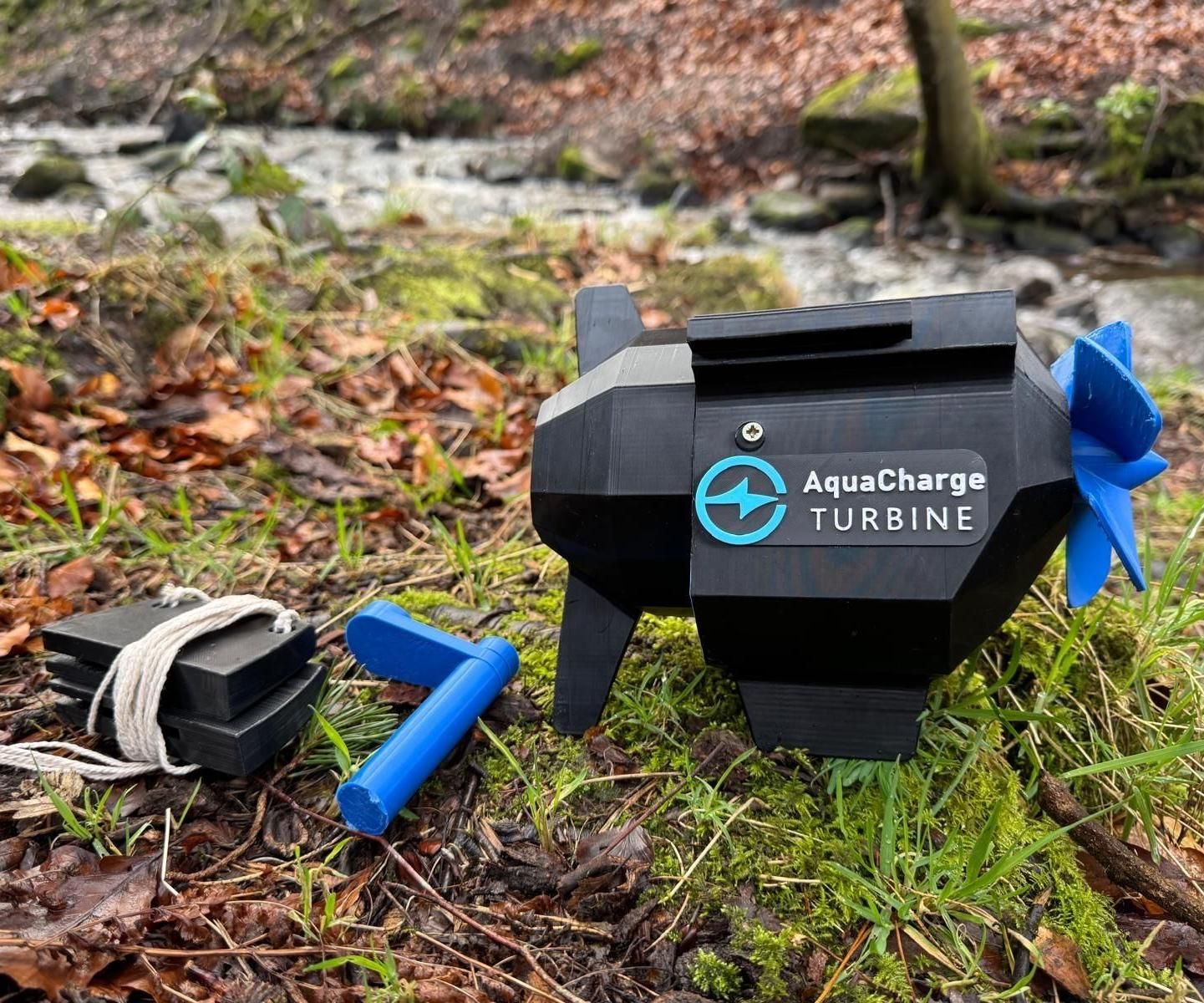
Consider AquaCharge, a portable water turbine entered in the site's 2026 Off the Grid contest. Its creator, posting as sam_havenhand, documented a generator designed to sit in flowing water and charge a power bank. The page lays out printing materials, magnets, coils, bearings, circuit components, assembly and finishing. It also explains the less convenient facts: a full phone charge can take roughly six hours, the device weighs almost a kilogram, and fixing it securely in a stream may take more than one person. This is not a flaw in the article. It is the article's value.
The contest had 66 entries and 23 winners, including prizes for students. That machinery of themes, deadlines, judging and rewards gives builders a reason to finish their write-ups. It gives readers a reason to browse beyond the exact thing they searched for. In the same event, a water purification system, a hand-crank generator and a pet tracker shared a shelf. None has to be a mass-market product to be worth learning from.
A tutorial can lower the cost of figuring out how to try, but it cannot eliminate the cost of materials, tools, time or judgment. AquaCharge requires printed parts, magnets, copper wire and electronics; its author explicitly flags limits in weight and power output.
A classroom can use the same trick
The Teachers area organizes projects by grade, subject and tool. A teacher can look under science, art, coding, robotics, laser cutting or 3D design, then ask students to make and explain something rather than merely repeat a definition. One middle-school student published a 3D-printable bucket-wheel excavator after learning Fusion in a digital manufacturing class. That project is unusually ambitious, but the same structure works with cardboard. A 2025 classroom collection invited students and staff to prototype with recycled materials as a way of exploring a new makerspace.
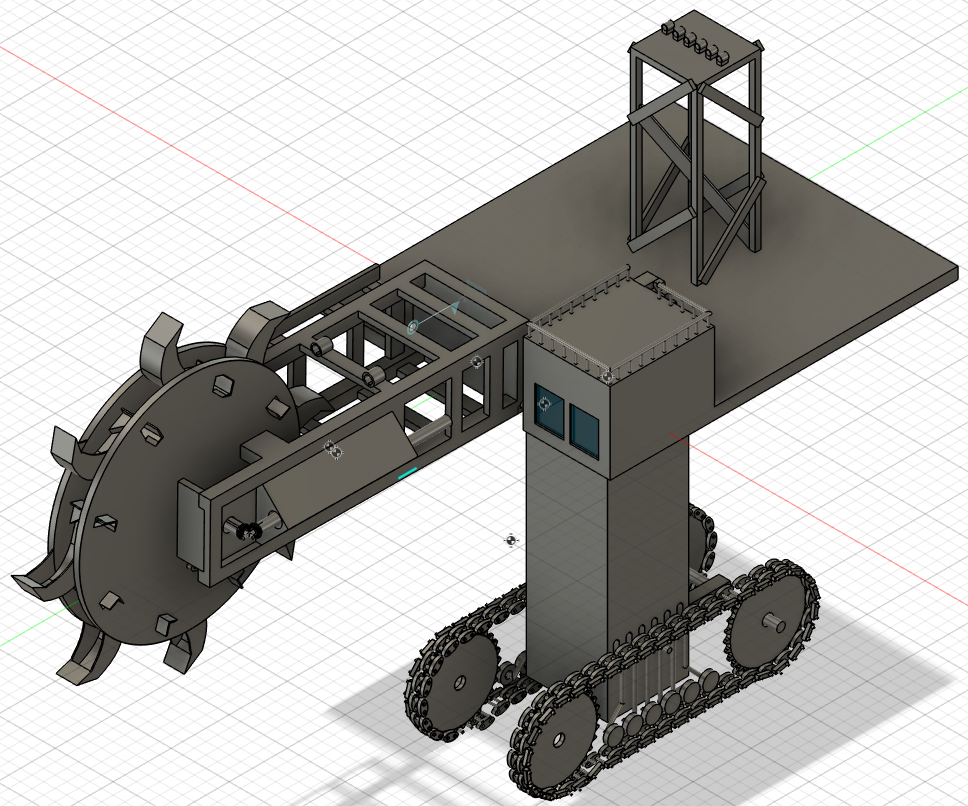
The teaching value is in the explanation. A student who documents a mechanism must notice what connects to what. A teacher who shares the steps can let the next class begin with an example instead of a blank page. These lessons work best when there is enough time, safe equipment and room to revise. A six-step turbine is a poor substitute for trained supervision around electricity and moving water; a cardboard model can be a better first lesson. Instructables supplies examples, not a guarantee that every project suits every room.
The copyable part
The company's distinctive expertise is editorial as much as technical. It persuades people who enjoy making to become useful teachers for strangers. The method is open to anyone: photograph the materials before they disappear into the build; number the steps; explain the decision that seemed obvious only to you; include the point that failed and the change that fixed it. Then make the work searchable and give its author a reason to share. A contest can help, but the smallest reward is often seeing another person build from your notes.
That is where Instructables sits in the market. It is part DIY media library, part social community, part informal learning platform. It is neither a substitute for a professional manual nor a shop selling all the things you see. Its best pages do something subtler: they turn one person's afternoon of uncertainty into another person's head start. The kite experiment could have been forgotten in a drawer. Instead, the drawer became a website.
Explore the workshop
Website ↗Teachers ↗Contests ↗Publish a project ↗Video introduction ↗YouTube ↗Instagram ↗Facebook ↗LinkedIn ↗X ↗