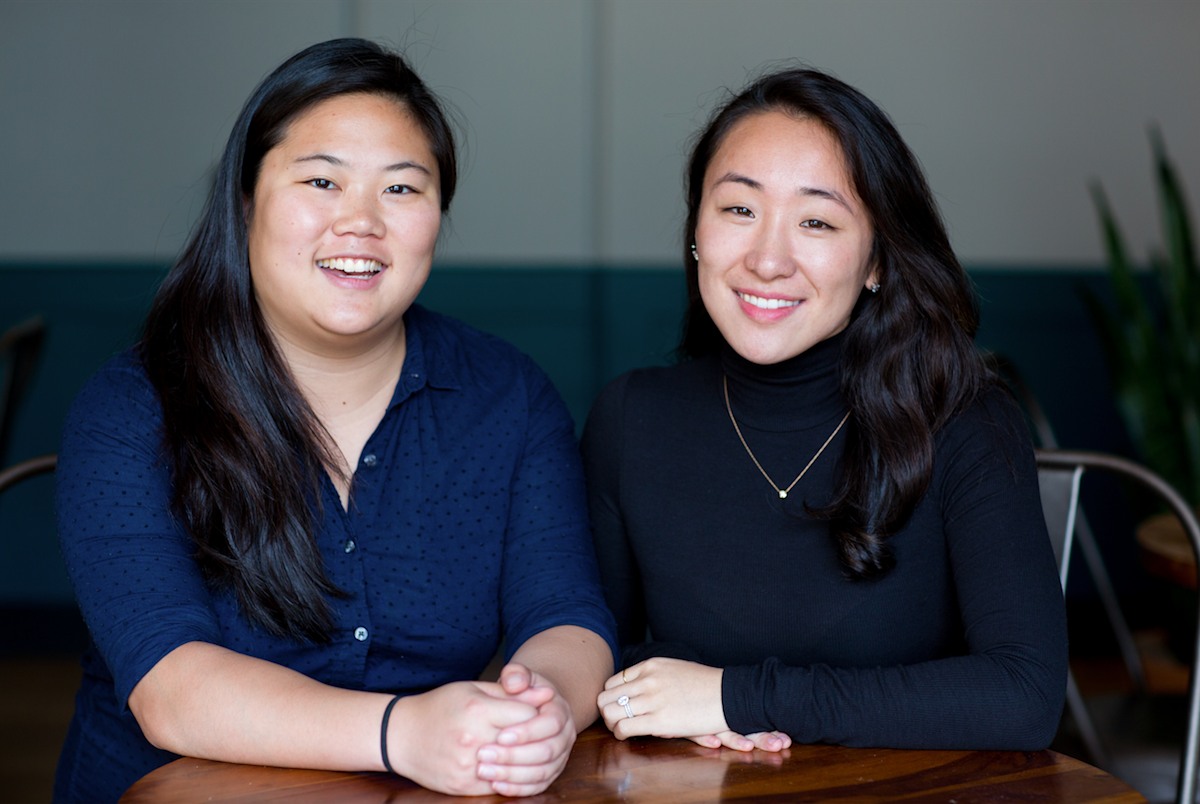
On a Saturday morning in the early days of Juni Learning, Vivian Shen did what founders do before their companies become abstractions. She taught the class. Then she answered parents. Then she worked on the curriculum. The business she and Ruby Lee had started in 2017 was built around a small, almost stubborn proposition: a child learning to code should not feel as if they had been left alone with a screen.
The internet had plenty of coding puzzles. Juni offered a person - often a university student close enough in age to seem less like an authority figure and more like a preview of who the child might become. Lessons were live, usually one-to-one, and project-based. A student did not merely complete a Python exercise. They made a game, a website or a small universe with rules of their own.
The fast read
- Juni began with live, personalized coding classes for children and expanded into math and other real-world subjects.
- A $10.5 million Series A landed just before lockdown; demand soon grew 2x to 3x week over week.
- The first strain appeared behind the lesson - in matching, scheduling, support and internal operations.
- The company’s second act is Acely, adaptive SAT and ACT prep priced from $49 a month on an annual plan.
- The lesson worth copying: deliver the valuable work by hand until you know precisely what software should repeat.
A university, shrunk to fit a laptop
Shen and Lee met at Stanford and came at the problem with complementary instincts. Shen had studied computer science and creative writing; Lee became Juni’s founding technical leader. They modeled part of the experience on VIPKid, the Chinese live-learning company, but aimed at subjects American schools often treated as extras. Coding was the wedge. Math and English followed. Juni’s larger ambition, as Shen put it in 2020, was to “build a university.”
Its customers were families with children roughly seven to eighteen, especially those who wanted more depth than a school timetable or self-paced app could provide. Juni’s instructors came from leading universities, passed background checks and taught in their areas of expertise. The age gap mattered. A ten-year-old could meet someone studying computer science and see not an institution, but a possible next chapter.
This was not cheap access. A later published plan cost $299 a month for one weekly 50-minute private class, with customized pacing, session notes and seven-day support. In 2020, group classes started at $179 a month and eight private sessions cost as much as $450. Parents were paying for a recurring relationship and the accountability around it, not simply for content. Free tutorials could explain a loop. A mentor could notice the moment frustration made a child stop typing.
“It’s really not about feeling smart, it’s about feeling like you can get over the hump on any kind of problem that you see.”Vivian Shen, on what learning should produce
The lesson survived. The machinery groaned.
Juni closed its Series A in February 2020, just before American schools shut their doors. It was lucky timing, but luck merely delivered a harder problem at higher speed. In the first month of restrictions, the company grew 2x to 3x week over week. It hired hundreds of instructors. By August, TechCrunch estimated that roughly 4,000 active subscribers represented a $10 million annual run rate, up sharply from March.
What failed first was not the curriculum. It was the invisible choreography around it. A personalized class requires the right instructor, a compatible schedule, progress notes, rescheduling, parent communication and support when any link slips. Growth features suddenly mattered less than internal tools. Shen later described a large engineering pivot from acquisition toward operations - the decidedly unglamorous software that kept the human promise intact.
What “one-to-one” really asks the company to do
The change of mind is useful precisely because it was not philosophical. Demand made the decision. When the service itself is constrained by operational drag, another landing page is not growth; it is a longer queue. Juni organized engineers into smaller pods, solicited pitches and connected the work to student outcomes. The internal system became as consequential as the classroom interface.
The tutor reappears as a study loop
The most revealing object in Juni’s story is now a redirect. Visit its public website in September 2026 and the old catalog of children’s courses has given way to Acely, a product operated by Juni Learning, Inc. The new customer is an SAT or ACT student. The format is diagnostic tests, a personalized daily plan, thousands of educator-reviewed questions, full-length practice exams, score forecasts and an AI tutor available on demand.
The product is different; the thesis is not. A giant library is rarely the student’s real problem. The problem is knowing what to do next, understanding why an answer was wrong and returning tomorrow. Juni once paid a person to make those decisions. Acely encodes more of them in software.
Acely currently lists $149 month-to-month, $99 a month billed quarterly and $49 a month billed annually. That lower marginal cost broadens the market, while a free tier lets students sample assessments and practice tests. In 2026, an ACT partnership added official licensed questions and passages. The pairing matters in a category where generative systems can be fluent and wrong: personalization is only useful when the underlying material deserves trust.
The market is crowded from both ends. Private tutors and live providers such as Wyzant sell attention. Kaplan, Princeton Review and Magoosh sell structured preparation. Khan Academy and official materials offer a low-cost starting point. Acely’s position sits between them - more structured and test-specific than a general chatbot, less expensive and less human than a private tutor.
Do it manually until the repetition becomes visible
There is a founder’s playbook hiding here. Begin with the expensive service, where feedback is loud and mistakes cannot be disguised as engagement metrics. Observe the moves a strong practitioner repeats: diagnose, sequence, explain, nudge, measure. Build software only after those moves have names. Juni spent years watching the work of tutors before Acely attempted to reproduce parts of it.
What to copy
Use a high-touch service to discover the real workflow. Instrument the dull bottlenecks. Automate repeated decisions, then keep humans on the parts where judgment and trust matter.
Where it stops working
The model weakens when the goal cannot be measured, the learner will not practice alone, the material changes too quickly to verify or the relationship itself is what the customer values.
That last limit is important. SAT preparation has a date, a score and a finite body of skills. Creative mentorship is messier. An algorithm can decide that algebra deserves another twenty minutes; it may be worse at sensing that a child needs permission to abandon the tidy exercise and build a ridiculous game about penguins. The original Juni excelled in that ambiguity. Acely excels where feedback can be made immediate and progress can be counted.
Shen eventually stepped back from the CEO role and remained chairman, describing more than $50 million in cumulative revenue across Juni and Acely. By then, the company had moved from one founder teaching weekend sessions to a platform serving tens of thousands of test-prep students. The clever part is not that a tutoring company discovered AI. Every tutoring company discovered AI. The clever part is that Juni had already spent years learning what a tutor actually does.