The useful thing about a pipe is that it refuses abstraction. Its diameter is its diameter. Its bend has to clear what the drawing says it must clear. The fitting either fits or produces an afternoon nobody ordered. Lukas Bock learned this sort of honesty in his family's trades business, a fourth-generation company that began in roofing and plumbing and later added heating, ventilation, air conditioning and electrical work. He is the youngest of four brothers. He spent time on job sites with his parents and siblings, bending pipes and watching expertise travel from hand to hand.
He also watched paperwork travel much less gracefully. Requests for quotes arrived as emails, spreadsheets and dense PDFs. Product catalogs ran to hundreds of thousands of items. An experienced salesperson had to interpret a description, find a specification-compliant match, check quantities and prices, then put the answer into an enterprise system. The work demanded judgment, but much of the day disappeared into searching and retyping.
Bock eventually left the job site for software. The remarkable part of his story is not that he escaped an old industry for a new one. It is that he circled back with a different toolbox.
A detour with a destination
At Allianz, Bock worked as a data scientist in the global Data & AI team, helping drive AI adoption across roughly 60 entities. At Google X in Silicon Valley, he worked as an AI engineer on end-to-end machine-learning pipelines used at scale. The career line then bent toward Cambridge, where he researched industrial technology and received a fully funded PhD admission. He was awarded support including Cambridge Trust and Klaus Murmann scholarships, but left the doctoral path before completing it.
One piece of the academic work did make it into print. Bock was principal author of a peer-reviewed paper with Thomas Bohné and Sławomir Tadeja on deciding when and how augmented-reality assistance systems should be deployed in industrial settings. Published online in 2024 and in a 2025 journal issue, the study turned a fashionable technology into a practical decision problem. Factories should not add AR because the goggles look futuristic. They should examine the task, user, environment and organizational fit.
That sentence, later used by Bock to explain his choice of market, could double as the moral of the research. Technology earns its place through context. In industrial work, context is rarely clean. It is embedded in a veteran employee's shortcut, a manufacturer's naming convention and the difference between two products that look identical until one consequential specification.
Founder-market fit, with a wrench in it
Mercura was founded in Munich in 2024. Bock became chief executive and took responsibility for business development. His co-founders brought product, research and engineering experience; the founding group evolved as the company did. Its focus stayed remarkably specific: quotation and order automation for distributors and manufacturers, particularly in the construction supply chain.
The pitch begins with a document. A contractor sends a request containing functional requirements but incomplete product information. Mercura extracts descriptions, makers, part numbers and quantities. It matches each line against the seller's catalog, uses business context such as sales history, and prepares the result for the ERP. The human remains responsible for the consequential answer; the software reduces the scavenger hunt required to reach it.
Receive the mess
Email, PDF and spreadsheet requests enter one workflow.
Find the facts
Descriptions, makers, part numbers and quantities become structured data.
Respect the spec
Catalog candidates are checked against requirements and commercial context.
Return to ERP
The prepared quote moves into the system where the sales team already works.
For Bock, this is personal without becoming nostalgic. In one post, he described Mercura as a mission “for hard-working people like my family.” He has taken engineers back to the Bock company to handle outlets and pipes, see how they are installed and discuss why a bill of quantities can resist easy matching. The visit carried a lightly competitive question: who bends pipe better, an informatics medalist or a physics medalist? Domain immersion need not arrive wearing a solemn face.
The beer-crate school of enterprise sales
The first useful data rarely appears because a founder has made a tasteful slide. Bock learned that while trying to interest Sanitär-Heinze, a major German plumbing wholesaler. His family initially thought the idea would fail, not because they doubted him, he has written, but because they understood the industry's data and complexity.
So he went to a branch in person. He spoke about an earlier project and his vision for the wholesaler. The employee did not entirely understand how it would work. Bock admits that he did not either. He offered a crate of beer in exchange for a connection to headquarters. The introduction led to Michael Kania, access to real user problems and the basis for an early version of Mercura.
The anecdote is funny because beer is a modest currency for enterprise access. It is instructive because the exchange was really about nerve and proximity. Bock did not yet possess the answer. He found someone willing to expose the question in useful detail.
From calendar blocks to clock hours
Sanitär-Heinze later said work that had taken two or three days could be handled in two or three hours, and that requests it once declined could now be accepted. The account also reveals what Bock's background buys beyond a good origin story. A customer executive said he understood the technical challenge quickly because he came from the plumbing world. Fluency creates trust faster than a feature list.
Two o'clock in San Francisco
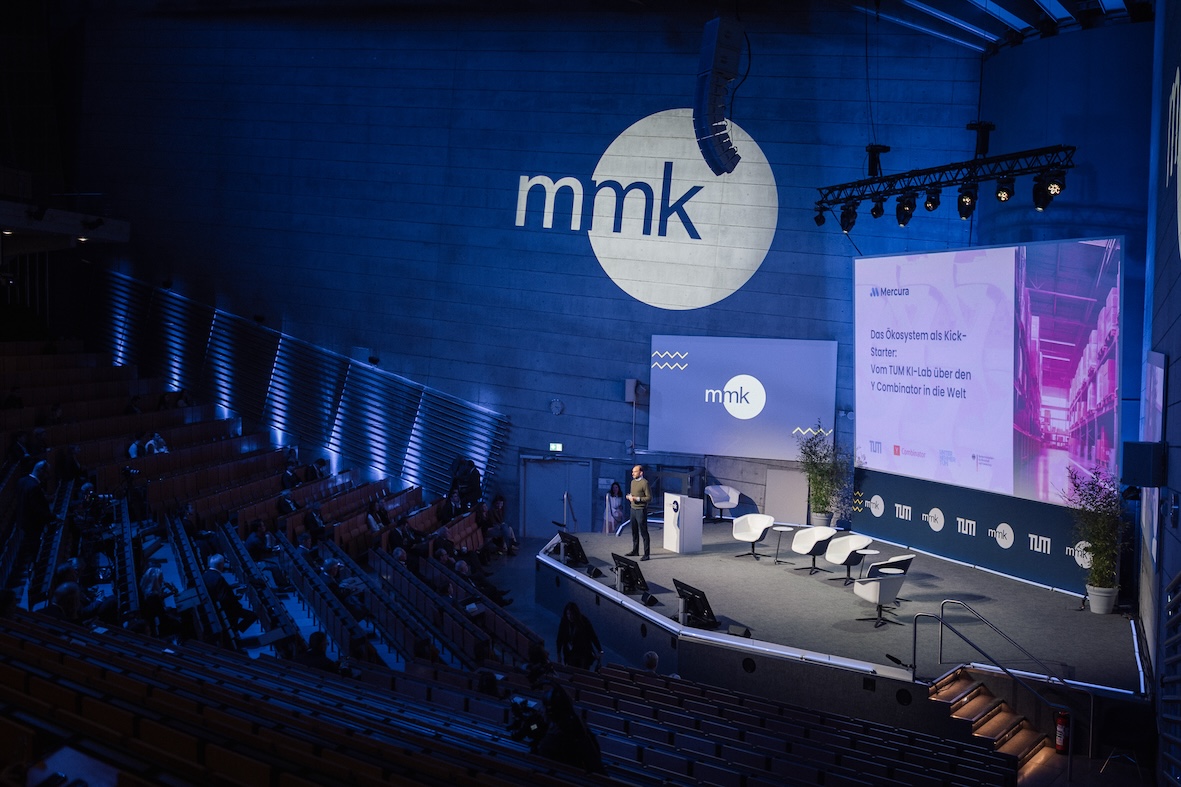
Mercura entered Y Combinator's Winter 2025 batch in San Francisco. Bock called it a full-circle moment and credited curiosity and openness with carrying him beyond what he once thought possible. The company's accelerator months, however, were not a retreat from its German customers. While working with Hauff-Technik and integration partner Kammachi, the founders regularly took meetings at 2 a.m. local time.
During one workshop, co-founder Stefan Zheng identified a feature that Hauff-Technik needed. Data changed hands on Thursday. An engineer worked through the weekend. Mercura demonstrated the finished feature on Tuesday and integrated it with Kammachi's SAP environment. The chronology has become one of Bock's favored examples of customer-centered speed: listen closely enough to find the obstacle, then make the calendar a competitive choice.
By January 2026, Handelsblatt reported that Mercura had more than 50 customers, annual revenue above $2 million and profitability after roughly one year. Bock later wrote that the company had reached $2 million in annual recurring revenue with no churn among paying customers during the period he described. Figures at a young private company move quickly, but the direction is clear enough: the supposedly unglamorous workflow has buyers.
A company that likes visible effort
Bock's public stories about colleagues provide a glimpse of the culture he is trying to build. One salesperson, Maximilian Kofler, found the founders' phone numbers and cold-called his way into an interview. He arrived at the on-site with his own lead list and secured a meeting with one of those prospects during the process. On his first day, Bock wrote, Kofler set a team record with seven leads.
Another early salesperson, Lars Leinen, created enough pipeline that Mercura needed someone to close it. Leinen stepped forward. When he closed his first deal, Bock gave him a small trophy for the first dollar. A tiny object made the invisible work visible.
There is a consistent fondness here for agency, but also for systems. Bock praised Kofler for treating sales like an engineer: every deal kept as a structured page, with agents handling operational overhead. The company sells a similar promise to customers facing more requests than their teams can absorb. Growth by adding hours is a poor machine. Infrastructure should carry the repetition.
His activities before Mercura add another register. Bock volunteered for four years with the student consultancy Academy Consult München, where his roles included innovation, reporting and diversity work. He mentored aspiring entrepreneurs in prison through Leonhard gGmbH and later volunteered with ReDI School of Digital Integration. Mercura says its founders support social mobility and commit part of their personal income to organizations that expand opportunity. The practical theme recurs: access improves when knowledge becomes usable.
Coming home without going backward
When the Bock family business marked 115 years and opened a new headquarters, Lukas flew back to Germany. He wrote about the doer mentality inherited from his father and the company's wonderfully economical domain name, ich-hab-bock.de. In German, “Ich hab Bock” means roughly “I'm up for it.” It also puts the family name to work. Four generations deserve a decent pun.
Unlike his brothers, Bock chose AI. Yet the apparent departure has become a return. He is still concerned with whether the fitting fits, whether the customer receives an answer and whether the person doing the work has the right tool. The scale has changed. The material has changed. The obligation to reality has not.
Industrial AI is often narrated as a collision between gleaming software and stubborn legacy systems. Bock's story offers a more human picture. The catalog is not merely old data waiting to be conquered. It is compressed experience. The ERP is not romantic, but it is where the business lives. The salesperson's judgment is not an inconvenience to automate away. It is the standard the automation has to meet.
A pipe still refuses abstraction. That may be precisely why it makes a good teacher.