Smart glasses are having their loudest year yet, and almost all of the noise is about the camera. Ray-Ban Meta wants to film your life; the rest of Silicon Valley wants to overlay it. Lucyd, a small company in Miami, looked at that race and decided to run in the opposite direction. Its glasses have no camera at all. They look like ordinary eyewear, play audio through open-ear speakers, answer questions from ChatGPT or Claude with a tap, hold a prescription, and start at $99. The pitch is almost contrarian in its plainness: glasses that are smart, but not weird.
The company behind the brand is Innovative Eyewear, Inc., which trades on Nasdaq under the ticker LUCY. It runs on roughly 13 people and did about $2.67 million in revenue in 2025. Those are small numbers for a public company. But the thesis is not small: that screenless, camera-less audio glasses - not augmented-reality headsets - are the version of this category that everyday people actually buy first.
01 / THE PRODUCTGlasses first, gadget second
The flagship line is Lucyd Lyte, launched in 2021 as an optical-quality audio frame. The design goal was blunt: build something that works just like regular glasses, but keeps you connected. Each pair packs open-ear speakers that sit near the temple rather than plugging your ears, noise-canceling microphones for calls, polarized UV400 lenses, and roughly a 12-hour battery. Because the frames are prescription-ready, a customer can walk the same path they would with any eyewear brand - pick a frame, add their script - and end up with glasses that also take calls and talk to an AI assistant.
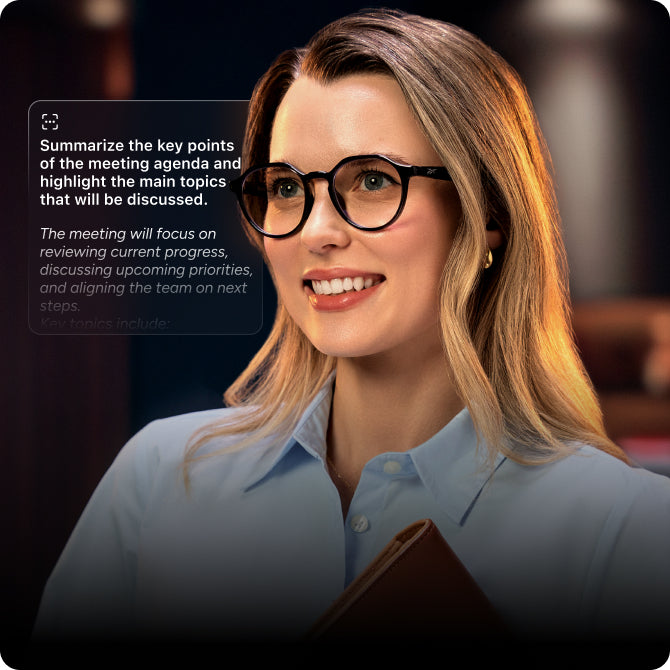
The AI part matters more every quarter. The Lucyd app was among the first to put hands-free ChatGPT voice access on a pair of glasses. In 2026 the company added Claude across its entire eyewear range, letting a wearer switch between Claude and ChatGPT by voice. Instead of betting the product on a single model, Lucyd made the glasses model-agnostic - a small strategic choice that looks smart while the AI market keeps reshuffling. Translation features round it out: the app handles 17 languages and can run real-time AI-translated calls.
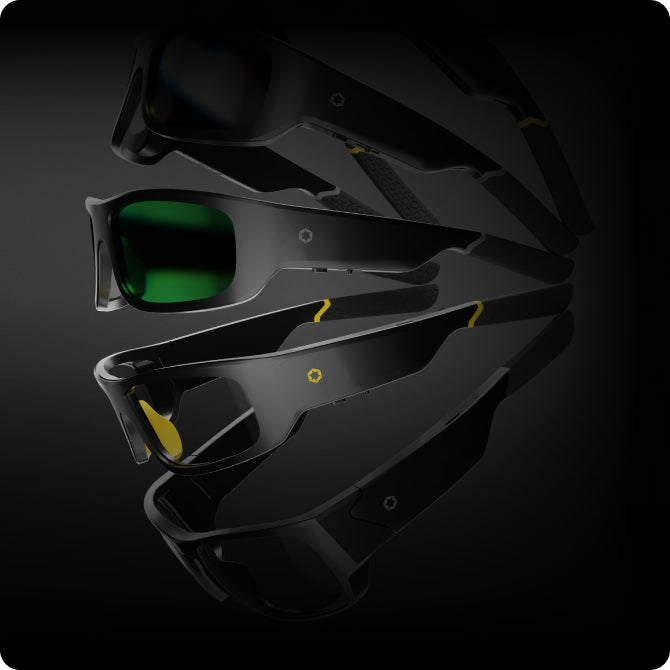
"When we started Lucyd, we saw a desperate lack of smart glasses that were truly functional for regular people. We wanted to make this category accessible to the average person."
Harrison Gross, CEO & Co-founder02 / THE CUSTOMERSTwo audiences, one frame
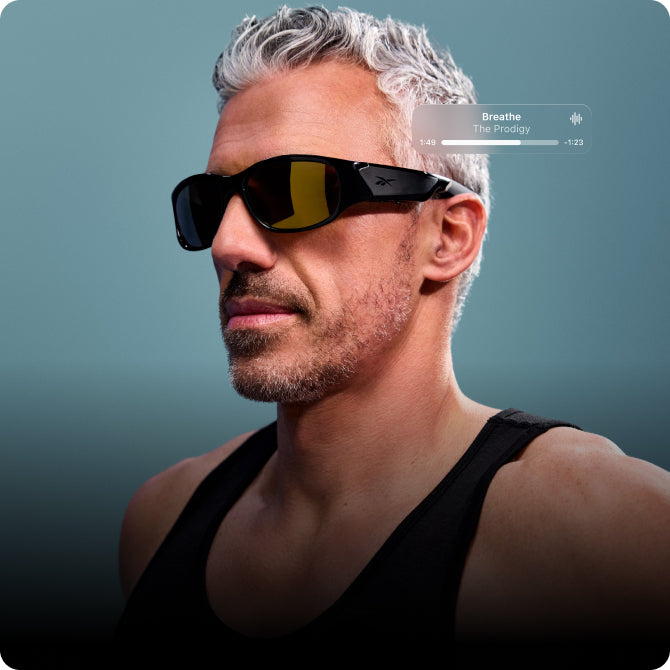
There are really two Lucyd buyers, and they want opposite things. The first is the consumer who wants stylish audio glasses without earbuds - someone comparing Lucyd to Bose Frames or Amazon Echo Frames, drawn in by the $99 entry price and the fact that nothing is filming them. The second buyer is a surprise: workers. Lucyd Armor, a line of ANSI Z87.1-certified smart safety glasses launched in 2024, became the company's top-selling frame, reportedly taking a large share of Amazon's smart safety category. For a driver, warehouse worker, or job-site crew, hands-free calls and voice AI behind impact-rated lenses is a genuinely useful pitch - and it won Lucyd a Red Dot Design Award in 2026.
Everyday wearers
Audio sunglasses and prescription frames for people who'd rather not wear earbuds, and who like that there's no camera on their face.
Workers on the job
ANSI-certified Lucyd Armor safety glasses with voice AI for industrial, logistics, driving, and outdoor use.
03 / THE WEDGEThe feature they left out
The clearest way to understand Lucyd is to look at what it refuses to build. Ray-Ban Meta, the category's breakout hit, is defined by its camera and starts around $299. Lucyd runs the exact opposite play: no camera, and a starting price a third of that. This is textbook counter-positioning - pick the giant, then become the thing it structurally cannot be. Meta can't easily ship a camera-free flagship without undercutting its own story. Lucyd can make "no one is being filmed" the entire point.
The trade-off is honest: no camera means no photos, no video, no visual AR. If you want glasses that record a hike or scan a menu with computer vision, Lucyd is not that. Its bet is that most people, most of the time, want the audio and the answers - not the lens pointed at their friends. Whether that bet ages well depends on how much the mainstream comes to expect a camera as standard. For now, it is a clean way for a tiny company to matter in a category full of giants.
04 / THE MODELOne product, four brands
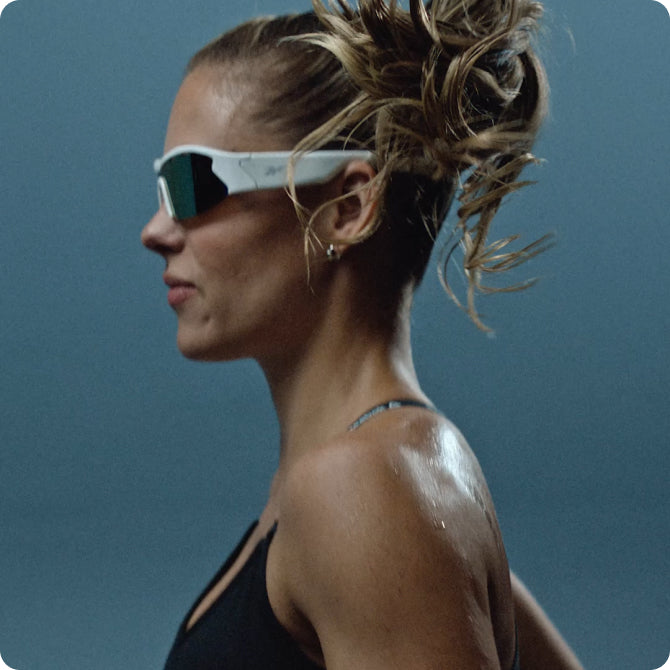
Hardware is punishing, and a small team can only build so many frames. So Lucyd rented distribution instead of building it. Through licensing deals with Authentic Brands Group, the same core technology ships under three familiar names: Nautica Powered by Lucyd and Eddie Bauer Powered by Lucyd (both 2024), and Reebok Powered by Lucyd (2025). Each collection borrows an established brand's audience and shelf space while Lucyd supplies the electronics and the app.
Stack that on top of the direct business - a Shopify storefront, Amazon, and wholesale through more than 180 optical stores - and you get a model that punches above its headcount. Direct sales carry the margin and the customer relationship; licensing extends reach without a corresponding jump in payroll; prescription lenses and accessories add attach revenue. It is a sensible shape for a company that has to be capital-efficient because, as a micro-cap on Nasdaq, it does not get to be anything else.
"In the future, the Lucyd user can access several of the world's most powerful AI models with a simple voice command. This is the most practical way to expand human abilities through wearables."
Harrison Gross, CEO & Co-founder05 / THE ORIGINWritten as the storm came in
Lucyd started in 2017 inside the Tekcapital incubator, where the founders licensed a set of AR smart-glass patents. They could not find a hardware partner willing to build the product, so they built it themselves - the founder's move when the platform you need does not exist yet. Company lore holds that the founding whitepaper was written in an Airbnb as Hurricane Irma bore down on Florida. A 2020 crowdfund pulled in over $1 million from roughly 4,000 investors, ranking among the largest raises of its kind. The operating company, Innovative Eyewear, was formed in 2019, and it listed on Nasdaq in 2022 with a roughly $7.35 million IPO.
The leadership team has stayed intact through all of it. Harrison Gross is CEO and is named on most of the company's patents. Konrad Dabrowski, a CPA, runs finance as CFO. Eric David Cohen leads technology as CTO. Their patent work - a modular quick-connect front-frame system and self-adjusting spring hinges - is aimed squarely at the two things that make smart glasses annoying to own: they break, and they don't quite fit.
That patent portfolio is where a small company's expertise actually shows. The quick-connect front frame lets a wearer swap styles without buying new electronics, turning a one-time purchase into something closer to a platform. The spring hinges widen the range of faces a single frame comfortably fits - a quiet but real problem when you are shipping rigid electronics inside eyewear. Neither feature makes a flashy headline. Both are the kind of unglamorous engineering that keeps returns down and repeat buyers happy, which is exactly what a 13-person hardware company needs.
06 / THE MARKETWhere it fits
Smart eyewear is crowded at the top and thin in the middle. Meta and Amazon and Bose have the budgets and the brand; the open question is who serves the buyer who wants something simpler and cheaper. That is the slot Lucyd is trying to own: functional, affordable, prescription-ready audio glasses with no camera and a choice of AI assistants. The revenue is still small and the company still runs losses, which is the reality of building hardware at this scale. But the growth is real - up about 63% in 2025 - and the strategy is legible in a way a lot of hardware stories are not.
The most copyable thing here is not the electronics. It is the framing. Lucyd does not sell "the future of computing." It sells glasses that answer a question and play a podcast, that pass a safety rating, that hold your prescription, that don't point a camera at the room. Boring utility, priced to move, sold under names people already know. In a category addicted to spectacle, that restraint is the whole idea.