Lorna Borenstein had already found one unusual use for a spare bedroom: launching eBay Canada. It was 2000, she was in Toronto, and there was a newborn in the picture. A national business and a new baby make rather demanding houseguests. Years later, having added Yahoo and the presidency of Move to her résumé, she tried a different arrangement. She would stop running businesses and travel with her husband and their three children. Retirement had apparently won the argument.
It did not hold the floor for long. Borenstein founded Grokker in 2012, turning a frustrating search for expert instructional videos into another company. The familiar entrepreneurial plot would make this sound inevitable. Her own reaction was less obliging. “I wasn’t intending to come out of retirement and start a company,” she said in 2016. “I mean, who does that?” It is a useful question to keep beside the polished biography.
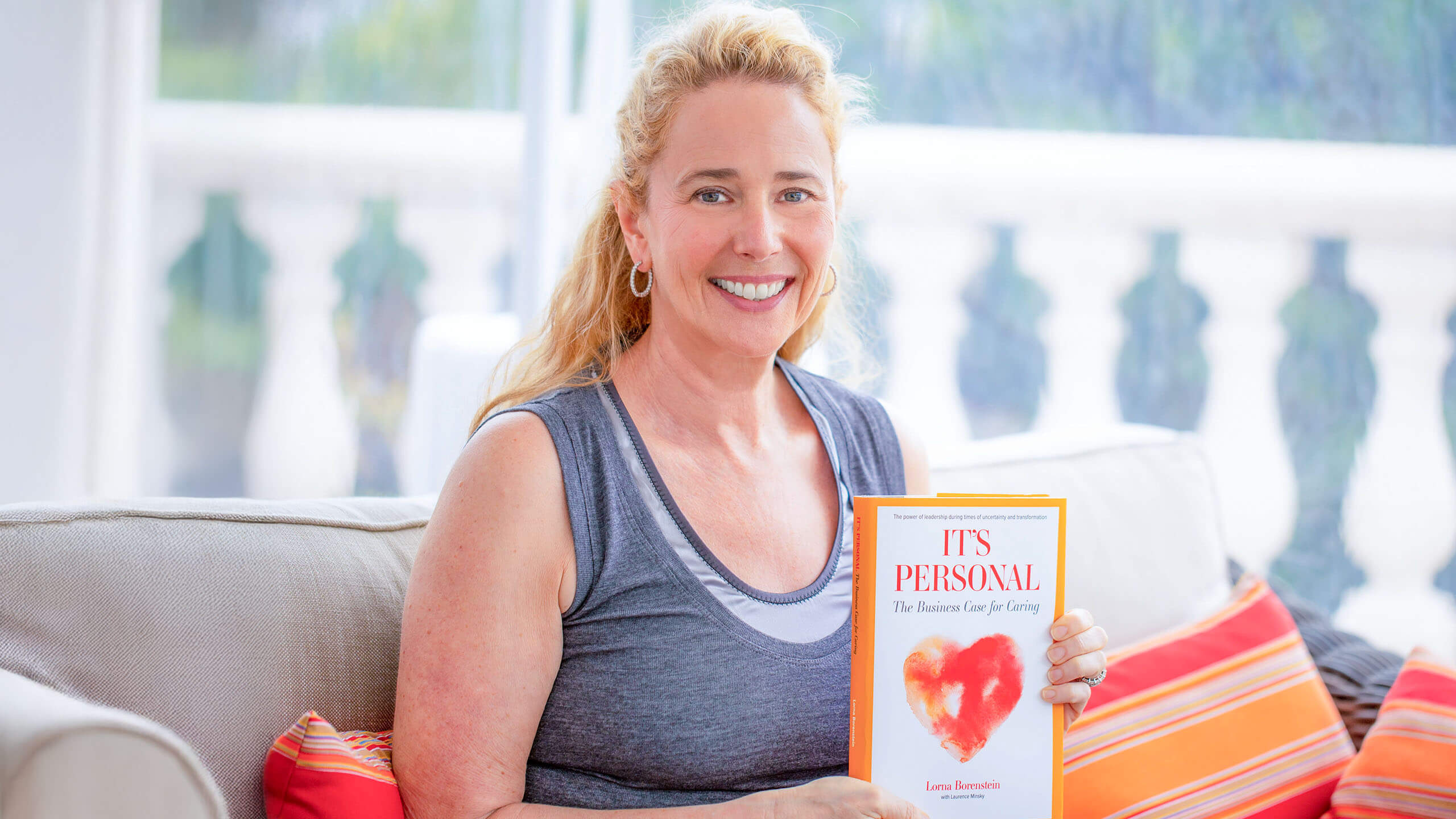
Today, she remains Grokker’s founder and CEO, and the author of It’s Personal: The Business Case for Caring. Her career has moved through law, online commerce, search, dating, property and employee technology. The subjects change enough to make a conventional career ladder look faintly inadequate. What recurs is her attention to the person trying to use the thing: the shopper, the learner, the employee. Her businesses have required people to try something unfamiliar. She keeps returning to what would make them willing.
A country launch.
A public-company presidency.
A retirement with a sequel.
A lawyer walks into the internet
Borenstein trained in two legal traditions at McGill University, earning degrees in civil and common law. She also studied business at the American College in London. Her early professional life included legal practice in Chicago and Toronto, followed by Hewlett-Packard Canada. The work at HP involved transactions, technology agreements and business expansion. Before she was asking people to trust an online marketplace, she had worked on the agreements that let technology businesses operate.
In 2000, eBay gave her a much less familiar assignment: establish its Canadian business. The guest-room beginning has survived in her biographies because it is such a tidy collision of domestic life and commercial ambition. It also puts a human scale on an internet company. A country launch sounds like a building full of people. In this telling, it begins inside somebody’s home, where a job title does not make the baby any less of a baby.
There is contemporary evidence of how quickly she became a public representative of that business. In March 2001, the University of Toronto’s Rotman School announced her as the guest speaker at its Women in Management Conference, identifying her as eBay Canada’s general manager. The launch was already becoming a career other women could examine. The woman working from home had something to say in a lecture room.
Borenstein went on to become an eBay vice president and general manager. The interesting part of that progression is the distance between a functioning website and a functioning community. Buyers and sellers must believe that strangers will do what they promise. In a later conversation about AI, she recalled the practical lesson of explaining trust and safety clearly. Her eBay experience remains part of the vocabulary she brings to newer technology.
Dating, houses, and the scale of a job
Yahoo widened the territory. Borenstein’s roles included leading its global Personals business and marketing for Search & Marketplace, alongside work on youth and education. Dating, shopping and searching are different activities, but all depend on helping people find something they consider worth their time. Her résumé places her inside several of the internet’s everyday habits while those habits were still being formed.
In May 2007, she became president of Move, the publicly traded company behind Realtor.com. The appointment put day-to-day operations, engineering, marketing and product development under her responsibility. This was a substantial change in scope from launching a national operation. She was taking charge of the machinery around an established business, with the responsibilities and scrutiny that came with a public company.
Her departure was announced in February 2009, with her resignation effective that March. Move’s new CEO, Steven Berkowitz, credited her with website redesigns, a focus on profitable operations and greater efficiency during the downturn. The timing matters: this part of the career took place in a difficult property market. A biography that hurries directly from eBay to founder would miss the years spent running something that already existed, through circumstances she had not chosen.
Six stops. A career with room for a detour.
- Before 2000Law & Hewlett-Packard
- 2000Launches eBay Canada
- 2004–2007Executive roles at Yahoo
- 2007–2009President of Move
- 2012Founds Grokker
- 2021Publishes It’s Personal
The vacation develops a business plan
The family’s extended travels were meant to create some distance from that working life. Instead, Borenstein encountered a familiar internet problem: an abundance of material and a shortage of useful ways to find it. She wanted expert videos in one place. Looking for them was taking more effort than she thought it should. The person who had run consumer businesses had become an irritated consumer herself.
Grokker began as an expert video network. By December 2013, it had secured about $5.5 million in funding, with Khosla Ventures, Josh Kopelman of First Round Capital and Ron Conway among the backers reported at the time. Its early proposition joined professionally made material with people who wanted to learn. The other side of the problem mattered too: capable teachers needed a way to reach an audience that might otherwise never find them.
The name is a clue to Borenstein’s imagination. Grokker draws on “grok,” the word associated with Robert Heinlein’s Stranger in a Strange Land. She has described the appeal as understanding through connection, with the encounter changing the people involved. An enterprise software name can be a formidable act of vowel removal. Hers carries a memory of reading science fiction as a teenager.
Another Heinlein novel, Friday, also stayed with her. She admired its female protagonist and its treatment of prejudice and difference. These reading interests sit beside a more unexpected curiosity: she has talked about studying quantum mechanics as a hobby. Neither detail needs to be turned into a business parable. They make her a more interesting dinner companion than a list of executive appointments would suggest.
“Doing good and doing well are consistent.”
Lorna Borenstein
The argument at the lunch table
Grokker’s business expanded into serving employers after companies began asking whether they could buy the service for their employees. Borenstein has described that demand as arriving after the consumer product was launched. This is a consequential order of events. The company first had to persuade individuals to use it; employers then saw something they wanted to offer at work. The employee remained a consumer with the option to lose interest.
Her views on management became more explicit as the business developed. She described shared lunches at long tables where conversation moved away from work and toward partners, children and ordinary life. A company can announce that people matter in a presentation. Sitting down with them requires a place, a time and a willingness to hear about something that will never appear in the quarterly results.
In 2021, she brought those ideas into It’s Personal: The Business Case for Caring. The book examines what she calls the Human Connection Movement in the workplace, arguing that belonging and business performance belong in the same discussion. Its contributors include leaders with different experiences of building companies. Borenstein has highlighted Caryn Marooney’s thinking about habits and culture, Susan Lyne’s lessons on selling a vision, and Christine Buck’s approach to brand building.
Her public conversations have also made room for small, unglamorous practices. In a podcast discussion with Jess Von Bank, she put particular weight on leaders demonstrating the behavior they want others to feel free to adopt. In a separate interview, she described her customer-support lead reading employee messages at company meetings. These are mechanisms for bringing people into the room, even when those people work elsewhere. They give a management argument something more substantial than a slogan to live on.
An investor, a reader, a returning beginner
Her interests extend beyond the company she runs. Change.org included Borenstein among the investors in its $25 million Series C announcement, alongside founders, executives and other backers. That establishes a specific investment connection; it also places her within a wider network of people funding internet businesses with a public purpose. Building Grokker has not been her only way of participating in somebody else’s idea.
She has continued taking her own ideas into public conversations. A 2017 conference panel she led brought together culture and HR executives from Pinterest, SurveyMonkey and LinkedIn. In 2019, she appeared on DisrupTV with Brian Solis and Holger Mueller, in a discussion hosted by Ray Wang and Vala Afshar about customer experience and innovation. The settings vary, but the questions remain close to the behavior of people inside organizations.
By 2026, her writing was addressing AI adoption directly. A March Forbes Council article argued that HR leaders need enough understanding to make informed decisions rather than acquire specialist expertise overnight. In September, she wrote about the administrative cost of confusing employee benefits and the potential for conversational software to give useful, contextual answers. Her emphasis was on making existing systems easier to use. After years in consumer technology, she is again concerned with the gap between providing something and helping somebody find it.
Outside work, her published biography describes gardening, travel and time with family and friends. Those interests deserve their own space in the picture. The founder who borrowed a name from a Martian vocabulary is also somebody who likes a garden. The executive who traveled with three children did eventually come back with another business. Retirement may have lost that particular argument, but it left her with the question that became Grokker: why is a person trying to learn something useful spending so much time looking?
Continue the conversation
Her work, her writing, and a few conversations worth opening.