In 2019, Mosaic Consulting Group had a measurement problem disguised as a morale problem. Turnover was high. Service lines were stagnating. The firm collected an employee net promoter score, but the number supplied little explanation. People were unhappy; management needed to know what, precisely, was happening. A thermometer is useful. It does not tell you where the draft comes from.
- Great Place To Work measures employee experience and sells workplace recognition.
- Its advantage combines trust research, software, benchmarks and publishing partners.
- The useful lesson: inspect differences between groups before celebrating an average.
Mosaic turned to fuller employee surveys through Great Place To Work. In the company’s published case study, retention rose from roughly 75% to 88% between 2021 and 2024. Mosaic estimated $2 million in annual turnover savings. These are customer-reported results, with several changes happening together. Still, the sequence poses a good question: how much does an employer lose by asking too little?
The business behind the badge
Great Place To Work occupies an unusual spot between management consulting, enterprise software and employer marketing. Robert Levering and Amy Lyman started the company in 1992. A partnership with Fortune produced its first joint 100 Best Companies to Work For list in 1998. Workplace research gained a public stage. Employers gained something they could show prospective hires.
Today, its customers include HR teams trying to understand departures, executives managing growth and recruiters seeking an employee-backed reputation. Hilton, Trek and WP Engine appear among its public examples. The company reports more than 22,000 customer organizations and over 20 million employees represented across more than 180 countries and regions. Its ambition is expressed in the words “For All.”

The employee gets the ballot
The central instrument is the Trust Index. Employees respond to 60 statements and two open questions, alongside demographic questions. Completion usually takes 10 to 20 minutes. The model examines credibility, respect, fairness, pride and belonging. Those subjects turn a slippery word, culture, into questions about experiences people can recognize.
Employers also complete a Culture Brief. Qualifying survey results can earn Certification for 12 months. Relevant Best Workplaces lists involve additional eligibility and selection; a certificate does not guarantee a Fortune ranking. That distinction matters to a candidate scanning a careers page. The badge and the league table answer related questions at different levels.
Credibility02
Respect03
Fairness04
Pride05
Belonging
One workplace. Five ways to ask whether it works.
There is a commercial transaction underneath the recognition. Employers pay a program fee covering assessment and associated reporting and materials. Quotes vary with company size and selected services. The Certification badge carries no separate licensing charge; Fortune and PEOPLE list badges can require publisher licensing. Buyers should budget for the particular package they need.
The average had a blind spot
When Michael C. Bush joined in 2015, he saw a limitation in how the organization evaluated workplaces: it was not sufficiently considering consistency across every employee’s experience. A company could look good in aggregate while different groups lived through very different working days. The average had concealed the interesting part.
In his account of the subsequent changes, data scientists developed a methodology for evaluating consistency. Technologists built a platform for collecting and analyzing feedback worldwide. Recognition shifted toward the For All approach. The lesson was methodological and moral at once: whom you include changes what you think you have measured.
“As our Great Place To Work Trust Index™ score has gone up, so has our profitability”John Burke / CEO, Trek Bicycle
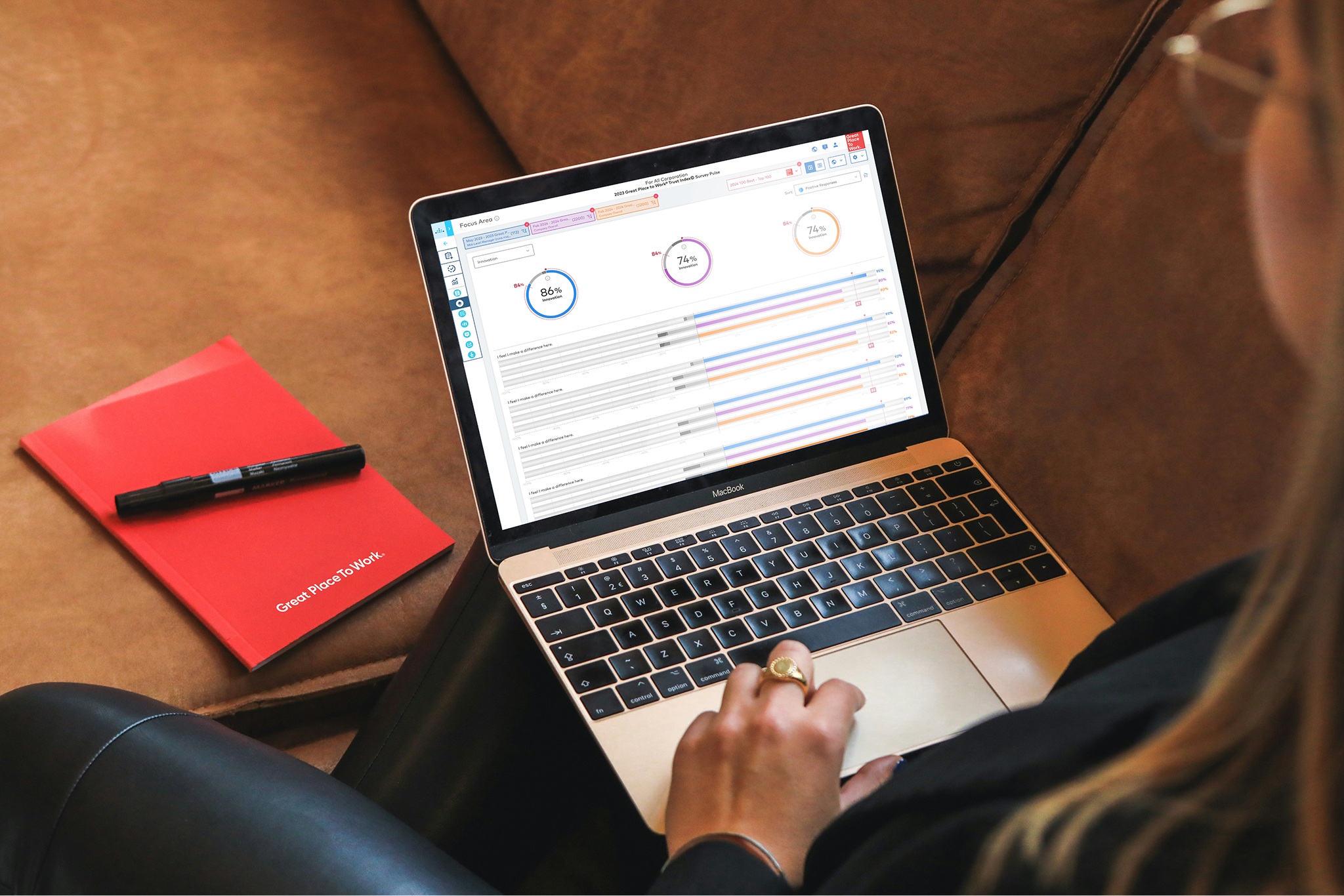
Emprising, the company’s survey platform, makes that approach usable through reporting, comparisons and manager access. Benchmarks supply context that an internal score lacks. Current offerings also describe Great Leader Lens, which turns results into guidance for individual leaders. Optional Culture Coaches add human help when a dashboard needs interpretation.
What changed at Mosaic
Mosaic’s account supplies a practical example. Its team compared four years of Trust Index scores with retention, revenue and client satisfaction. It invested in leadership development and clearer career paths. Employee confidence in its executive team rose from 55% in 2021 to 82% in 2024. Survey findings gave the people team a business argument for further investment.
Notice the order. A weak measurement system came first. Richer feedback exposed more useful questions. Management connected those questions with business costs, then funded changes. Another employer can copy that sequence without expecting the same savings. The amount depends on its turnover, salaries, hiring costs and the time new employees need to become effective.
That is a more demanding use of employee research than collecting applause. The next useful step is to choose a problem a manager can influence, explain the intended response to employees and return to the question later. Without that return visit, staff have supplied information without learning whether anyone used it. A survey calendar alone cannot close that loop.
A signal that needs maintenance
Alternatives include Culture Amp, Qualtrics and Gallup, each offering employee listening or engagement tools. Great Place To Work’s particular combination joins that internal management work to external recognition and media distribution. UKG bought the business in September 2021. The announcement retained a standalone structure and access for companies beyond UKG’s own customers.
The recognition machinery continues. Its 2026 Fortune 100 Best list put Synchrony first, followed by Hilton and Cisco, after analysis of more than 1.3 million confidential survey responses collected in 2025. The scale is impressive; the individual employer still faces an ordinary managerial task: decide what an uncomfortable answer requires.
The approach depends on candor, representative participation and leaders prepared to act. A frightened workforce can make feedback difficult; an average can still obscure local trouble unless someone examines it. Certification also has a date. For job seekers, it is one piece of evidence to follow with questions about their prospective team. For employers, its best use begins after the survey closes.