He didn't start Folklore. He decided to make it bigger - and grew the Minneapolis studio about 40% in his first year.
On March 1, 2024, a 31-person design and technology shop in St. Louis Park got a CEO with a resume usually reserved for companies a hundred times its size. Lorenz Esguerra spent three decades inside the machinery of Procter & Gamble, Bain & Company, Weber Shandwick and Edelman. Then he chose Folklore.
The math arrived quickly. Within a year, Folklore had grown roughly 40%, with new clients in health care, recreational vehicles and finance - the kind of mid-market businesses that need a partner fluent in both strategy decks and code commits. Folklore calls itself a team of veteran designers, technologists, researchers and strategists. Esguerra calls it a place that can go to the next level.
What makes the move interesting is what it wasn't. He didn't found a startup. He didn't take a corner office at a holding company. He picked an existing studio with good bones and applied the one thing the giants taught him: an office is not a building, it's a growth engine, and growth engines are built out of people you choose well.
It is a quieter kind of ambition. The flashy version of a 30-year career ends with a vanity title at a global network. Esguerra's version ends with him rolling up his sleeves at a shop where everyone knows his name and the wins are measured in actual clients won, not slides presented.
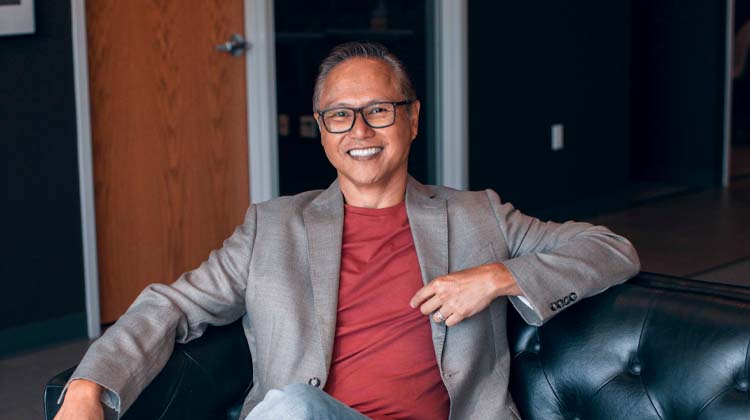
I'm excited to leverage my business acumen and track record to bring in the right partners and talent. I know I can create opportunities that can take Folklore to the next level.- Lorenz Esguerra, on joining Folklore
At Folklore, the year-one story is a client roster - health care, RVs, finance - not a press tour. He brings in business, then builds around it.
Running Edelman's Dallas and Houston offices, he grew the markets over 7% in a year when much of the industry was contracting.
He took Weber Shandwick's 90-plus-person Minneapolis operation and turned it into a growth engine - his signature move, repeated.
An MBA in strategy from UCLA, an accounting degree from Manila. He reads a P&L and a creative brief with equal comfort.
He credits mentors for the way he leads, and pays it back as treasurer of a nonprofit widening the door into advertising.
After the holding-company circuit, he chose a 31-person studio - betting that craft scales better than bureaucracy.
True diversity and inclusion lie at the heart of a thriving company and business economy.- Lorenz Esguerra
A Filipino American who grew up in the 1980s and '90s, Esguerra talks about mentors the way some people talk about lucky breaks - as the thing that made everything else possible. So he volunteers as treasurer of The BrandLab, a Minnesota nonprofit working to make advertising, marketing and communications look more like the audiences they serve.
It is not a side hobby bolted onto a CEO title. It is the same idea that runs through his whole career, pointed at the start of the pipeline instead of the end: choose people well, give them a shot, and the work gets better. Treasurer is an unglamorous post. It is also exactly the job for someone who believes the numbers and the mission belong in the same sentence.
His resume reads like a tour of business heavyweights - P&G, Bain, Weber Shandwick, Edelman - and then takes a hard left into a 31-person studio.
He once ran two Edelman markets at the same time. Dallas and Houston, on one calendar.
He studied across three campuses on two continents, from the University of the Philippines to UCLA Anderson.
He lends his financial chops to a nonprofit as treasurer - the rare CEO who volunteers to do the books.