A farm, a factory, a power station, a town and some fish want the same river. Somebody has to divide the water. In Marble’s River Keeper, that somebody is a child. The decisions have consequences, and the player has to make it through three simulated years. A water-balloon battle is available too. Even the most earnest lesson needs an occasional splash.
Mora’s current company builds an interactive learning world for children aged six to twelve. It is a new audience for a founder whose previous venture involved biotechnology and houseplants. The river game gives a small, useful introduction to his approach: put a complicated system within reach, let someone act on it, and leave enough room for mischief to keep the explanation alive.
His route to this point includes Google, a partnership with a geneticist, years of research, a painting exhibition and a browser-based watercolor experiment. These are concrete changes of medium. Looking across them, a recurring question emerges: how do you make something technically elaborate feel approachable to the person who will actually use it?
The family of teachers and the teenage salesman
Mora was born in Austria and grew up in the south of France in a family of teachers. As a teenager, he sold business cards to hairdressers. It is a pleasingly ordinary first business for someone who later helped found a biotechnology company. The customer had a shop, the product fitted in a pocket, and the value was easy to explain. No diagram of a molecular pathway was required.
He studied at emlyon business school, then worked at Google in product marketing. Consumer products became part of his professional vocabulary. But he wanted work with a larger social purpose. That desire led towards a rather different kind of enterprise, one where the product could grow while its founders were busy trying to explain it. More on his early career.
A conversation that took four years
In 2018, Mora and Patrick Torbey were at STATION F in Paris. Torbey had a doctorate in genetics from École normale supérieure. Mora brought experience with consumer technology. Their surroundings supplied an unusually cooperative brainstorming partner: the houseplants.
Torbey’s idea was to create a living organism with a useful function. The pair settled on plants and air purification. Neoplants grew from that conversation. It was a meeting of commercial experience and scientific expertise, with the science demanding a much longer timetable than a quick consumer software release.
By March 2023, Mora was discussing four years of research and development on STATION F’s Entrepreneur Talks podcast. The episode ranged from the company’s beginnings to product iteration, risk and fundraising. Four years is a substantial interval between having an idea and asking a household to make room for it. For a founder accustomed to digital products, the waiting was part of the work.
“R&D cycles are not sales cycles.”
Lionel Mora, on the pace of deep tech
The original conversation matters because neither partner could have supplied the whole company alone. Torbey’s scientific training and Mora’s product experience met around an object familiar enough to disappear into the background of a room. Their project asked people to look at that object again. The founding conversation. The 2023 conversation with Mora.
The film was part of the job
A technically ambitious company still needs words, pictures and a reason for someone to care. In a later account of Neoplants’ early storytelling, Mora recalled bringing a manifesto-film brief to a director in 2021. He was told it could not be done for less than $50,000. He liked the director’s work and disliked the answer.
The resulting film involved his childhood friend Max De Donato, composers Aurélien Rubod and Etienne Copin, and Donya Bouzarjomehri, who helped articulate the company’s purpose. Mora named those collaborators when looking back on the project. The names are worth keeping in the picture. A founder may be the person explaining the business, but the explanation can have several authors.
His account also distinguished the film’s job from a straightforward sales pitch: it had to explain why the company existed. That is a different assignment from listing product features. It calls for a story that can survive after the viewer has forgotten the specifications. Mora’s account of making the film.
Then came work at the other end of the customer relationship. In spring 2024, Mora described delivering some early Neoplants orders in person in San Francisco. He also emphasized the team effort and the messiness of launching. A product that had occupied years of development was now being unboxed in somebody’s home. The distance between research and a front door had become quite literal. His launch-day reflections.
A new company, a younger audience
When Mora announced his next company in 2026, he said he had met Guillaume Boniface-Chang at the end of the previous summer. They had been talking to hundreds of parents. Their subject was the place AI would occupy in childhood, and the kind of experience they wanted to build around it.
The first invitation sought 100 founding families with children aged six to twelve. It was an invitation to try a prototype, with the parents’ experience feeding back into the work. For Mora, the product question had shifted from introducing biotechnology to households towards designing a digital place a child might explore.
That early description put curiosity and self-confidence at the center. It also brought together an unusually broad list of prospective collaborators: parents, engineers, educators, storytellers and artists. Each group has something different to ask of a learning world. A working product has to accommodate those questions on the same small screen. His first invitation to families.
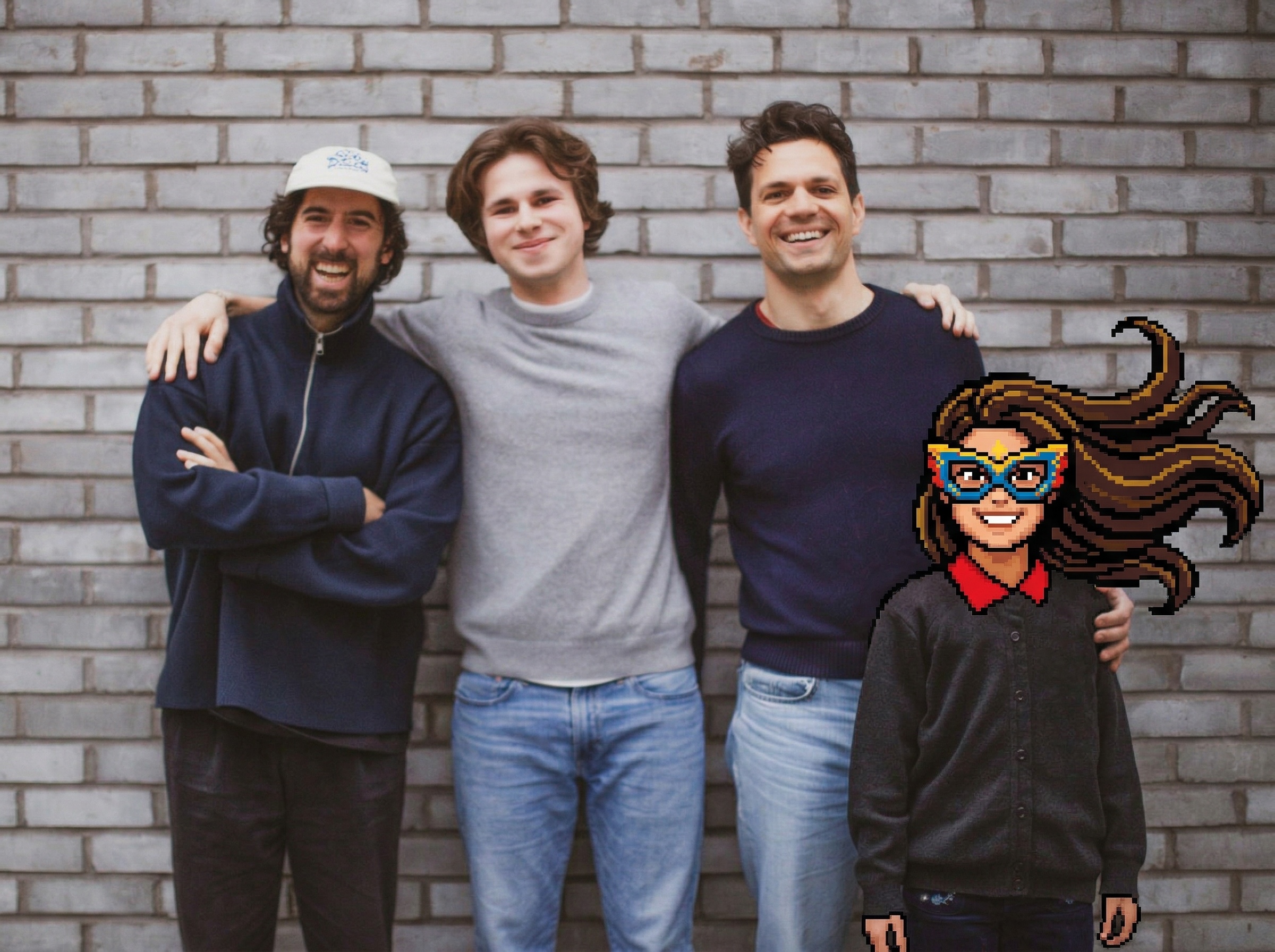
After the community beta opened, Mora shared examples of what children were doing: improvising chess with generated images, exploring marine biology, working on multiplication and investigating a hidden fossil. These were his observations from an early release. They suggest the range he wanted the world to accommodate, with different children finding different reasons to stay curious. His notes from the beta opening.
The map underneath the adventure
Exploration needs somewhere to lead. Marble released an open curriculum map that connected primary-school topics rather than arranging them as an isolated list. Mora credited Boniface-Chang for building it, adding a small joke about his own contribution: “I just made it look pretty.”
He explained the decision to share it as a way for more people building educational products to work from a common foundation. The gesture makes part of the company’s underlying thinking inspectable. Other builders can examine the relationships between ideas instead of having to reconstruct the whole structure from the beginning. His explanation of the release.
The published dataset describes each topic with an approximate age range and evidence of mastery. Connections indicate prerequisites, with a reason for each relationship. In practical terms, a map can help answer two questions: what supports this idea, and what can understanding it make possible next? Those are useful questions for a parent as well as a software builder. Explore the published curriculum.
Marble’s craft system gives another example of structure inside play. A child describes or sketches something to build, revises a blueprint, then chooses resources and tools. A successful result can become an object in the world. The steps ask the child to make decisions along the way. Imagination has to negotiate with materials, which is a familiar inconvenience for anyone who has ever tried to make anything. See the craft system.
Leave room for paint to run
Mora maintains a creative portfolio under the name YO4000. It includes photography, AI short films and a first painting exhibition, Bleu, held at Les Heures Bleues in Paris in December 2024. The Lake is credited as a film he directed and edited. Another experiment, Ten Hour Turbo Noir, advertises the time spent making it in its title. That is one way to prevent a side project from acquiring a committee.
The portfolio provides a useful companion to his company work. Pictures and films have an audience too; their success depends partly on whether someone wants to keep looking. It would be a mistake to turn every independent creative project into a business lesson. Still, they show that his interest in making things extends beyond a product roadmap. Explore his creative work.
In August 2026, he shared a watercolor simulator based on physics research. He described expanding it to 52 pigments, adding salt and alcohol texture effects, and including a code mode that prints function calls beside the painting. He was also working on a version for children inside Marble.
A paint simulation is a particularly apt experiment for this company. The visible activity is making a picture; underneath it sit questions about mixing, texture and how materials behave. A child can begin with a color and reach a question about the mechanism. The tool gives Mora a way to bring a creative interest into the learning world without requiring the user to begin with the mathematics. See the watercolor experiment.
A founder with an edit button
Mora’s public opinions give the product work some sharper edges. He has criticized AI tools that require users to spend time selecting models or consulting elaborate prompting guides. “Good AI should just work,” he wrote. That expectation puts a burden on the builder: the machinery may be complicated, but the person using it should be able to get on with the task. His view on product simplicity.
He is equally impatient with formulaic AI-written posts. In April 2026, he urged people to keep using their own brains and objected to recognizable stock phrasing. It is an interesting position for someone building with generative technology. His criticism concerns the decision to surrender judgment and voice to the tool. The person still has work to do. His post about writing.
For deep tech founders, his advice has been more patient. In January 2026, he warned against comparing research-heavy businesses with rapidly growing AI software companies. He spoke from more than six years in that work and encouraged founders who still had conviction in what they were building. Research can produce its own uncomfortable calendar. His advice to deep tech founders.
Marble now gives him another place to apply those views. Children encounter the result of the engineering, not the organization chart behind it. Their questions can move from a fossil to a painting, or from a river to the people who need its water. Mora’s task is to make the next action inviting enough to try. Sometimes that action involves a blueprint. Sometimes it involves a balloon.
Follow the next question
Explore the work and conversations behind this profile.