The medical bill arrives with the social grace of a parking ticket and the narrative clarity of a tax form. A balance appears. The explanation is thin. The portal asks for a password last used during another geological era. Somewhere, a billing team is waiting for payment while a patient is waiting for an answer. Levon Brutyan has spent much of his career inside this stalemate, first as a lawyer and collections operator, then as the co-founder and CEO of Collectly. His wager is plain: people are more likely to resolve a bill when the process treats them like people.
Brutyan did not arrive at that idea through the usual founder ritual of discovering a large market in a spreadsheet. He studied financial law and risk management, worked on the Russian side of DaimlerChrysler during the companies' separation, practiced law, and learned the mechanics of receivables. At Creditreform Russia, he went from leading debt collection to running the operation and managing work across the CIS and Eastern Europe. He saw the old loop up close: send a letter, wait, send another, call, wait again. As balances aged, the odds of resolution declined. Everyone paid for the delay.
Operational scar tissue
Experience of that sort produces an unfashionable advantage. Brutyan knew which part of collections was genuinely difficult and which part was merely inherited habit. He had managed thousands of cases, trained staff and helped put collection software into practice. The lesson was not that communication should be louder. It was that it should be better timed, more relevant and easier to act on.
Business school brought him to San Francisco. At Hult International Business School, where he completed an MBA in entrepreneurship, he looked at the American collections industry with a familiar operator's eye. The market was enormous, the tools were conservative, and the customer experience seemed to have been designed by committee during a fire drill. He returned to the idea with Maxim Mizotin, a machine-learning specialist and former university classmate. Brutyan carried the workflow knowledge; Mizotin could build the system. Collectly emerged from that pairing in 2016.
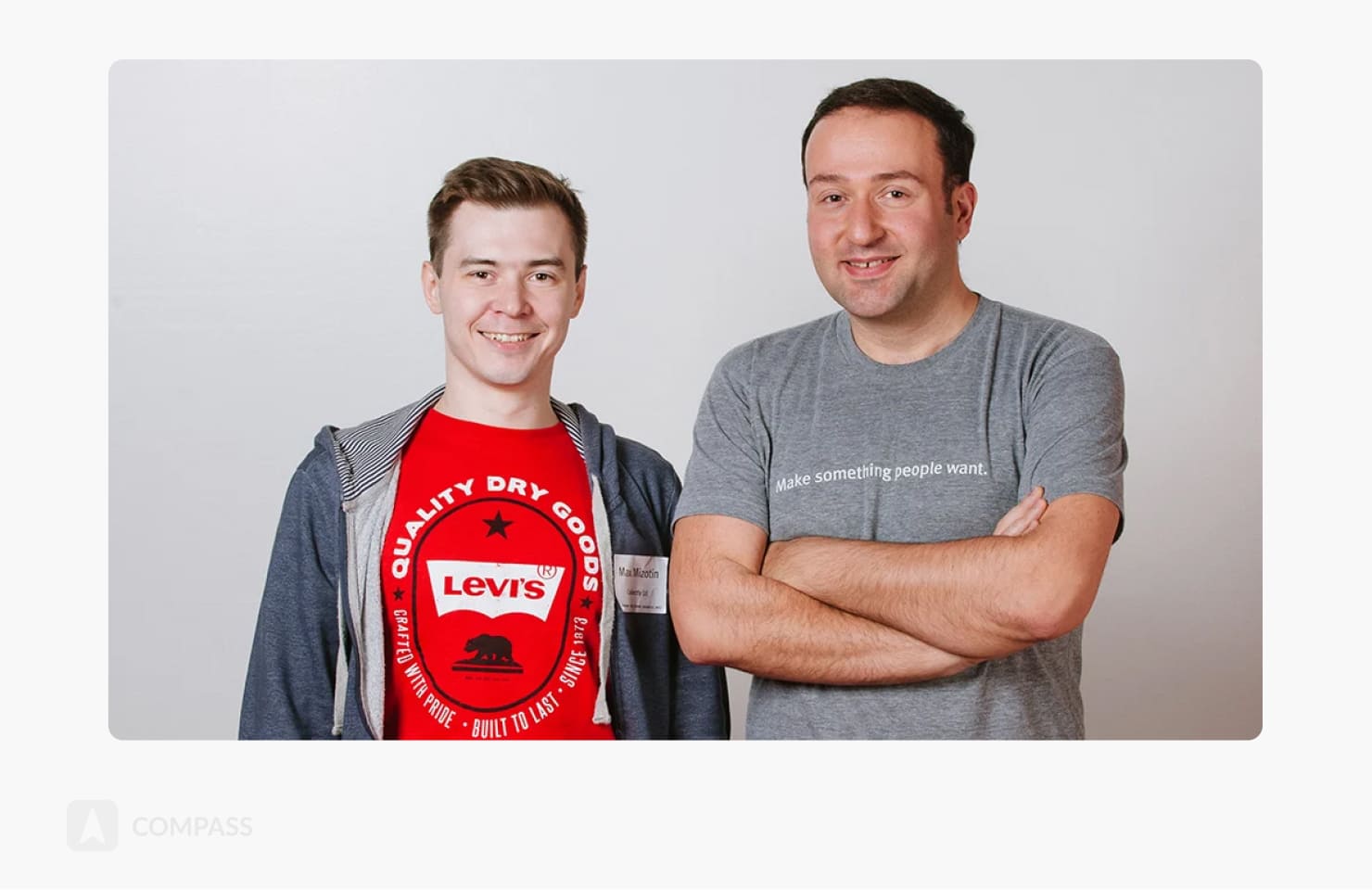
The first version focused on moving debt collection online. Rather than repeat the same outreach cycle for every account, the software could learn from interactions, select a communication channel and offer a payment arrangement appropriate to the situation. The pitch contained a technical layer, but its human logic was easy to recognize: a message noticed at the right time can be more useful than three letters ignored at the wrong time.
“As a founder I understand how difficult it is to push things.”Levon Brutyan, on offering office hours to Armenian startups
The seventh email
Early enterprise selling offered its own comedy. Brutyan and Mizotin approached large banks, believing institutions steeped in collections would immediately grasp the product. Employees often replied only after several messages. The founders calculated that an answer arrived around the seventh email. Interest was lively once contact was made, which raised the obvious question: why not answer the first one? It is the kind of maddening detail that becomes funny only after survival.
Accelerators supplied a different route. Collectly participated in Nordea's program and then entered Y Combinator's Winter 2017 batch. Brutyan regarded YC as an education measured in velocity. He also tried to pass some of it on. While in the program, he offered free YC-style office hours to founders in Armenia, framing the effort as a way to return useful perspective to a community that had fewer direct connections to Silicon Valley. His current YC biography keeps the door open: ask about credit risk, health finance, founder relationships or B2B sales. “Please don't be a stranger and reach out,” it says.
A useful narrowing
Collectly could have remained a general-purpose debt collection product. Instead, it narrowed its focus to healthcare, where the mismatch between institutional workflow and ordinary life is unusually visible. Providers needed to collect balances. Patients needed to know what they owed, why they owed it and what they could do next. Paper statements and office-hour phone queues were not simply inefficient. They made the transaction harder to understand.
The product evolved from chasing overdue accounts into managing a broader patient financial experience. It connected with electronic health record systems, synchronized balances and payment activity, sent outreach through text, email, voice and mail, and made room for self-service plans. The dashboard gave billing teams rules and visibility; the patient-facing layer aimed for a short path from question to action. By the time Sapphire Ventures led Collectly's $29 million Series A in July 2023, the company was engaging more than 300,000 patients daily and had posted threefold year-over-year growth.
The funding story matters less for its number than for what it reveals about Brutyan's method. Investors described him as “heads-down” and inclined to “just get stuff done.” Their personal bonds formed over Golden State Warriors games, food and old-school rock. In another life, Brutyan told them, he would front a rock band rather than a company. It is an appealing alternate timeline, though perhaps the current job uses the same instincts: tempo, repetition, listening and the occasional need to keep everyone from playing a solo at once.
Software learns to pick up the phone
In June 2025, Collectly launched Billie, an AI billing agent available through voice, chat, email and text. It could answer common questions, explain balances, send statements and set up payment plans using data connected to healthcare and insurance systems. Brutyan's phrase for the product was “AI with empathy.” The words make a useful constraint. Efficiency alone can produce a quicker maze. A helpful agent needs to understand context, provide a next action and know when a complicated case requires a person.
The next move pushed the company upstream. In March 2026, Collectly completed the acquisition of Pledge Health, whose software automates pre-service financial workflows such as coverage verification, estimates, clearance and payment setup. Collectly had already worked on what happened after a balance appeared. Pledge added more of what happens before the visit, when missing information and manual portal work can create later confusion.
The combined scope now stretches from eligibility to final payment, across more than 20 electronic health record integrations. Collectly said the platform was trusted by more than 3,000 facilities and had processed over $1 billion in patient payments. The larger ambition is an operating system for the financial journey, one that catches missing details early, keeps systems synchronized and lets staff spend less time pushing information between queues.
“It's AI with empathy, built for healthcare.”Levon Brutyan, introducing Billie in 2025
The dignity of boring problems
Brutyan's biography joins fields that rarely share a founder slide: philosophy contests, financial law, an automotive corporate separation, debt collection, business school, healthcare software and rock music. Yet the connective tissue is surprisingly consistent. He gravitates toward systems in which rules, money and people collide. His 2006 silver medal came from an international philosophy contest at Lomonosov Moscow State University. His legal training centered on financial risk. His operating career dealt with obligations and the delicate business of getting them resolved.
He also appears comfortable giving the supposedly boring problem its due. Billing is not a side quest for the person receiving the bill or the practice waiting for the money. It is a product experience with emotional and financial consequences. The founder's job, in this telling, is not to sprinkle modern vocabulary over an old process. It is to notice the unanswered call, the unclear balance and the seventh email, then remove the reason each one exists.
There is a compact lesson here for operators looking for a company idea. Start with the workflow you know well enough to find irritating in high resolution. Learn which constraints are real. Find a collaborator whose skills complete the picture. Narrow the market until the customer and the problem become specific. Then widen only by following the work itself.
Brutyan once imagined the stage lights of a rock band. He got fluorescent billing offices, API integrations and conference halls instead. The consolation is that rhythm still governs the work. A message at the right time. A question answered before frustration sets in. A payment option that appears when it can be used. Collectly's entire proposition is that the financial part of care can keep time with the people moving through it. For a medical bill, behaving may be less about charm than simply knowing when to speak.