Les Kollegian had a recurring problem in New York: he ran out of clean clothes. Consulting trips stretched beyond the contents of his suitcase. Back in San Diego, his office was his bedroom, where boxer shorts and a T-shirt were an acceptable uniform. East Coast clients required a little more ceremony. On one morning commute, he walked into Kenneth Cole at Grand Central, bought a shirt and tie, changed in the fitting room, and carried on to work.
He became a regular, sometimes visiting three times a week. The staff learned his name. Eventually, they had outfits pressed and waiting, including on mornings when he never arrived. There are expensive workshops about customer experience. Kollegian acquired his lesson with a change of clothes.
In 2003, with a son on the way and his consulting business growing, he gave both the same name: Jacob Tyler. He wanted agency clients to leave feeling as well looked after as he felt leaving that shop. It is a charming origin for a business. It also sets a demanding standard. Remembering a customer is easy to promise. Arranging a whole company around that promise requires considerably more than a good memory.
A designer arrives with a bartender’s education
Kollegian was born in Cambridge, Massachusetts, and moved to Maryland at eleven. He paid his way through private high school by working in a Washington, DC, warehouse. At the University of Maryland, he worked as a waiter and bartender, graduating in 1991. Graduate study followed, along with work as a production artist. He earned a master’s in communications design at the University of Baltimore.
The route into agency leadership passed through other agencies and progressively larger responsibilities. A 1995 visit to San Diego persuaded him to save for a move to Southern California. At Echolink Interactive, he became creative director, working on campaigns for clients including Intel, Qualcomm, America Online and Fox Television. By late 1999, he was ready to work independently. The agency dates its founding to 2000.
His first portfolio lived under the name Vivid Commerce. It was a practical label for someone combining graphic design with interactive work. Jacob Tyler would make the enterprise more personal. The name carried a family connection; the service ambition came from those New York mornings.
The full office and the free lunch
One early pitch produced a story that deserves its own catering invoice. The YMCA wanted reassurance that this small agency could handle its business. Kollegian invited friends to work in the office for two hours in exchange for lunch. About thirty arrived with laptops. The room looked busy. The agency won the account.
He tells the episode as an improvised answer to a client’s fixation on size. It also reveals the peculiar theatre of selling creative work. The buyer wanted evidence of capacity; the agency supplied the appearance of it. Kollegian says the work went well. Still, the anecdote becomes more interesting beside his later insistence that headcount is a poor substitute for capability.
His preferred relationship with clients is direct, with access to the people doing the work. His preferred conversation can be blunt. “We are not afraid to tell you when you have spinach caught in your teeth,” he has said. That is a fairly efficient description of creative criticism: potentially embarrassing, ideally useful, and best delivered before the next meeting.
When growth began to look familiar
Kollegian had already seen a version of the agency he wanted to avoid. In 1998, while working as a creative director, he heard a company president announce plans to reach 180 employees within six months. He wondered why the ambition could not be to triple profit while maintaining a manageable staff.
That recollection gives his later troubles some bite. Knowing the danger did not grant immunity. By 2012, Jacob Tyler had more than thirty-five employees and clients around the country. Kollegian later acknowledged that he had tried to cover too many needs with too many kinds of positions. Work suffered. Accounts departed, some taking their work inside their own organizations. Employees left or were laid off.
He described the pain in terms broader than the loss of his own dream: other people’s lives had been disrupted. The familiar founder narrative would hurry through this passage on its way to recovery. Kollegian’s account lingers. He put the period of rethinking at roughly five years. Rebuilding an agency appears to have required more patience than filling an office for an afternoon.
“I feel unsuccessful.”
Les Kollegian, answering a question about himself in 2018
The admission is unusually plain for a person whose business involves presentation. It leaves room for an uncomfortable possibility: the signs that persuade other people a company has arrived may offer its founder very little reassurance.
Hiring as an act of design
His answer to those problems became increasingly specific. In 2019, he described a staffing structure with a permanent core handling such work as strategy, project management and client service, joined by specialists as projects required them. He used “hybrid” to describe that combination of people. The term concerned how the agency assembled expertise.
He wanted experienced specialists, clear accountability and the flexibility to match the work. Video calls made collaboration possible across locations. The business could draw on people beyond its own payroll without asking clients to fund an internal position for every conceivable assignment. His argument was that a smaller core could still support a broad range of skills.
He had also written about the false economy of hurried recruitment. A vacancy becomes urgent, a project lands, and the temptation is to put someone in the chair. The cost arrives later, in supervision, revisions and mistakes. His prescription was to keep a pipeline of candidates and take the time to assess them. He also urged owners to examine prospective clients carefully. A customer with money can still consume more time than the work justifies.
These are operational choices with a designer’s consequence: they determine what the customer experiences. A beautiful presentation cannot rescue a working relationship in which nobody has time, the wrong person owns the problem, or the agreement means something different to each side.
Keep continuity close. Bring the needed skills to the work.
The brand has to survive a Tuesday
In a 2013 essay co-written with Charles Van Vechten, Kollegian argued that companies should examine how their own owners, managers and employees understand the brand. The internal audience has to embody its promises before the external audience can believe them. He treated the exercise as a matter of operations as well as marketing.
This makes the clothing-store story more useful than a pleasant anecdote. The pressed shirt was the result of someone paying attention, remembering a preference and preparing for a likely need. Those actions gave the brand its meaning. For an agency, the equivalent might happen in a revision meeting or a difficult conversation about scope. The ordinary encounters are where the promise accumulates evidence.
His career has included helping other people turn ideas into publications, too. College Magazine founder Amanda Nachman partnered with him in 2008. The publication went on to win the University of Maryland’s Cupid’s Cup business competition in 2009, sponsored by Under Armour founder Kevin Plank. It is a connection that places him beside another entrepreneur early in a company’s development, working beyond the boundaries of a conventional client list.
Someone else at the whiteboard
Kollegian joined Entrepreneurs’ Organization San Diego in 2011. He credits the relationships there with helping him through difficult stretches of ownership. When he wanted to walk away, fellow members made time for urgent meetings and worked through possible solutions with him. The founder who sells expertise has needed a room in which he could ask for it.
“Relationships are everything. That’s the real ROI.” The line comes from his 2025 conversation about EO. He favors making time for individual conversations and lunch, where a relationship can deepen beyond a brief encounter at an event. There is a practical continuity here with the early referrals that brought consulting work his way. People were part of the business infrastructure from the beginning.
Sharing responsibility inside the agency has a concrete example, too. In February 2022, Jacob Tyler named Tom McFadden president. McFadden had joined in 2012 and worked through roles in copywriting, messaging, creative leadership and operations. Kollegian pointed to his colleague’s knowledge and leadership as reasons for the appointment. The decision put someone with years inside the business in a position to help lead its next stage.
Still taking a seat at the table
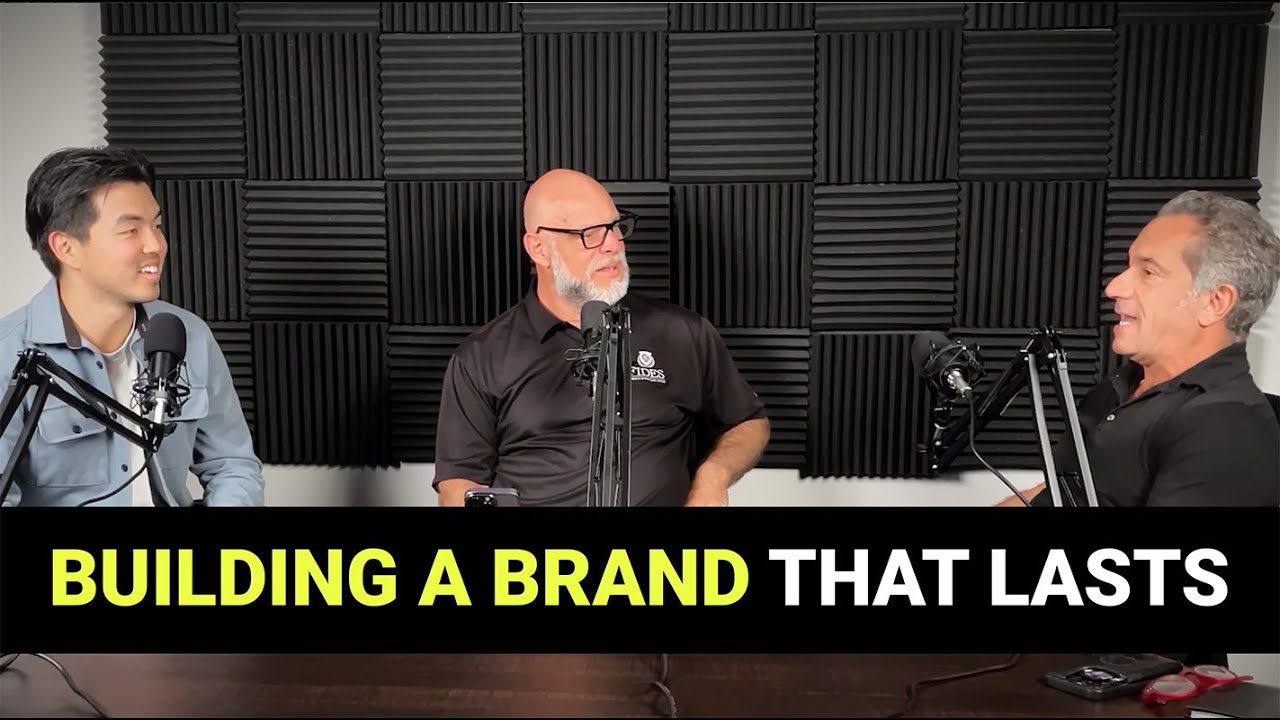
By August 2026, Kollegian was on the questioning side of the microphone. He co-hosted a Makers & Founders conversation with Mark Gallo and World Amenities founder Paul Hodge. The episode followed Hodge’s route from acting into hospitality supplies, including the practical problems of distribution and building a management team. Kollegian’s interest in how other owners make a business work now has an outlet.
There are quieter outlets for his creativity. Artfully lists him on its advisory board and describes him as an avid painter and aspiring drummer. The word aspiring is a useful detail. It allows a chief executive to be a beginner at something, with no obligation to turn the activity into a case study.
Back at Jacob Tyler, the service promise remains an everyday obligation. Websites, campaigns and identities are finished, reviewed and delivered; a working relationship has to be renewed in the next interaction. His story keeps returning to the people who make those interactions possible: a shop assistant, a colleague, a friend willing to sit down and work through a problem. The company bears his son’s name. The lesson that helped shape it belonged to the people who remembered his.