Laura Evans Manatos had a fairly inconvenient problem: she had achieved the career she wanted. The ambition dated to seventh grade. The work had taken her from California newsrooms to Washington, through years of live reporting and an anchor chair at Fox5DC. Leaving meant reconsidering a decision she had been making, with considerable determination, since childhood. There is no particularly tidy place on a résumé for that.
In 2017, she left television news and founded Laura Evans Media. She wanted more attention paid to people working on solutions. Today, she is the firm’s founder, president and CEO, applying a reporter’s knowledge of audiences to communications work. The change involved a new business and a different relationship with the news. It also gave her a choice over the stories she would spend her days helping to tell.
Her biography contains the familiar markers of a broadcasting career: two Emmys, five nominations, assignments that required explaining events while they were still unfolding. Her next chapter poses a less familiar question. After learning how public attention is allocated, what do you choose to do with that knowledge? For Manatos, the answer has led toward organizations whose work she believes deserves a larger audience.
The seventh-grader with a deadline
She grew up in the San Francisco Bay Area and pursued broadcasting through internships and entry-level work. Her first internship was at KTVU in the Oakland and San Francisco market. After college came experience involving CNN, NPR and NBC’s coverage of the Barcelona Summer Olympics. Each placement brought her closer to the work she had already decided she wanted to do.
Her first on-air anchor and reporter job was at KIEM, the NBC affiliate in Eureka, California. Then came KEYT, the ABC affiliate in Santa Barbara, followed by Washington. These are useful details in a career often summarized by its most visible job. Before the familiar face on a capital-city newscast came a series of smaller assignments, applications and moves. The ambition required practical errands.
- EurekaKIEM · First on-air role
- Santa BarbaraKEYT · Anchor & reporter
- WashingtonFox5DC · 18 years
- 2017 onwardLaura Evans Media · Founder
At Fox5DC, where she spent 18 years, she anchored the 5 p.m. news. Her field assignments included presidential inaugurations, political conventions, the attack on the Pentagon on September 11 and the Washington sniper attacks. These were stories with immediate consequences for the people watching. An anchor’s responsibility included giving events a comprehensible shape without the luxury of waiting for a historian’s conclusion.
Over time, she wanted more space for constructive responses to problems. The people who interested her included those who had encountered adversity and then set about doing something useful for others. That preference gradually became a reason to reconsider the job itself. By the time she left, the distinction between the career she had pursued and the work she wanted next had become difficult to ignore.
Leaving before the next title arrived
Manatos has described the departure as a leap made before a next step was secured. The phrase is memorable because television careers usually arrive with a conspicuous structure: a station, a slot, an audience, a contract. Founding a company requires assembling a different structure, including several responsibilities that have never appeared on a teleprompter. The certainty of an early ambition does not supply a business plan.
“I would call this an evolved career choice.”Laura Evans Manatos
The work that followed kept much of her original craft. She still needed to find the person inside a complicated subject, decide what mattered, and explain why someone should care. But she could choose the organizations she worked with and help develop stories before they reached a journalist. Her professional experience became part of the service rather than something she had to leave behind with the desk.
Other journalists joined her. In a January 2021 interview, she described working with eight former journalists. By 2024, she reported a team of 15. Those dated snapshots show a business growing beyond its founder’s individual capacity. They also suggest why the newsroom remained such a useful recruiting ground: colleagues already understood the pressures, habits and questions of the people they would be approaching.
The people now listed on the firm’s team page work across strategy, writing, outreach, social media and production. Jennifer Davis is COO, executive writer and director of strategy; Daniela Sicuranza is chief creative officer and senior director of outreach. For a business carrying its founder’s name, the list makes an essential point visible. Delivery depends on a group of people, with different assignments, doing the work together.
An invitation to the opera
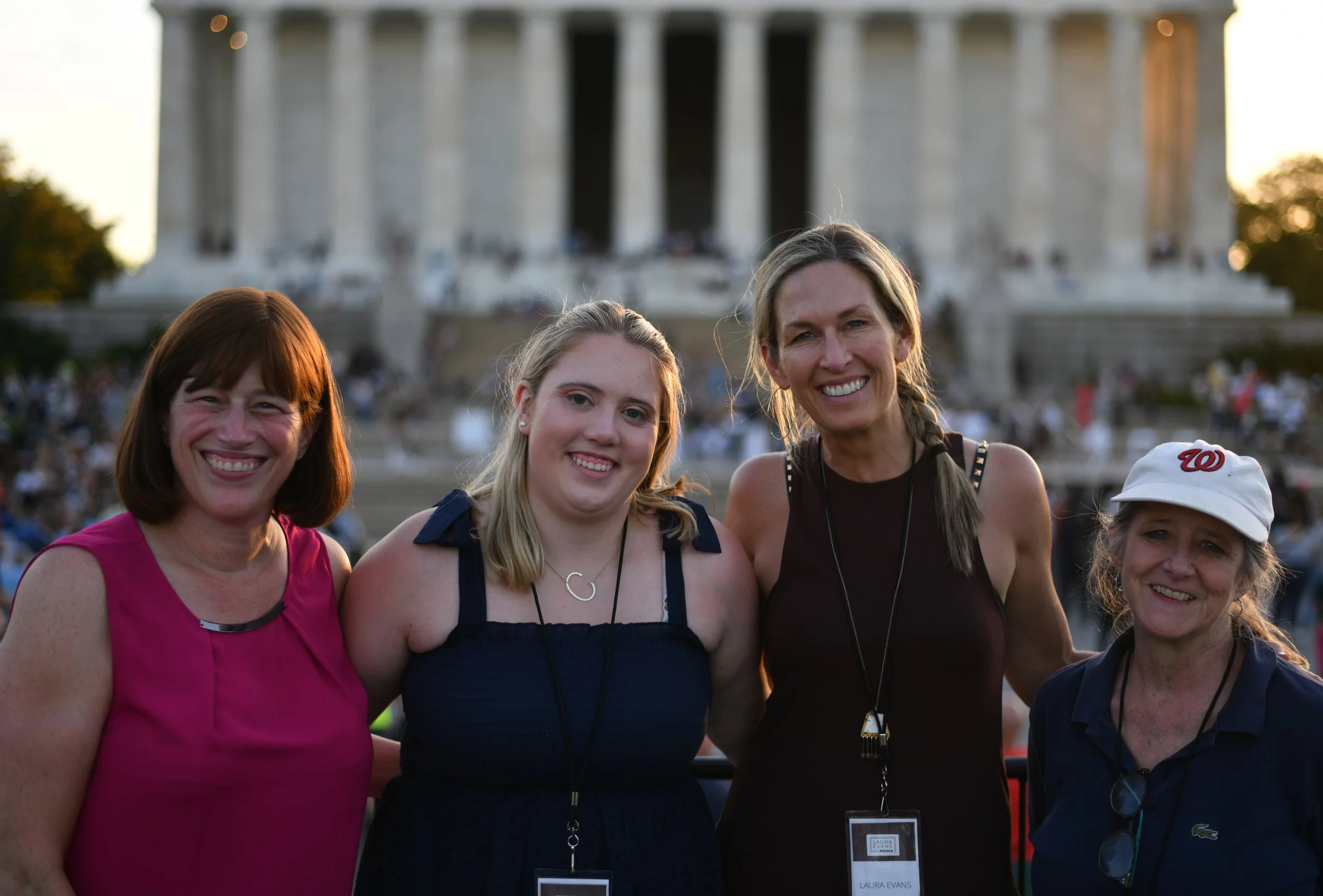
One example takes the story outside, beside the Lincoln Memorial. Opera Italiana is in the Air presents free, informal performances, offering an entry to music that can carry a formidable reputation for ceremony. The communications problem is appealingly concrete: how do you persuade people that an experience they may consider distant or intimidating is open to them?
Laura Evans Media worked on the organization’s narrative, media outreach, social content and video. Its campaign included press coordination in Washington and New York, along with a mission film that could continue working after the concert ended. A performance has a fixed time and place. A film can introduce the idea to a potential sponsor or a future attendee long afterward.
The firm also describes work for Lever for Change, aimed at reaching beyond specialist philanthropy publications. That assignment combined executive preparation, messaging and content with media and speaking opportunities. The audience question changes from client to client. Someone already immersed in philanthropy needs a different introduction from someone encountering an organization for the first time. Recognizing that difference is part of the craft.
For USA for UNHCR’s Building Better Futures campaign, the firm’s work included spokesperson training and a launch at the Annual Concordia Summit. Here again, the assignment crossed formats: public remarks, executive profiles, an event and outreach. A useful story needs to survive those changes of setting. The person speaking should sound recognizable whether the audience is in a room or reading on a screen.
Taking the microphone somewhere else
Manatos’s work also extends onto the stage. Hosting and moderation draw on skills an anchor practices continually: listening, keeping a discussion moving and helping an audience follow the conversation. Concordia’s September 25, 2024 summit program listed her as master of ceremonies. The microphone had a different venue, while the job still required a sense of timing and an awareness of the people listening.
Mentoring offers another use for that experience. She was among the media professionals participating in the 2025 Heritage America program, which introduced Greek-American young people to leaders across public life and business. She has also taken part in a public-speaking discussion with fellow journalist John Metaxas. The experience accumulated in a career becomes something another person can ask questions about, test against their own ambitions and use.
Her civic commitments include Vital Voices and the Washington Oxi Day Foundation. In February 2026, she joined a USA for UNHCR delegation at Kigali Independent University in Rwanda. The visit supported refugee access to higher education and the DAFI scholarship program. Participants included Princess Marie-Chantal of Greece, Jessica de Rothschild, Alane Adams, Rachael Jarosh and USA for UNHCR’s Suzanne Ehlers.
The university discussion included possibilities for telling the stories of scholarship students and alumni through audiovisual work. That detail connects the visit to her professional interests without turning a delegation into a personal achievement claim. Education programs need support; people considering that support need to understand what the programs make possible. Students’ own accounts can help make that connection concrete.
A goddess, a ledger and some cookies
At the 2025 Gabby Awards in New York, Manatos was one of 20 women honored by the Greek America Foundation. Each honoree was associated with a figure from Greek antiquity. Hers was Eupheme, the goddess of speaking well and kindly. For someone whose work concerns what gets said, how it is said and who gets heard, the organizers had found a pleasantly specific match.
There are more ordinary details, too. She has three children with her husband, Mike. In 2021, she spoke about enjoying travel and entertaining, owning a horse and making chocolate chip cookies. She also admitted that the accounting side of owning a company was less appealing than the stories. Even a career with a mythological footnote still comes with bookkeeping.
There is a practical tension in work built around constructive stories. A good intention does not automatically make an account interesting, and a worthy organization still has to explain itself clearly. Manatos’s professional background gives that tension a place in the narrative. She has occupied the chair from which a pitch is considered, questioned and sometimes passed over. The move into communications puts her experience at the service of people preparing for that encounter. The work continues before the interview begins and after it ends, in the choices about what to explain, what to show and which audience needs to hear it.
The thread through her working life is an interest in people. In the newsroom, that meant understanding what had happened and helping viewers understand it. In her company, it means helping people explain the work they want others to notice. The seventh-grader’s ambition remains legible in both. What changed was the assignment she was willing to accept, and eventually the assignment she chose to create.