There is a particular pleasure in a press clipping. It has a masthead, a date and the reassuring permanence of ink, even when the ink is pixels. Someone can paste it into a report. Someone else can call it a win. West End Strategy Team, a Washington communications firm usually shortened to WEST, is interested in the less photogenic moment that follows. Did the lawmaker read it? Did a donor understand it? Did a patient learn where care remained available? Did anyone with the power to act actually move?
That distinction is the firm’s product. Matt Dorf founded WEST in 2013 after a career that ran through journalism, politics, government and advocacy. His compact method is called Goals-Audience-Tactics. The punctuation is practically the business plan. First decide what should change. Then identify who can change it. Only then choose the press conference, op-ed, webinar, briefing, social post or reporter call.
The order is the operating system
A newsroom hired by people with something at stake
WEST’s customers are not the usual parade of detergent, sneakers and software. They are nonprofits, foundations, coalitions, think tanks, museums, universities, international NGOs and socially responsible businesses. The public client list includes Planned Parenthood of Greater Ohio, PEN America, Physicians for Human Rights, Emerging Public Leaders and the NYU Stern Center for Business and Human Rights. Their problems tend to arrive with an adversary, a deadline or both: a court ruling, a book ban, a public-health emergency, a reputational threat, a research report that deserves more readers than most research reports receive.
The firm supplies the missing newsroom. Its staff develop messages, pitch reporters, train spokespeople, write statements and op-eds, prepare toolkits, manage events, make digital content, map crises and turn an institution’s scattered experiences into a story bank. That last item is easy to underestimate. An organization may contain a hundred persuasive human stories and still be unable to locate the right one on Tuesday afternoon. A story bank makes memory operational.
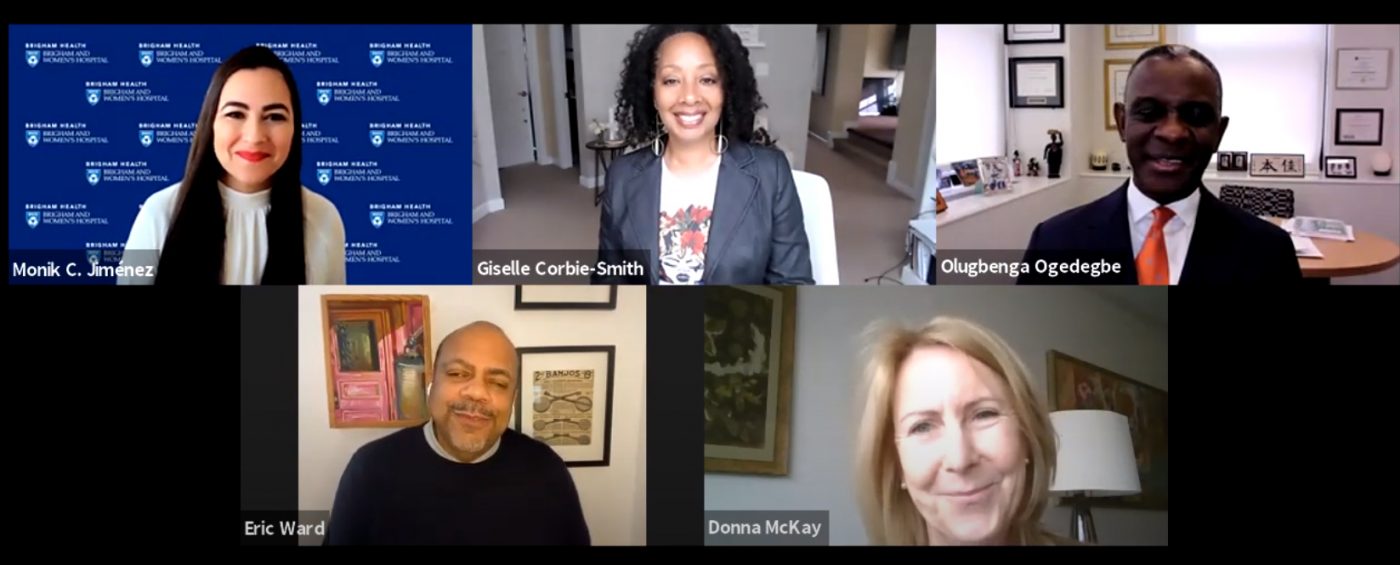
During the pandemic, WEST and Physicians for Human Rights built 47 webinars around health equity, detention, policing, vaccine access and the protection of health workers. WEST helped select topics and speakers, prepared run-of-show documents and moderator questions, rehearsed participants, ran technical logistics and promoted each conversation. More than 20,000 people registered. The speakers included a former director of the U.S. Centers for Disease Control and Prevention and a chief scientist of the World Health Organization.
The first thing to fail is the sequence
Communications teams are often handed a tactic disguised as a strategy: “We need a video.” “Get this in the Times.” “Make it go viral.” In WEST’s framework, that is the first failure. The channel has arrived before the audience and the audience before the goal. A national headline can be useless when five state legislators are the only people who matter. A small local story can be decisive when it lands in the correct district.
“Success is measured by whether you have reached the audiences necessary to achieve your goals.”West End Strategy Team
The case that best explains the value of preparation came in June 2022. WEST worked with Planned Parenthood of Greater Ohio before the Supreme Court’s Dobbs ruling, drafting statements, commentary, talking points and activist toolkits for several possible outcomes. When the decision arrived, the machinery was already warm. Within three hours, the team hosted a briefing attended by more than 50 local and national reporters. Speed was the visible achievement. Advance agreement was the hidden one.
This is also the answer to what changed the team’s mind: not a documented corporate pivot, but a repeated operating observation. Media attention is not scarce in the same way preparedness is scarce. The firm’s case studies keep returning to the work before the moment - scenario planning, speaker rehearsal, message discipline, audience selection - because the news cycle punishes organizations that attempt to invent their position while a reporter waits.
What the work costs, and what the number means
WEST does not publish a rate card, and agency work rarely fits tidily into one. Public filings do provide two useful points of scale. Human Rights First reported paying West End Strategy Team $132,000 for strategic communications in 2021 and $156,000 in 2023. Those numbers describe one client relationship, not an industry menu. They cannot tell us the hours, team size or scope. They do show that this is substantial institutional work, bought as an ongoing capability rather than a clever afternoon of copywriting.
Human Rights First’s reported 2023 payment to WEST for strategic communications. It is a disclosed engagement figure, not a standard package price.
The business model is conventional professional services: clients pay for strategy and execution, likely through projects and retainers. The positioning is less conventional. WEST openly filters for clients whose missions it believes in and focuses on civil rights, reproductive freedom, immigration, racial justice, gun-violence prevention, public health, democracy and human rights. That affinity can create fluency and trust. It also defines the conditions in which the firm is a poor fit. A client seeking politically neutral consumer promotion, a self-serve publicity product or guaranteed positive coverage is shopping for something else.
The useful parts are gloriously copyable
An organization does not need a Washington agency to borrow the mechanics. It needs the discipline to do the uncelebrated work before public attention arrives. WEST’s examples suggest five practices that travel well:
- Write the outcome in plain English. “Raise awareness” is fog. Name the policy, behavior, donation or membership change you want.
- Choose a human audience. “The public” cannot open an email or vote in committee. Identify the people with a plausible route to action.
- Prepare branches, not one prediction. Draft language for several outcomes so the team can respond to events rather than debate them from scratch.
- Rehearse the voice. Expertise does not automatically become a good interview. Train speakers without sanding away the experience that makes them credible.
- Reuse the story. A strong account can live in a speech, op-ed, annual report, donor note and social post if it is captured, permissioned and indexed.
These practices fail under predictable conditions. If leaders cannot agree on the goal, no message can repair the disagreement. If the intended audience has no power over the outcome, precision becomes theater. If an organization lacks trust with the people whose stories it wants to tell, a story bank becomes extraction. And if success is defined as favorable coverage at any cost, a values-led firm that sometimes counsels restraint will feel frustratingly miscast.
A small firm in the gap between right and heard
Washington has no shortage of public-affairs shops. Large agencies sell scale, political firms sell access and digital firms sell targeting. WEST sits in a narrower lane: progressive issue expertise paired with the habits of a newsroom and the services of a full communications department. Its team comes from government, campaigns, journalism, nonprofits, agencies and business. The firm has operated beyond Washington through New York and Chicago leadership, and its client work has reached audiences from Ohio to Ghana, Liberia and Kenya.
The company’s most telling office detail may be architectural. When WEST moved into its first permanent headquarters in 2019, the designers used glass-lined offices and a collaborative layout inspired by Dorf’s nostalgia for newsrooms. Newsrooms are noisy factories for answering three questions quickly: What happened? Why does it matter? Who needs to know? WEST added a fourth: What should happen next?
That question keeps the clip from becoming the conclusion. A headline is evidence that a message escaped the building. It is not evidence that it arrived where it could do something. WEST’s entire proposition lives in that small, consequential distance.