The internship that changed Maria J. Rodriguez’s life came with an awkward condition: it did not pay. She was studying finance at George Washington University, with parents who understood work as something that helped keep a household going. An invitation to work for nothing required an explanation. The university supplied one: academic credit. Six credits helped make the arrangement acceptable, and a young woman preparing for a career with numbers found herself learning what words could do.
There is a temptation to hurry past this part of a founder’s biography. The internship becomes a charming prelude to the company, the awards and the board appointments. Rodriguez has kept returning to it. Before the career could change, the opportunity had to be possible. That distinction would eventually become something she could put money behind.
Six credits, and a different future
Her first professional map had seemed fairly legible. A supervisor at the nonprofit where she worked part time suggested public relations, a field she had not seriously considered. He helped connect her to an internship. At Community Media, a small nonprofit PR firm, she encountered communications organized around social causes. Finance lost its claim on her timetable. She switched her focus to marketing and added classes related to journalism and PR.
Her parents had come from Spain by way of Venezuela. They met while working for a Colombian ambassador there, then moved to the United States when his posting changed. Rodriguez was born in Washington. Education and hard work carried considerable weight in the family. The unpaid placement tested how a promising new profession fitted into those older, thoroughly practical expectations.
The detail she later used to explain the near miss was admirably economical: Because it wasn’t paid.
Four words puncture quite a few speeches about ambition. An opportunity can be fascinating, worthwhile and financially out of reach at the same time. Her parents’ reservations belonged in the story because they identified a condition that enthusiasm could not settle.
“Because it wasn’t paid.”
Maria J. Rodriguez, on the internship she almost missed
A company with more than one cause
In 1987, at 27, Rodriguez co-founded Vanguard Communications. She eventually became its sole owner and continues as president and CEO. The firm gave her a way to work across causes rather than choose a single organization’s mission. Nonprofits, foundations, associations and government agencies became the constituency for a business built around public communication.
That choice brought a particular business problem. A cause may be urgent without having a large communications budget. Its language may be familiar to staff and baffling to everyone else. Rodriguez’s firm has worked in the space between an organization’s expertise and an audience’s attention, turning complicated subjects into messages people can use.
Environmental work gave that purpose a public stage. Her career has included promoting Earth Day 1990 and helping Willie Nelson and Farm Aid draw attention to family farmers. A concert brings the music; explaining why the farmer matters requires another kind of arrangement. The communications work connects the occasion to the issue that brought everyone together.
Vanguard’s own workplace also became part of the experiment. In 2006, Working Mother selected it among 25 small companies recognized for family-friendly practices. Its arrangements included bringing babies to work and flexibility around school closures. These were concrete responses to the fact that employees have lives that occasionally refuse to consult the production schedule.
The invitation comes before the message
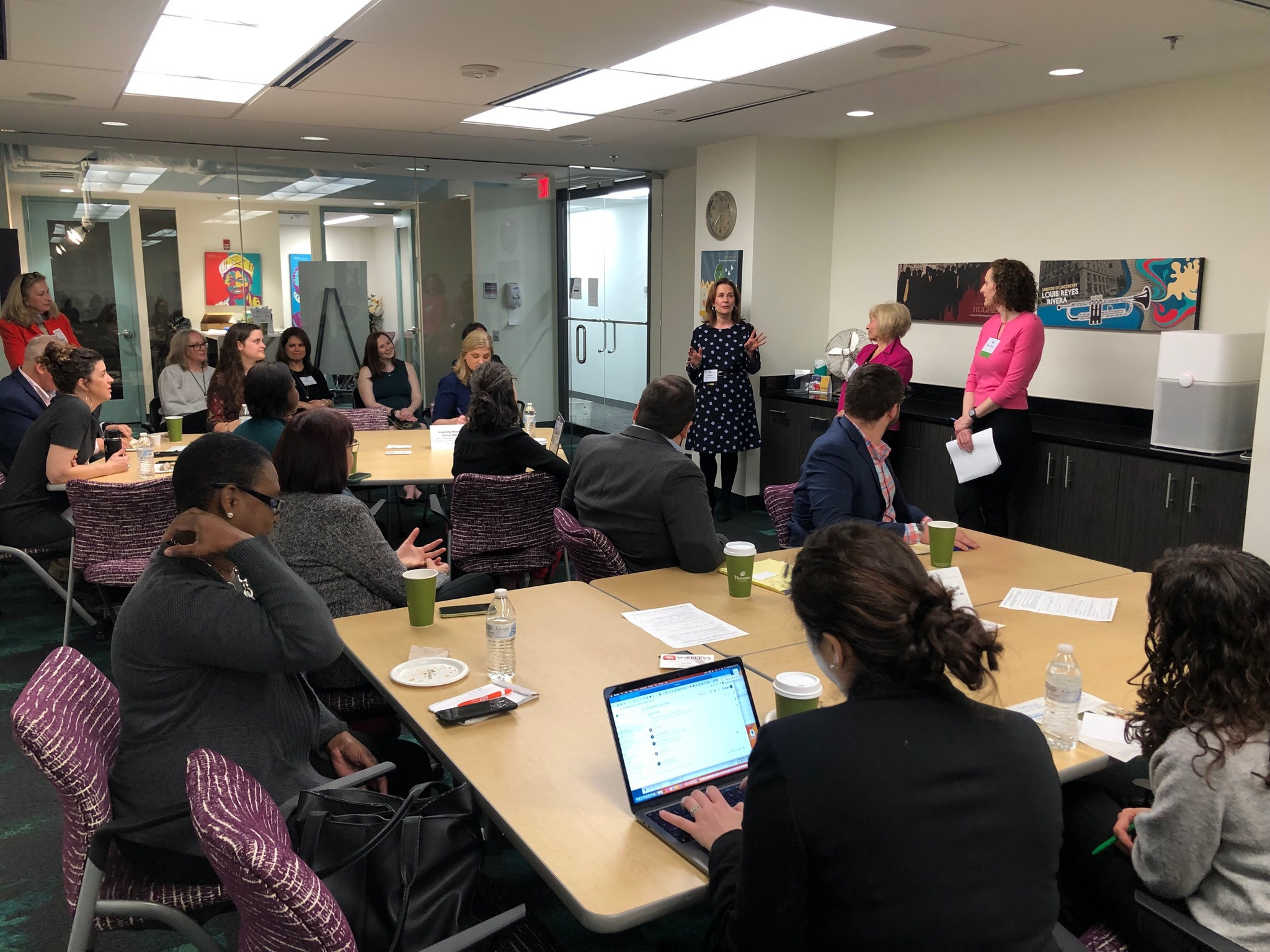
Rodriguez’s view of the work puts an obligation on the person preparing the campaign: bring the people concerned into its creation. In her writing, she invokes the principle nothing about us without us.
Knowing a subject professionally does not grant possession of someone else’s experience. Participation needs to happen early enough to affect decisions.
That can complicate a tidy plan. Audiences may use different words, care about different obstacles or object to an image everyone in the office liked. Listening gives those differences somewhere useful to go. Otherwise, the discovery arrives after publication, when revision is more public and usually more expensive.
She has made a similarly specific argument about communicating in Spanish. Translating English copy leaves the original assumptions in charge. In a 2023 interview, she described wanting campaigns for Hispanic audiences to begin in Spanish. She also stressed differences within Spanish-speaking communities, including vocabulary and the images people recognize as belonging to their own lives.
Her advice about staffing follows the same attention to individuals. In a 2022 conversation with Doug Simon, she cautioned against assuming that someone’s identity makes them the automatic choice to lead a particular project. Ask about the person’s interests. A colleague deserves a conversation before becoming the office’s designated representative of an entire community.
Invite the audience
Let participation affect decisions.
Start with the language
Consider culture as well as words.
Ask the colleague
Find out what they want to contribute.
The anniversary that paid someone else
In 2017, Vanguard’s 30th anniversary became the occasion for Comunicadores for the Future, developed with GW’s Cisneros Hispanic Leadership Institute. Rodriguez returned to the university that had helped make her own introduction to PR possible. This time, payment was built into the proposition.
The program puts students into communications roles at nonprofit organizations, with Vanguard providing mentoring and professional development. Its design has also included housing assistance, acknowledging that a summer placement in the Washington area brings expenses beyond the work itself. Students need somewhere to live while acquiring the experience employers will later ask them to possess.
By October 2024, 38 students had participated. That year, the program earned Vanguard a PR Daily Agency Impact Award. The number represents a recorded milestone, rather than a prediction about everyone’s future. Each placement still has to become useful work, and the students’ accounts make that work visible.
Evelyn Ramirez, reflecting on her experience a year later, described making videos about Latinas in Girl Scouts Nation’s Capital. The organization wanted to reach more Latinas and provide Spanish-language resources. She stayed involved after the summer through a part-time role, then carried lessons about personal storytelling into work with young people elsewhere.
In July 2026, intern Daniella Meza described a placement at The Phillips Collection. She helped with events and community outreach, and accompanied a colleague interviewing local artists. She connected those conversations with what she had learned in anthropology: understanding a person’s circumstances begins with listening. The internship had given a classroom skill a public setting.
- 1987Rodriguez co-founds Vanguard Communications.
- 2017Comunicadores for the Future begins.
- 202438 students served by October; the program receives an Agency Impact Award.
- 2026A new cohort takes on nonprofit communications assignments.
After the award, the homework
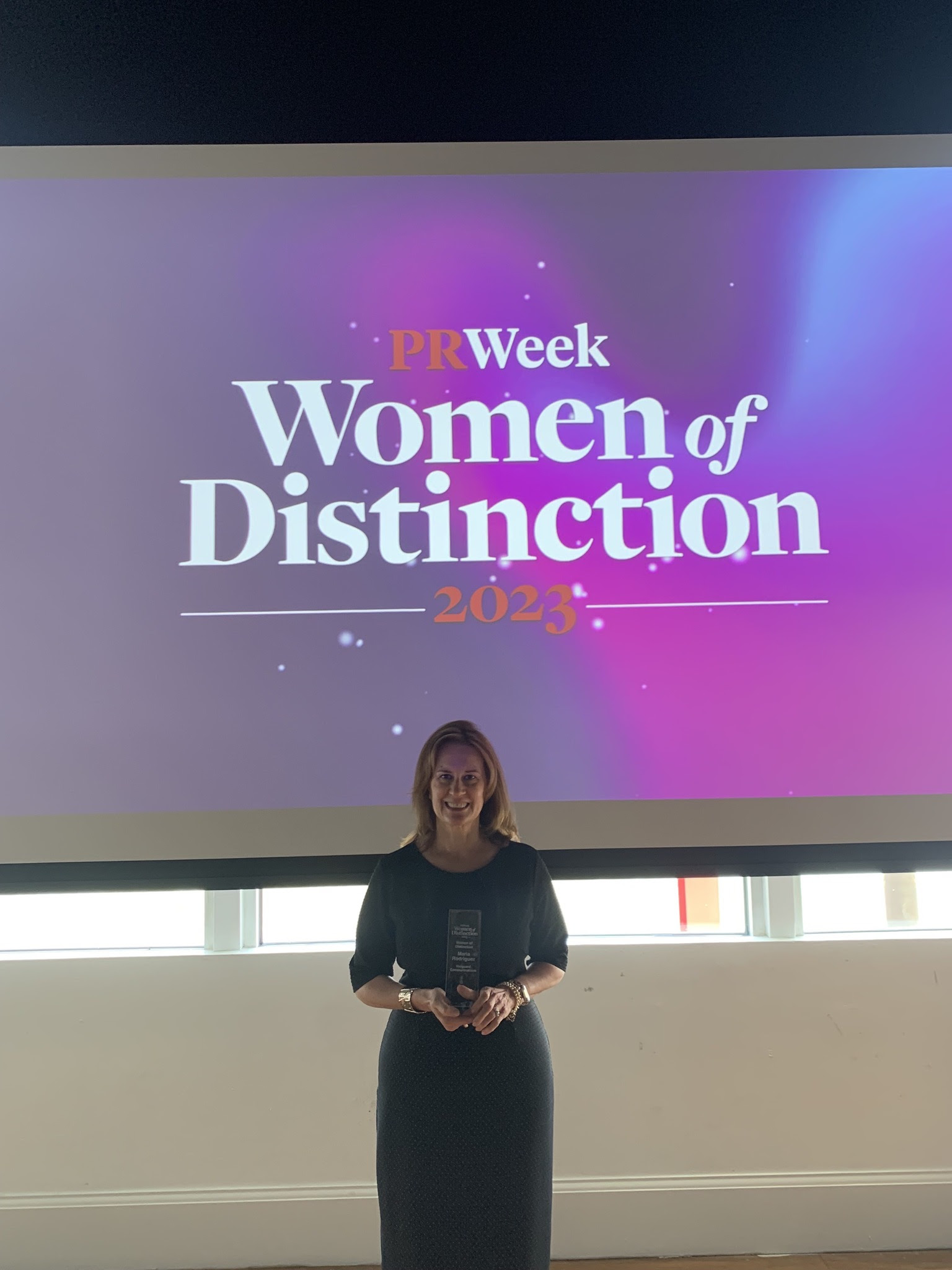
Recognition has accumulated along Rodriguez’s own route: the National Capital Public Relations Hall of Fame in 2016, the PR News Hall of Fame in 2019, PRWeek Women of Distinction in 2023. The following year, the Washington Business Journal included her among its Women Who Mean Business honorees.
Awards make convenient punctuation. Running the firm supplies the next sentence. In February 2026, Vanguard became a certified B Corporation. Rodriguez later described a process that was more demanding than she had anticipated, requiring a close examination of policies, practices and assumptions. An established company was being asked to show its workings.
Her account gives the certification a practical consequence: room to work alongside other B Corps and businesses whose values align with the firm’s purpose. It also sets an ongoing expectation of accountability. After nearly four decades, she was still describing changes the organization needed to consider, rather than treating its age as sufficient proof of its intentions.
Her responsibilities extend beyond the firm. She has served as treasurer of Girl Scouts Nation’s Capital and sits on the National Press Club’s Board of Governors. In her candidacy statement for the club, she discussed membership, financial sustainability and press freedom. The entrepreneur’s concerns and the institution’s responsibilities occupied the same paragraph.
Her statement also acknowledged the less photogenic work of keeping an organization going: economic downturns, restructuring and the arrival of artificial intelligence. Those experiences sit alongside the campaign successes. For someone building a communications career, they offer another useful part of the picture. Creative work needs an organization capable of sustaining it, with decisions about resources as well as ideas. The founder who funds a student’s first placement also has to keep thinking about the business that makes the placement possible. That responsibility continues well beyond the day an award is presented.
A life with the volume turned up
Outside the work, Rodriguez likes cooking for friends and family and going to rock concerts, particularly Bruce Springsteen’s. Her mother cooked at embassies; her father kept records playing. Childhood summers in Galicia included helping her grandmother with vegetables and farm animals and carrying water from a mountain spring. The village house had no running water. She remembers those summers as lessons in resilience and community.
Her appetite for conversation has professional company. Kate Perrin, a longtime collaborator and mentor, encouraged her to join the International Women’s Forum. Rodriguez has enjoyed its book club and the chance to learn from women whose careers differ from her own. Podcasts accompany walks and dinner preparation. There is evidently room for another voice in the kitchen.
The habit suits the career. Someone once looked at a finance student and suggested a possibility she had not seen. Rodriguez followed it, built a business around it, and eventually helped fund a route for students making their own discoveries. A first chance can be an accident of meeting the right person. She has spent part of her working life making the next chance more deliberate.
Keep the conversation going
- Vanguard Communications Her firm and its work
- Maria Rodriguez on LinkedIn Professional updates
- Rodriguez’s essays Writing on communications and running a firm
- Comunicadores for the Future The program and its participants
- Watch: PR’s Top Pros Talk Her conversation with Doug Simon
- Listen: the paid-internship conversation HispanicMPR interview, July 2024
- Read: her family and communications story El Tiempo Latino, in Spanish