Pat Fearey had put months into the cupcakes. As bake-sale chairman at her children’s Seattle elementary school, she had organized the parents, the cakes and the small mountain of work that fundraising can conceal beneath a cheerful name. The return, as she remembered it, was $144. Then she attended PONCHO, the arts fundraiser, and saw another way to do things. Here were people raising money on a scale that excited her. She had found an organization worth her effort. The cupcakes had served their purpose.
It is an appealing place to begin the story of a public relations founder: a woman looking at a room and recognizing what it could accomplish. Fearey would build a business around bringing people, organizations and ideas into useful contact. Long before her surname appeared on an agency door, she was learning how a city gathered, who volunteered and what made people participate.
A bigger room than the bake sale
Fearey joined PONCHO’s volunteer world in the late 1960s and became its president in 1993. Its initials stood for Patrons of Northwest Civic, Cultural and Charitable Organizations. Even the name sounds as though it needs a committee. For her, the attraction was immediate: the arts, the ambition and the pleasure of an event that could make a meaningful financial contribution.
Her community work also included the Seattle Chamber of Commerce, Rotary and the YMCA. Together, those commitments suggest a working life that spilled well beyond a client list. A fundraiser needs an audience. A civic organization needs people willing to do the work. Public relations depends on understanding both the invitation and the people receiving it. Fearey moved among all three worlds.
Over fifty years, PONCHO provided $35 million to 238 organizations in the Puget Sound region. Those are the organization’s totals, spanning many volunteers and leaders. They help explain the scale of the undertaking Fearey joined. Its continuing arts legacy includes an endowment supporting Pacific Northwest Ballet, Seattle Art Museum, Seattle Children’s Theatre, Seattle Opera, Seattle Repertory Theatre and Seattle Symphony. For a public relations practitioner, that is a recognizable part of the city’s cultural landscape. For a volunteer, it is a reminder that the work surrounding an evening’s event can have a life well beyond the evening. Fearey’s presidency placed her within that shared effort.
The bake-sale return she remembered before discovering PONCHO’s approach to arts fundraising.
Leaving the boss, starting the business
Her professional beginning was at Seattle Center. There she did public relations and began dating its director, Jack Fearey, whom she later married. She left for a spell at Southland Corporation because she wanted to avoid the special treatment that might accompany a relationship with the boss. Eventually she started her own firm in 1981. The Northwest Marine Trade Association, organizer of the Seattle Boat Show, became her first major client.
The sequence has a practical clarity. She understood how a personal connection could affect a professional room, and she chose to change her position in it. Setting up a business meant putting her own judgment in front of clients. An event such as the Boat Show offered a concrete test: there was something to communicate, an audience to reach and a reason for that audience to care.
Her remembered wish list included an electric pencil sharpener. It is a wonderfully modest emblem for an agency founder: machinery devoted to making the next sentence possible. Today, a pencil sharpener would struggle to survive the first slide of a technology presentation. For Fearey, it belonged to the serious business of getting the writing done.
The cost of getting into the room
Running her own firm did not remove the barriers surrounding a woman giving executive advice. Aaron Blank, who later succeeded her, recalled stories she told about being brought quietly into meetings, sometimes through a back entrance, because leaders were reluctant to be seen consulting a woman. His account gives a sharper edge to the familiar phrase “a seat at the table.” First, someone had to let her approach it.
There is a temptation to let the later success soften that detail. It should remain uncomfortable. The business depended on her counsel while parts of the business world were still uneasy about acknowledging it. Her career required the ordinary work of serving clients alongside the additional work of establishing her right to be there.
Blank remembered her Southern accent and a reputation for integrity. His description joins qualities that are too often treated as incompatible: personal warmth, an ethical standard and a willingness to take creative risks. She could be reassuring company while making decisions that moved the firm into unfamiliar territory. Courtesy did not require standing still.
Seattle connections, a wider circle
In 1992, Fearey was among the independent agency owners who met in Phoenix after the Edelman Public Relations Network disbanded. The gathering included practitioners from Philadelphia, Cleveland, Nashville and other American cities. They formed the Phoenix Network, which expanded internationally and became the Public Relations Global Network in 2002.
For an independent owner, that gathering addressed a real business problem. Clients’ needs could extend past the boundary of an agency’s home market. A network of fellow owners offered people to call, local knowledge to exchange and resources to share. Fearey’s Seattle roots and those wider professional connections could coexist. The firm could keep its independence while participating in work beyond its own city.
Her civic connections were equally tangible. In November 1996, King County added Patricia Fearey to its Seahawk/Kingdome Renovation Task Force. The appointment places her in a particular public conversation about Seattle’s future, far from the vague claim that a person “knows everyone.” Here was an actual task force, with actual names and responsibilities.
- 1981Founds The Fearey Group in Seattle.
- 1992Joins the founding Phoenix Network meeting.
- 1993Serves as PONCHO president.
- 2005Named a Women of Influence honoree.
- 2014Aaron Blank assumes the CEO role.
Permission came with a credit card
Blank’s recollections offer a small, useful demonstration of how Fearey managed creative ambition. When he wanted to develop the firm’s video capabilities, she gave him the company credit card and permission to buy what he needed. An employee’s proposed direction became an investment. The experiment acquired a budget.
It is easy for an agency to place creativity in its vocabulary. Equipment is less eloquent and more revealing. Someone has to authorize the purchase, accept the uncertainty and trust the colleague who believes the work can improve. In this instance, Fearey did. A founder whose own early equipment included an IBM Selectric was willing to finance a different generation’s tools.
The work earned recognition, too. The Puget Sound PRSA chapter’s 2004 awards credited Fearey and Linnea Westerlind with a Totem for “TimberHawk opens for thrills,” in the business/services category for special events lasting fewer than seven days. It is a satisfyingly specific entry on a career record: a named colleague, a named project and an award for execution.
In 2005, the Puget Sound Business Journal included her among its Women of Influence honorees. The group also included Seattle Storm executive Karen Bryant, Sound Transit chief Joni Earl and REI chief Sally Jewell. The recognition brought her business and civic contributions into the same frame. By then, the agency she had started in 1981 had been operating for more than two decades.
Choosing who gets the keys
Blank remembered being hired after a single interview. He had been working at Edelman and had not been actively seeking a change. The attraction was a local firm with a reputation he respected and fewer organizational layers. Their first meeting began a relationship that would eventually put the company in his hands.
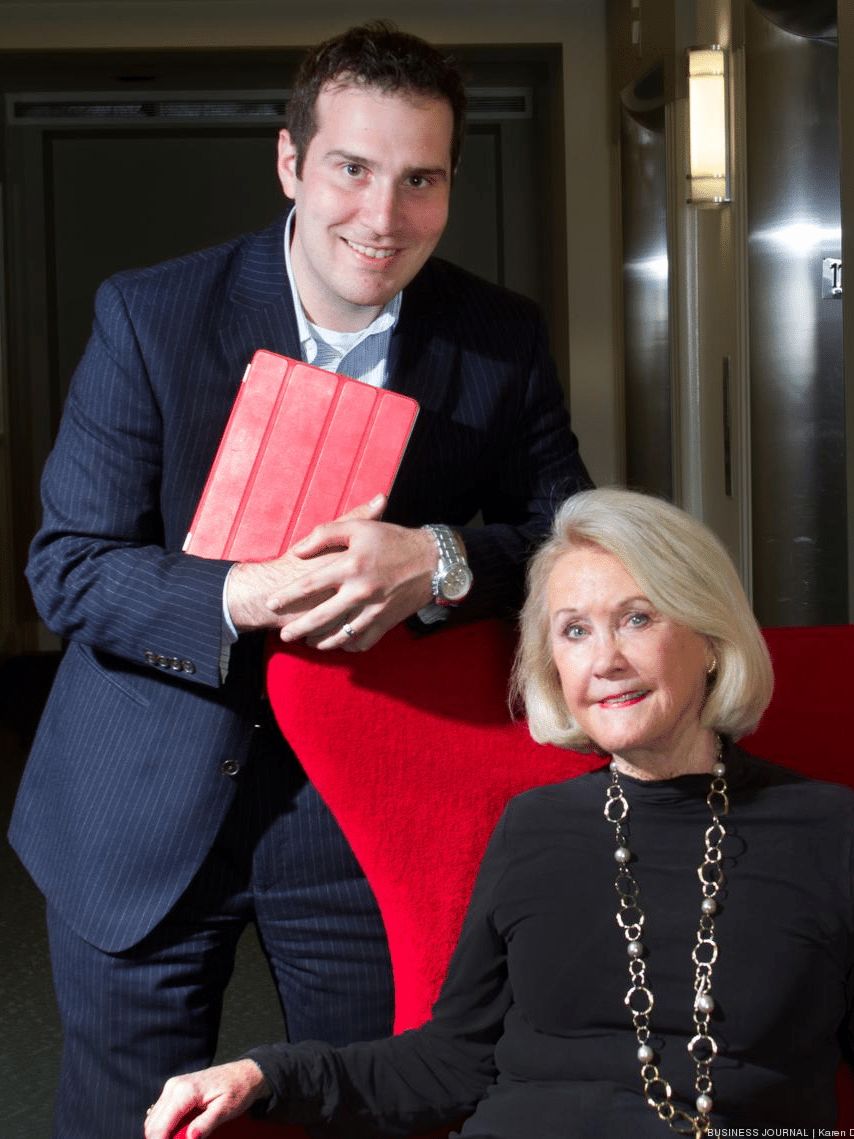
The formal succession arrived in stages. On November 1, 2013, Fearey announced the sale to Blank, then the agency’s president. He would become CEO and president on January 1, 2014. The arrangement called for her to remain on the board and serve as Of Counsel, providing continuity for clients and staff. The purchase price was undisclosed.
The distinction between announcement and assumption of office matters because it shows a handover with room for continuity. A firm’s relationships do not move automatically with its ownership documents. Employees need to know whom they can rely on. Clients need confidence that the advice they value will continue. Fearey’s continuing involvement gave the next chapter a connection to the person who had built the business.
“Integrity has been foundational to my business.”
Pat Fearey, reflecting on the handover in 2013
A surname that stayed on the door
In 2021, The Fearey Group shortened its name to Fearey for its fortieth year. The words around the founder’s surname disappeared; the surname stayed. Blank connected the refreshed identity to her approach and to the firm’s beginnings. A business can change its services, visual identity and leadership while continuing to carry a very personal piece of its history.
By the agency’s forty-fifth year in 2026, Blank was still discussing what he had learned from her. That continuing reference is part of her professional legacy: a successor explaining his work through the founder’s standards, years after taking charge. It also returns the story to the relationships that made the company possible.
Fearey had spoken about spending more time on the tennis court as she handed over leadership. It was an appealing ambition for someone whose working life had involved so many other people’s schedules. The account she left of her career makes room for effort, affection, judgment and a little amusement. There are major clients and civic appointments in it. There is also a bake sale that barely justified the cupcakes, and a founder who understood when to look for a bigger room.