Danielle Finck’s first publishing commission came with an unusually generous brief. In fourth grade, her teacher handed her a blank, bound book and asked her to fill it with stories. The teacher had noticed something. Finck remembered. Decades later, after building a public relations agency, she was still thinking about the assignment. A good editor can be difficult to forget, particularly one who offers the whole book.
The setting was Cowan Elementary in Sacramento; the teacher was Mrs. McNeil. Finck’s subsequent education in getting people to listen included teenage telemarketing and college journalism classes. There is something pleasingly practical about that combination. One teaches you that a stranger can hang up. The other asks whether you have given the stranger a reason to stay.
Her adult career became an extended exercise in finding that reason. In 2008, she founded Elle Communications. The agency would represent organizations, businesses, and leaders working on social and environmental issues. A worthy subject still had to compete for attention. Finck chose to make that competition her occupation.
An inconvenient year to be choosy
The timing supplied an immediate complication. Starting an agency during the recession was a difficult proposition; starting one with a particular view of which clients it wanted made the proposition more particular still. Finck wanted to work exclusively with organizations whose efforts benefited people and the planet. Unable to find the employer she wanted, she created her own.
By 2018, she was discussing that choice with Jessica Abo: Elle’s remit included nonprofits, ethical brands, social enterprises, corporate responsibility teams, and activists. The organizing principle crossed the usual industry divisions. A consumer company and an advocacy organization might need quite different campaigns while sharing a publicist’s belief that their work deserved a wider hearing.
Finck also understood the less romantic requirement. “It’s our job to make conscious brands cool and relevant,” she said. Consumers could choose competing products. Journalists could pursue competing stories. An admirable intention did not relieve a client of the obligation to be interesting.
As impact became fashionable, she said the agency grew more selective about clients. That is a useful complication in a founder’s story: success for the category could make choosing within it harder. Attractive language about purpose could conceal a marketing exercise. The work behind the language needed scrutiny.
“It’s our job to make conscious brands cool and relevant.”
Danielle Finck · 2019
- 2008Elle begins
Social and environmental impact PR - 2024A new company chapter
Dolphin acquires Elle - 2026Sharing the thinking
Reports, workshops, strategy days
The cause still needs a publicist
Consider the range of work around Michael Tubbs. He credits Elle with supporting Mayors for a Guaranteed Income, End Poverty in California, his documentary Stockton on My Mind, and his book The Deeper the Roots. Those projects connect public policy, film, and publishing. They also give a communications team several different ways to introduce a person’s ideas to an audience.
Ai-jen Poo describes another part of the machinery: preparing National Domestic Workers Alliance spokespeople for interviews and helping its advocacy receive coverage. The visible moment is someone answering a question. Preparation has already happened. A publicist has to consider what a speaker knows, what an audience needs explained, and which questions may arrive without an invitation.
Elle’s service list makes the work more tangible. It includes messaging, media training, journalist and influencer relations, speaking opportunities, op-eds, partnerships, and event production. A story can leave the agency as an interview, a speech, or a collaboration. The choice of format is part of the job.
In 2021, one project brought Etsy and Nest together to help launch individual shops for the Gee’s Bend quilters. The partnership connected a community of makers with a route to customers. Publicity had something specific to point toward: people could discover the work and then buy it. That is a more useful destination for attention than admiration with nowhere to go.
An editorial map of Elle’s communications services.
The room matters, too
There is a quieter account of Finck’s working style in the offices she helped arrange. Early Elle spaces in San Diego and Los Angeles included vintage furniture and succulents. San Diego’s office shared space with architect Graham Downes in Barrio Logan. The Los Angeles team worked together around a white conference table most of the time.
Finck cared about light, order, and a setting that made work feel possible. She had experienced enough different workplaces to have preferences. Her taste for plants came with a practical qualification: they had to be plants she could keep alive. Even an idealistic business needs a realistic watering policy.
That interest in making things extended beyond office furniture. In an earlier personal interview she described ceramics, candle-making, gardening, and cooking for friends. She also recalled a childhood ambition to become an attorney, expressed through two years of devotion to a Stanford Law sweatshirt. Some children dress for the weather; others dress for the admissions committee.
The agency’s published values give this preference a working expression. They encourage curiosity, personal connections, humility toward clients, and room for laughter alongside demanding work. Hobbies are treated as a source of creative material. These are the company’s stated expectations, and they are revealing in their specificity: a ceramics studio can have a place in an agency’s account of how good ideas happen.
Her description of success had changed, too. Where she had once looked toward size and outside recognition, she came to value “Constant growth in soul and internal satisfaction.” That is her stated measure, rather than a financial result. It helps explain why a founder might care both about whom the company represents and how the working day feels.
Sixteen years, then a bigger room
On July 15, 2024, Dolphin Entertainment acquired Elle. The agency became a division of 42West, joining a group with specialties across entertainment publicity, music, influencer marketing, and events. Finck’s business had spent sixteen years developing its particular brief. The transaction placed that expertise beside people accustomed to turning a cultural moment into a public conversation.
The announcement said Finck and Silvie Snow-Thomas would continue leading Elle, with its senior leadership and staff joining Dolphin. The deal adviser described them as co-presidents. Snow-Thomas matters to this chapter: the acquisition was presented around their continuing leadership, rather than simply the transfer of an agency name.
For Finck, the attraction was access to a wider set of collaborators. An entertainment group could bring a client’s cause into conversations already involving artists, audiences, and brands. There is a practical logic here. A campaign needs both an idea worth hearing and people who understand how to get it into circulation.
Looking back at the agency’s beginning, Finck recalled the skepticism succinctly: “People thought we were kinda crazy.” She also credited former client Christiana Figueres with teaching her an approach to persistence and optimism. Her ambition at the time of the deal was to take the work to a broader audience. Selling the company became another decision about how its clients might be heard.

years between Elle’s founding and its acquisition
2008 → 2024
A strategy small enough to use
The agency’s newer offerings suggest that the next audience includes communicators themselves. The Shift combines reports, workshops, and a weekly newsletter about changes in the profession. Its subjects include earned media, creator partnerships, and visibility in a world increasingly shaped by AI. The newsletter promises a single concept, a question to consider, and an action to take.
In September 2026, Elle promoted a thought leadership workshop and report examining ten changes in how ideas gain attention and attribution. The proposition is recognizably close to Finck’s original work: help someone with something to say understand where it belongs. Here the client is also being taught how the process works.
Strategy Days offer a more concentrated version. Founders, authors, and small teams can work with senior communicators without committing to a continuing agency retainer. The advertised deliverables include a narrative, a six-month roadmap, priority platforms, and story angles. A team can then carry out the plan itself.
There is an earlier precedent in Elle Beginnings, which coached young businesses on PR they could implement internally. The format acknowledges a basic tension: an organization may need communications advice before it can afford an ongoing agency relationship. Turning expertise into a bounded engagement gives that organization another way in.
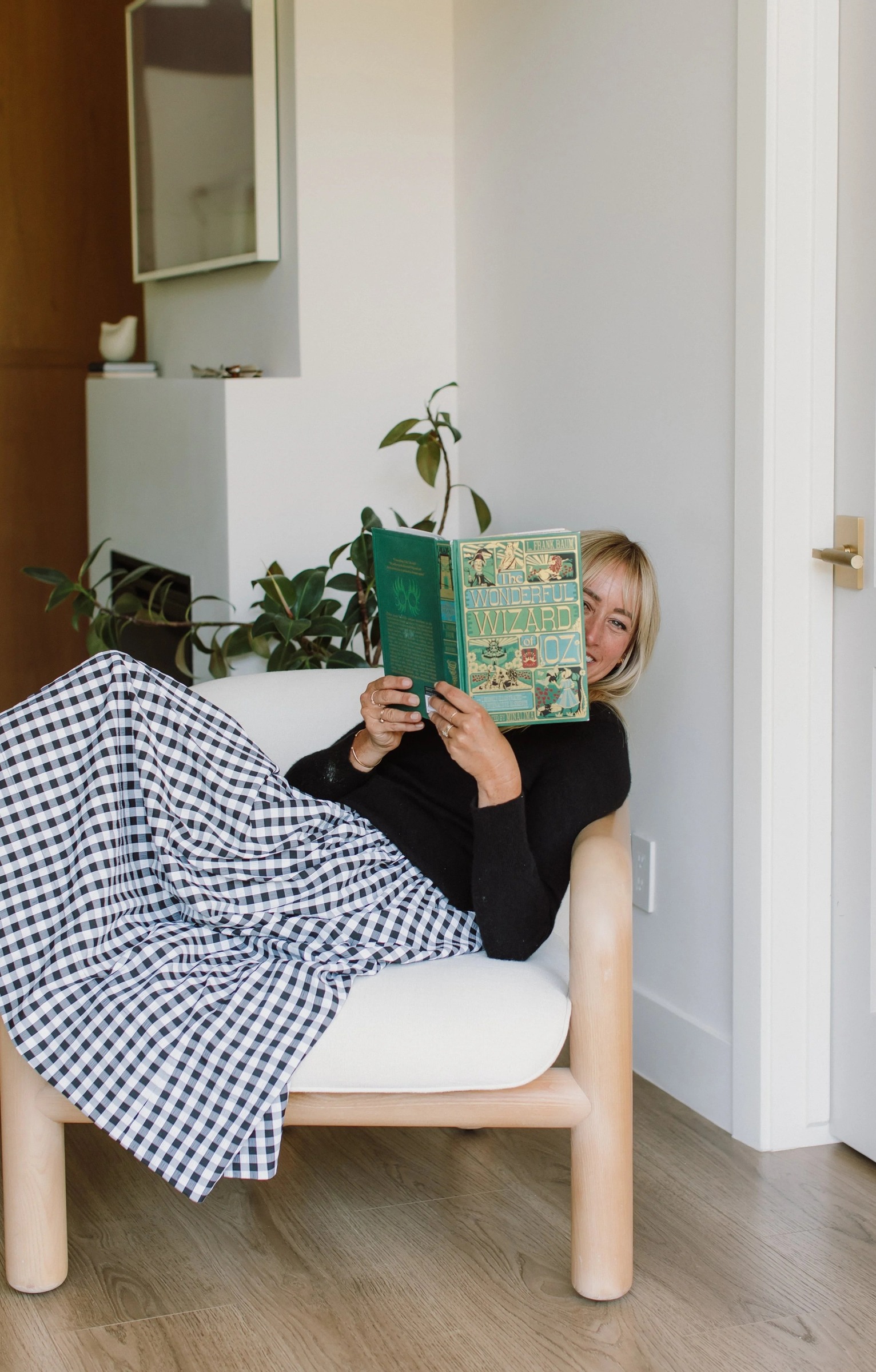
The smallest audience in the house
Her public conversations about PR keep returning to people. In a nonprofit-focused discussion, she addressed pitching journalists, op-eds, and the possibilities of solutions journalism. The emphasis was on human stories and relationships. A recent conversation with AJ Vaden similarly explored choosing a PR partner, setting expectations, and letting goals determine the strategy. Those are grounded questions for a profession sometimes judged by the glamour of its finished work.
Her personal website offers a different test of whether a story holds attention. Its children’s book lists include seasonal reading, friendship, and Black History Month. March 2026 brought recommendations for Easter and St. Patrick’s Day. The site gives her children an explicit role as discerning fellow readers. A household reading list comes with a demanding review panel.
Finck has also written children’s stories she hopes to see in bound books. That ambition sits comfortably beside the agency work. Both involve choosing words for someone else’s attention, although a child is less likely to be impressed by the distribution strategy. The page has to earn the next page.
The old classroom assignment now has a long, unexpected afterlife. Finck went into business helping other people’s stories travel, then made room for books she could share at home. The audiences differ in size and circumstance. The useful question remains wonderfully plain: what will make this person want to keep listening?
Keep the conversation going
- Personal website & book lists
- Elle Communications
- The Shift reports & workshops
- Watch: conversation with Jessica Abo
- Read: the 2024 acquisition interview
- Listen: PR with AJ Vaden
- Read: the 2019 Yellow Co. conversation
- Read: the early office tour
- Listen: communications for nonprofits
- Explore: Elle’s work in The PR Net 100