There is a peculiar kind of luxury in not needing a website. For most businesses, invisibility is a crisis. For Sunshine Sachs Morgan & Lylis, it became a credential. The firm could point to the people on the screen, the causes in the news, the stars crossing the carpet and the brands sliding into conversation, then quietly leave its own name off the caption. In late 2025, when it finally unveiled a substantial new site, the company joked that it had barely had one for 35 years. The line was funny because it was also a thesis: if the publicist is the story, something has probably gone sideways.
The business began in New York in 1992 with Ken Sunshine, fewer than 10 employees and a useful apprenticeship in politics. Political work teaches the central fact of communications early: facts do not arrive alone. They arrive through a messenger, at a moment, in a frame, before a particular audience. Get one of those wrong and the rest may not matter. Sunshine carried that instinct into entertainment, labor, public affairs and causes. Shawn Sachs joined in 2001 and eventually became CEO. By 2022, the shop had grown beyond 250 people.
Attention is not a megaphone. It is a routing problem.
Call SSM&L a PR agency and you are correct in the way that calling a smartphone a telephone is correct. The old job was coverage: find the reporter, shape the pitch, earn the story. The current service menu runs through crisis planning, thought leadership, social strategy, creative production, affiliate marketing, brand integration, talent and influencer work, and even counsel on communicating AI products and workplace policies.
The thread is not publicity. It is routing. A film needs critics and festival oxygen. A consumer product may need a creator, an affiliate link and one photograph people want to repost. A nonprofit needs attention that turns into action rather than applause. A founder in a crisis needs fewer messages, not more. SSM&L sells the judgment required to choose the route - and the relationships required to open it.
The modern communications switchboard
This explains the firm’s odd range. Its client universe includes actors and athletes, studios and streaming platforms, global companies and early-stage startups, sports tournaments, advocacy groups and nonprofits. Those categories look unrelated on an org chart. In public, however, they all compete for the same finite resource: credible attention.
“Every client has a story, every story has an audience.”SSM&L’s operating propositionThe flywheel
The nicest trick in the building is an introduction
The company has a phrase for bringing two clients together: a “Sunshine Special.” It sounds like a diner breakfast and behaves like a miniature joint venture. A talent client meets a brand. A cause finds a public voice. An event gets a cultural hook. The agency does not merely rent its contact list to each account separately; it searches the roster for combinations.
This is one of the few pieces of the model a smaller company can copy without a famous address book. Begin every project by asking who else benefits if the idea succeeds. Make introductions that create a better object - a sharper event, a more natural partnership, a story with actual stakes - rather than stapling a celebrity to a logo. The tactic works when the interests overlap. It curdles quickly when the connection feels purchased, the audience can see the seams, or neither party would choose the other without a contract.
Media relations, thought leadership and crisis scenario planning.
Film, television, personal representation, sports and live events.
Creators, social platforms, affiliates and paid amplification.
Brand strategy, copy, design and content from an in-house studio.
Then the operators went on the door
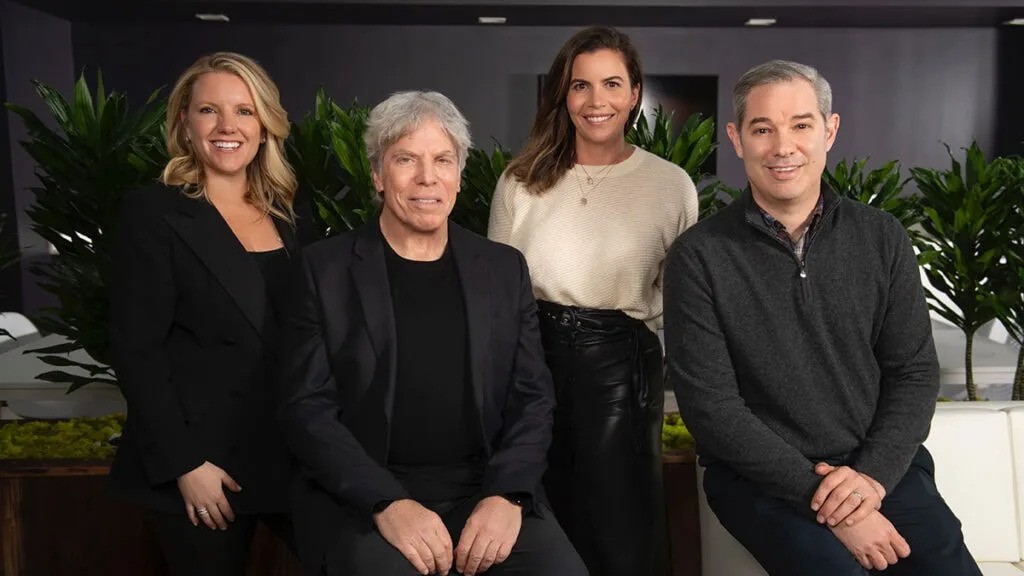
In March 2022, the firm made a revealing decision. Keleigh Thomas Morgan and Heather Lylis became co-presidents, and “Morgan & Lylis” entered the company name. This was not a startup sprinkling titles before a funding announcement. Both women had been made partners years earlier and were credited with helping the firm grow from a tiny shop into a multi-office company. The rebrand turned succession into typography.
That matters in an industry tempted by the heroic-publicist story - the lone whisperer with an impossible phone book. SSM&L’s scale argues for something less cinematic and more durable: teams, repeatable judgment and people who remain long enough to accumulate context. Recent public figures put employee retention at 80 percent; 65 percent of senior leadership had been with the firm for more than a decade. The average tenure of its U.S. executive team was 12.6 years.
Client relationships show the same pattern. The firm has described work with Leonardo DiCaprio stretching 26 years, Lin-Manuel Miranda 21, Feeding America and Advertising Week 19 each, and Tyler Perry 18. In communications, longevity is not a sentimental metric. It means the adviser has seen the client through different news cycles, leadership moods and public mistakes. The archive becomes part of the product.
There is no public rate card. This is a scoped professional service, usually sold through retainers or campaign engagements whose price changes with staffing, duration, urgency, geography and channel mix. Anyone offering a neat universal number would be describing a different business.
The press box needed a creator entrance
One 2025 project makes the company’s evolution concrete. Working with the USTA, SSM&L helped launch the U.S. Open’s first Creator Credential, opening tournament access to 45 creator partners. It is a small administrative phrase with a large implication. For decades, institutions decided who counted as media by issuing a badge. The new credential acknowledged that influence had moved before the bureaucracy caught up.
The same adjustment appears across the firm. At Sundance in 2024, it reported that nearly a fifth of the company attended the ten-day festival, supporting 17 clients across more than 90 red carpets and more than 25 panels. Its site now puts Reddit sentiment, TikTok strategy and LinkedIn thought leadership beside television bookings and awards campaigns. It represents more than 60 events a year, but says an event’s story should be larger than the room. The carpet is distribution; the point is what travels after everyone goes home.
What changed the firm’s mind about its own visibility was the same force changing client work: attention fragmented, discovery became digital, and credibility had to be legible in more places. The new site, built by its Brand Studio, did not abandon discretion. It made the firm easier to understand without making it louder than its clients.
The scarce asset was never publicity. It was a believable connection between a story, a messenger and a moment.The useful lesson
Copy the sequence, not the Rolodex
Most readers cannot reproduce SSM&L’s network, and should not try. The transferable part is the order of operations. First, define the behavior you want: attend, buy, trust, donate, reconsider. Second, identify the audience with enough precision to exclude somebody. Third, choose the messenger and channel. Only then make the artifact - the interview, dinner, post, partnership, statement or film.
The approach fails under predictable conditions. It cannot rescue a bad product indefinitely. It does not create trust when the messenger has none. It becomes expensive theater when a client wants “buzz” but cannot name the desired action. And in a genuine crisis, choreography without candor is merely delay. The best communications strategy is sometimes operational: change the policy, fix the service, make restitution, then explain.
Sunshine Sachs Morgan & Lylis sits between the giant global agency networks and narrower entertainment boutiques. Its advantage is not that it can do everything. It is that the practices contaminate one another productively. Political timing sharpens a brand launch. Entertainment instinct gives a nonprofit campaign a human center. Creator fluency updates a sports institution. Crisis discipline keeps a playful idea from becoming a reckless one.
The company’s favorite borrowed motto is “Work Hard & be nice to people.” It risks sounding like wall art until you notice that relationship businesses eventually test both halves. Work hard without kindness and the network stops answering. Be nice without rigor and nobody calls when the stakes rise. The firm that stayed behind the picture understood a durable truth: the spotlight moves, but people remember who helped them stand in it.