There is a familiar Hollywood trick in which a person enters a room as one thing and leaves as another. An athlete becomes a celebrity. A reality star becomes a founder. A bottle of tequila becomes an accessory to a lifestyle. The transformation looks spontaneous because the machinery sits just outside the frame. Full Scope PR is part of that machinery - a compact Los Angeles agency built to make separate public moments feel like chapters from the same book.
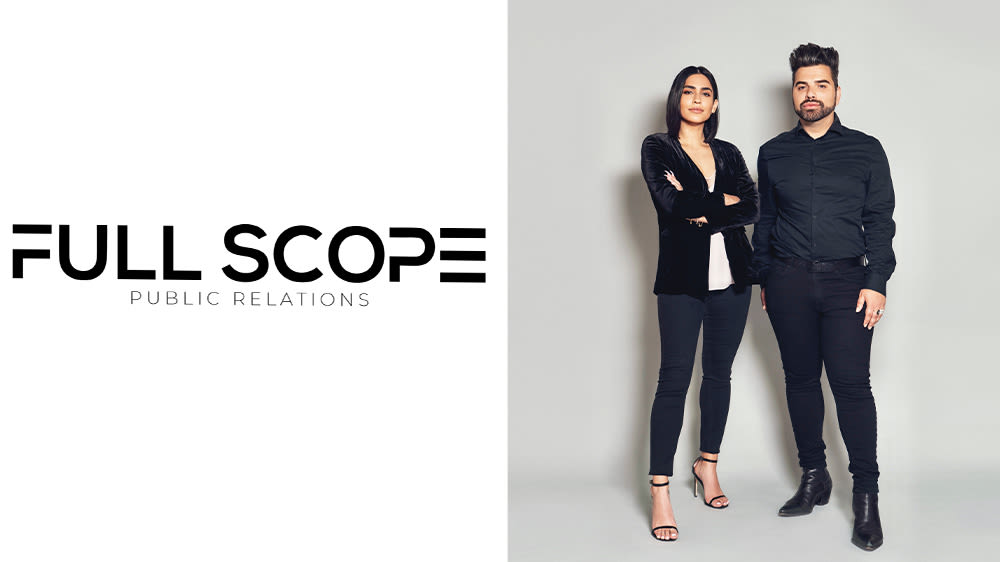
The firm opened in May 2022, when publicists Jack Ketsoyan and Pia Malihi combined long entertainment résumés with an unusually broad opening roster. There were musicians such as Tyga and Brian McKnight; television names including Kristin Cavallari, Erika Jayne and Dorothy Wang; and brands and events such as Uncommon James, Neon Carnival, hoo.be and Don Londrés Tequila. Most new agencies announce an ambition. Full Scope arrived with cast, props and distribution.
The product is not publicity. It is continuity.
Full Scope describes itself as a full-service public relations firm, but that phrase hides the interesting part. Its four advertised practices - talent, music, strategic corporate communications and branding - are not four isolated departments. They are four doors into the same problem: how do you keep the public from meeting a different version of you every Tuesday?
For a performer, the work can include interviews, junkets, red carpets, charitable campaigns and management of personal or family media. For a musician, it stretches to tour publicity, television bookings, award shows and brand partnerships. For a company, the agency develops the message, launches the product, finds cultural partners and pushes the story beyond its usual trade category. Crisis work waits in the wings because a public identity is most valuable at the precise moment it is under stress.
Talent
Interviews, appearances, image development and the daily choreography of a public life.
Music
Releases, tours, television, awards and partnerships timed to the artist’s larger arc.
Corporate
Messages translated across entertainment, lifestyle and business audiences.
Branding
Launches, activations, influencers and social moments made to reinforce the same idea.
That range matters because celebrity and consumer branding now share a nervous system. A performer can launch a skincare line before lunch; a fashion label can borrow the emotional logic of a fan club by dinner. An agency that represents both people and products sees the crossings early. It can turn a client’s old television history into a jewelry launch, as Uncommon James did when Kristin Cavallari reunited members of the Laguna Beach cast for a 2023 campaign. The photographs carried Full Scope PR’s credit into national coverage. Nostalgia supplied the story; a new collection supplied the reason for telling it now.
Attention is rented by the moment. A public identity compounds when every moment points in the same direction.The practical logic behind Full Scope PR’s service mix
A boutique built on borrowed trust
Ketsoyan started his career at the major entertainment publicity firm PMK and later co-founded EMCBowery. Malihi began at EMCBowery under Ketsoyan, then moved to Jonesworks, where her work included talent, corporate and executive clients. When they formed Full Scope, their real seed capital was not software or inventory. It was accumulated trust: who answers the phone, which editor cares about which angle, when a client will take advice, and how quickly a team can tell the difference between a passing flare-up and a reputational fire.
Their launch statement described a team mixing young creatives with veteran experts. The current LinkedIn page lists 15 employees and places the company in the 11-to-50 band. That is large enough to maintain specialized relationships, yet small enough for one client story to travel through the office without being dismantled into a dozen departmental briefs. The trade-off is capacity. A bespoke, relationship-heavy model works when senior judgment stays close to the account; it weakens when volume turns intimacy into process.
Where the agency places its effort
Illustrative, not financial data: shape the narrative, place it in culture, protect it when the environment changes.
Then the agency’s own name became the crisis
In September 2024, documents dressed in Full Scope branding began circulating online. They purported to outline a breakup plan for Travis Kelce and Taylor Swift, including a date and sample language. The plan was fabricated. Full Scope’s response was striking for what it did not attempt: no discursive rebuttal, no tour of every claim, no cleverness. The agency called the documents false and unauthorized, then said it had engaged lawyers to pursue whoever created them.
The first thing that failed was provenance. A logo and the surface grammar of professional communications were enough to make fiction travel as evidence. The corrective move was to restore a chain of authority: this did not come from us; counsel is now involved. For a business that usually stands beside the story, it was a rare moment in front of it. The episode also exposed a condition of modern reputation work: a recognizable identity can be copied faster than its owner can answer.
There is a useful lesson here for any company, not merely a celebrity shop. Crisis language should establish three facts in order: what is false, who has authority, and what happens next. Do it before the online crowd rewards speculation with a plot. Full Scope’s statement was short enough to survive being quoted, which is one of the least glamorous and most valuable features a crisis statement can possess.
Ketsoyan and Malihi open Full Scope with talent, musicians, consumer brands and events already on the list.
Uncommon James reunites Laguna Beach cast members, giving a product collection a ready-made cultural memory.
A forged celebrity media plan forces the agency to turn its crisis discipline inward.
The firm remains privately held, with 15 people publicly listed across a broad communications remit.
What a founder can borrow
The copyable part of Full Scope is not its celebrity access. It is the discipline of designing one story that can survive several rooms. Begin with the sentence you want a customer, reporter, employee and partner to repeat. Do not feed each audience identical language; translate the same idea into the reason each group should care. A founder’s interview, a customer event and a product announcement should feel related without looking duplicated.
A portable version of the playbook
- Choose one narrative before choosing channels. Distribution cannot repair a fuzzy premise.
- Give every public moment a job: explain, prove, widen or protect the story.
- Use partnerships to enter an adjacent culture, not merely to borrow a larger audience.
- Prepare the short crisis statement before the crisis. Authority reads better than improvisation.
This approach depends on a client having something coherent to reveal and the patience to build recognition over repeated moments. It is poorly suited to leaders who want guaranteed coverage, instant virality or a public story that compensates for a weak product. Media relationships can open a door. They cannot make the room interesting.
Full Scope PR occupies a specific place in the market: between the solo celebrity publicist and the sprawling integrated agency, close enough to Hollywood to understand the tempo of fame and broad enough to follow a client into commerce. Its work is mostly visible through other people’s success, which is appropriate. The best context rarely waves from the center of the photograph. It simply makes the photograph make sense.