Before the curly fry, before the delivery bag, there was a pea processor in Weston, Oregon. In 1950, F. Gilbert “Gib” Lamb started the business that became Lamb Weston. A decade later, he had a peculiar answer to a familiar factory problem: how do you cut a great many potatoes into reliably shaped fries? Send the potatoes through blades in a stream of high-velocity water.
- Frozen potato products for restaurants and retail, sold across more than 100 countries.
- Its edge: processing know-how, specialty cuts, and help making fries perform.
- The catch: consistency depends on everything from ventilation to inventory software.
The Water Gun Knife sounds like something confiscated at summer camp. It became an industry standard. That gap between the comic name and the serious consequence is a useful introduction to Lamb Weston. The company takes small, easily overlooked problems and applies industrial engineering until solving them becomes a business.
Today, that business supplies frozen potato products to restaurants and retailers across more than 100 countries. McDonald’s represented roughly 15% of fiscal 2025 sales. A fry that looks incidental beside a burger belongs to a supply chain substantial enough to support a public company.
The customer is buying fewer surprises
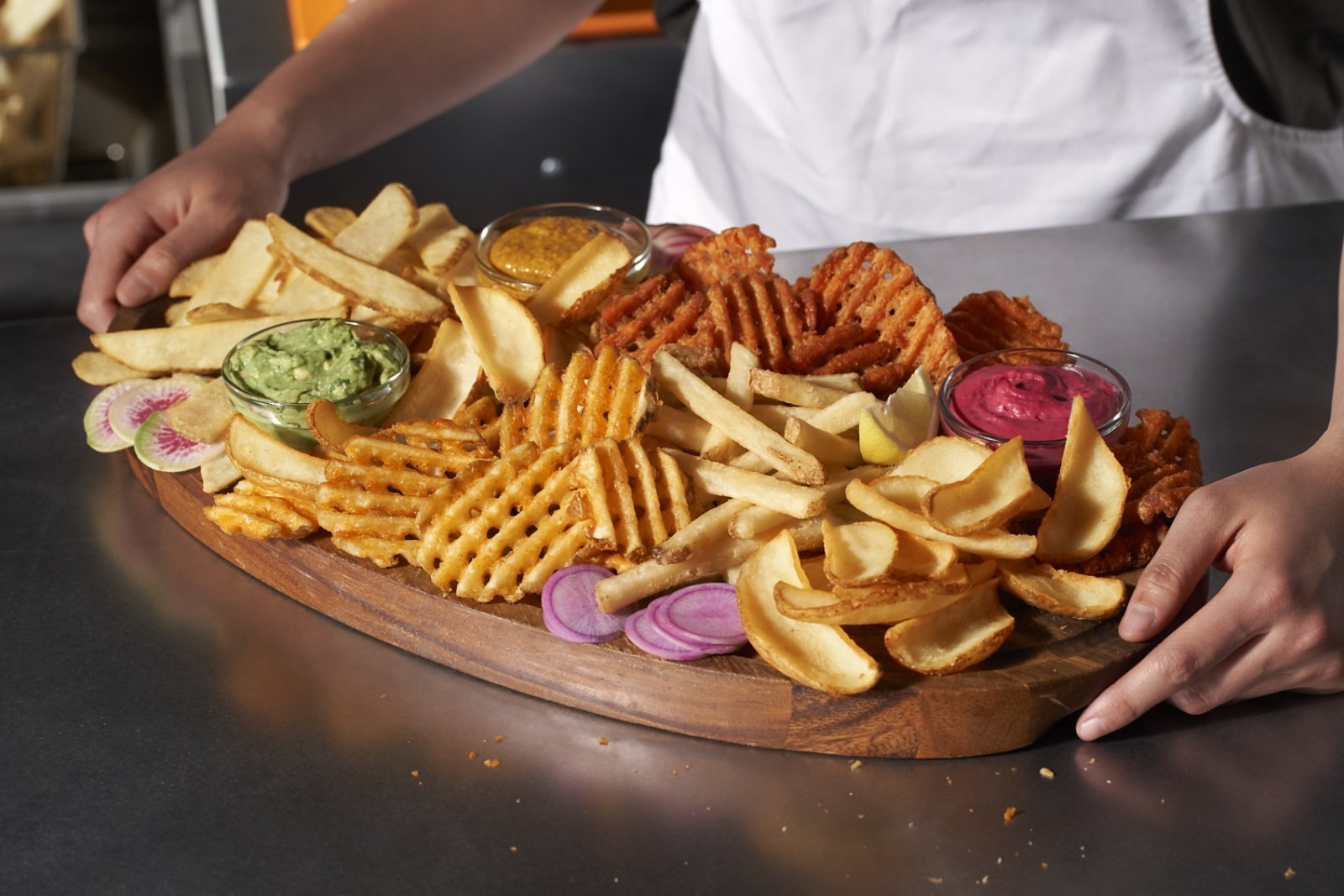
Lamb Weston sells straight-cut fries, sweet potato fries, hash browns, mashed potatoes, and shaped potato products. Twister Fries arrived in 1983; CrissCut Fries followed in 1984. The shapes are playful. Their commercial purpose is practical: give a kitchen a recognizable side dish without asking its staff to invent a manufacturing process during lunch.
Its business model is manufacturing and distribution. It sells branded and private-label frozen products through foodservice and retail channels. Restaurants need predictable preparation, portions, and supply; grocery shoppers need something that works at home. The company’s expertise reaches from potato sourcing and processing to product development and advice for operators.
Alternatives include McCain, Simplot, and Cavendish Farms. Frozen potatoes are an established, competitive category, so a funny shape alone cannot carry the argument. Lamb Weston’s case rests on processing experience, product performance, and customer support. Its culinary team helps operators develop menu applications. It also publishes practical resources on preparation, presentation, and takeout.
The enemy in the bag is steam
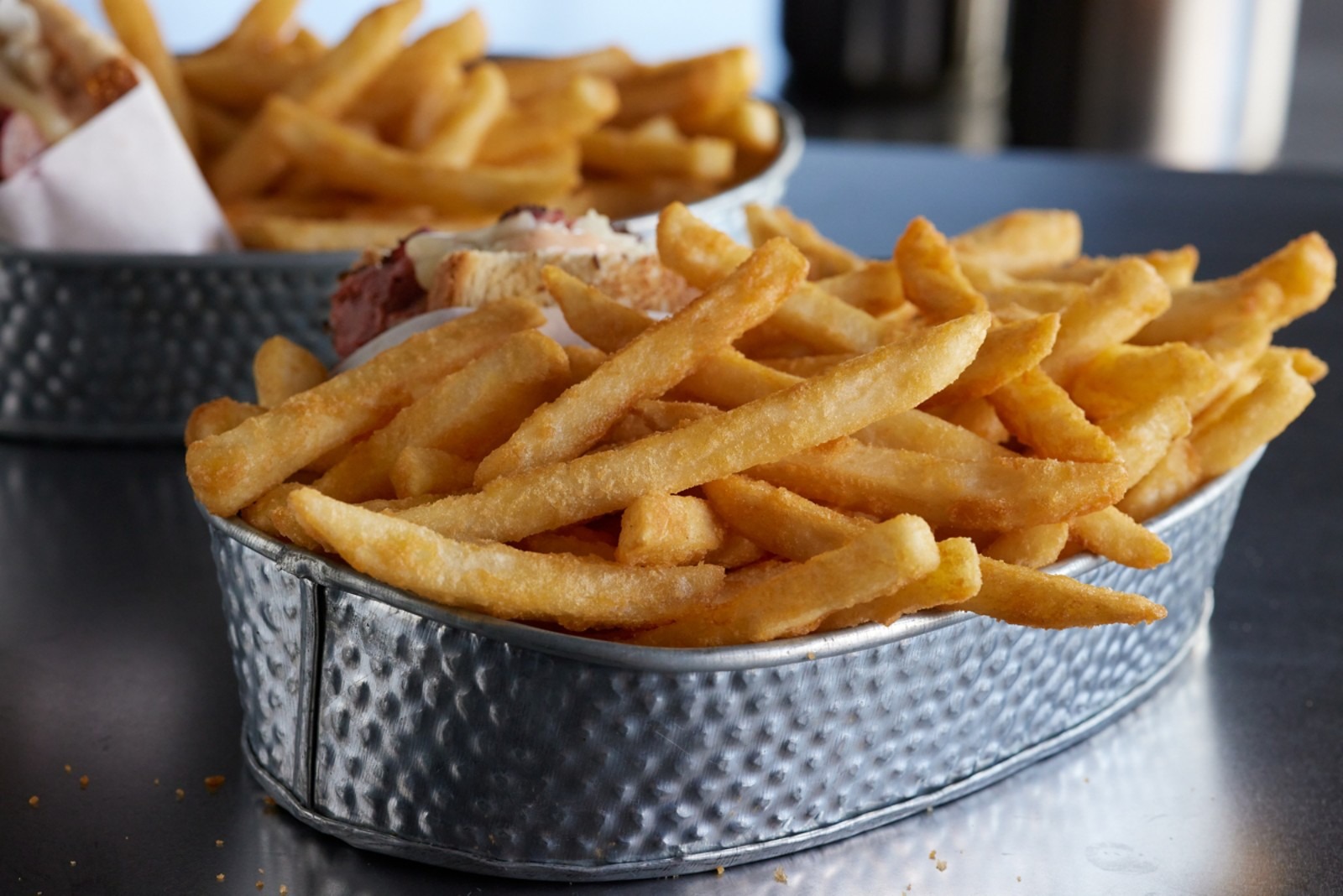
Consider the delivery fry. At the restaurant, it can be crisp. At the customer’s door, it can resemble a warm shoelace. In a 2019 Northwest Public Broadcasting report, innovation executive Deb Dihel described hot fries trapped in closed packaging: “Because you’re sealing them in like a sauna.” The failure happened after the kitchen had apparently done its job.
“Because you’re sealing them in like a sauna.”Deb Dihel / on closed delivery packaging, 2019
Dihel had seen the problem on delivery runs in China. Back in Washington, the response involved a reformulated starchy batter and packaging that let steam escape. The reporter found the resulting fries still crunchy after 30 minutes. Lamb Weston markets Crispy on Delivery with an up-to-30-minute crispness claim when used with vented packaging.
The qualification matters. A coating is only part of the system. Seal the bag, trap moisture, or extend the journey and the result can change. Operators can copy the underlying experiment: test the food after its actual delivery trip, rather than approving it at the fryer. Buy for the final bite, then choose packaging and handling to match.
Then the system lost sight of the fries
In fiscal 2024, another kind of engineering went wrong. A transition to a new enterprise resource planning system reduced visibility into finished-goods inventory at distribution centers. The problem affected order fulfillment. Some customers went elsewhere for supply. The company later reported that it paused the next implementation phase for North American production facilities in fiscal 2025.
The bill was substantial: an estimated $135 million reduction in sales and approximately $95 million in losses associated with the fiscal 2024 transition. Those figures describe different effects; adding them together would overstate the damage. They also are not a disclosed software purchase price. The cost that matters here is the disruption.
A manufacturer can know how to cut, coat, and freeze a potato yet struggle to get the right carton out of a warehouse. That is the uncomfortable dependency inside a business built on consistency. The practical lesson is to treat inventory visibility and fulfillment as conditions a new system must preserve during a rollout.
More pounds. Less profit.
The pressure extended beyond software. In October 2024, Lamb Weston announced the permanent closure of its Connell, Washington, plant and workforce reductions approximating 4% globally. It initially estimated $200 million to $250 million in restructuring charges and about $55 million in fiscal 2025 pretax savings. A supply-and-demand imbalance had made capacity a problem to reduce.
Fiscal 2026 shows why shipping more is an incomplete measure of success. Sales volume increased 7%, but price and product mix moved against the company by 6%. Net sales rose 2% to $6.612 billion while net income fell 19% to $290 million. An extra week contributed $127.1 million to sales. More activity did not automatically produce better economics.
The October 6, 2026 update offered progress with qualifications. First-quarter fiscal 2027 sales reached $1.67 billion, up 1%, and the company raised its full-year outlook. Management reported roughly a ten-percentage-point improvement in North American utilization from capacity initiatives. It also pointed to inflation and difficult EMEA conditions. The recovery still depends on where, and at what cost, growth occurs.
The pounds outran the profit.
What travels with the potato
Lamb Weston’s footprint also reflects a long partnership with Meijer Frozen Foods. A European joint venture began in 1994; Lamb Weston bought the remaining interest in 2023. Its declared workplace values include integrity, teamwork, inclusion, empowerment, and results. Those are company commitments, best judged alongside execution rather than mistaken for proof of it.
The market position carries scrutiny, too. In September 2026, a federal court allowed much of a frozen-potato price-fixing case involving Lamb Weston and competitors to proceed. The allegations remain allegations; Lamb Weston has said the claims lack merit. A profile of industrial scale needs room for the questions that scale attracts.
For a restaurant operator, the useful question is specific: which product, preparation method, and package fit this kitchen and this journey? For another manufacturer, the copyable idea is equally concrete. Find the point where the customer’s experience deteriorates, then work backward. Sometimes the answer is a water gun. Sometimes it is a hole in the box.