An email arrives without a greeting. Just bullet points. Across the thread, people begin supplying the missing tone: annoyance, impatience, perhaps a small declaration of war. Lalitha Priya Chandrashekhar has described this everyday misunderstanding with the attention it deserves. The sender, she points out, might simply be busy. A few lines written quickly can acquire a personality their author never intended.
Her rule is to “assume positive intent.” Give the message a generous reading. If questions remain, pick up the phone. It is modest advice, which may be why it feels useful. Nobody needs a corporate retreat to try it. The next email will do.
Chandrashekhar, known as Priya, is the founder and CEO of MEYA Health. Her working life includes building a company, advising founders, and mentoring people earlier in their careers. Yet this small observation about communication offers an unusually clear introduction to her. Leadership reaches the inbox long before it reaches a stage.
The email before the argument
In her account, the trouble begins when a reader supplies an emotional soundtrack to plain text. A defensive response invites another defensive response. Soon, two people are preparing for a conflict that began with an interpretation. Anyone who has watched a perfectly innocent full stop become evidence for the prosecution will recognize the setting.
Priya puts the obligation on the reader to pause. That does not require agreeing with every message. It creates enough space to discover what someone meant before deciding how to answer. Her phrase “Business is people” makes a practical demand: the person on the other end needs to remain visible.
“Business is people.”
Priya Chandrashekhar, on workplace communication
That concern is particularly relevant to a remote company. Colleagues cannot always glance across a desk to check whether a short reply came from irritation or a crowded afternoon. Written exchanges carry more of the relationship. A company’s values therefore have to survive the ordinary conditions of work: deadlines, distractions, incomplete information, and the occasional message sent between other messages.
A business acquires a second chapter
Priya founded PFG MedComm in 2013 as a solo consultancy. The business began assembling a broader team in 2016. In 2026, its official timeline introduced the MEYA Health name. Those dates describe a progression from one person’s practice to an organization with several disciplines and a different public identity.
The name change gives the story a visible marker. Much of company building is less photogenic. It involves deciding who should join a project, how responsibilities fit together, and which habits will hold as more people arrive. The work has to become something a team can deliver together.
Public profiles describe her company as fully remote and emphasize flexibility and inclusion, including support for parents. These are choices about who can participate in a workplace and under what conditions. The practical questions follow quickly: how to collaborate, how to make expectations clear, and how to maintain relationships without assuming everyone shares an office.
As a woman and minority founder, Priya has also mentored students and people beginning their careers. Her advisory work has included PFG Stealth and FemTechLab. That creates another set of relationships around the business: people bringing early questions, asking for perspective, or working out what a next step might look like.
The price of knowing your value
In September 2023, Priya joined Suneera Madhani on CEO School for a conversation about go-to-market strategy. The episode connected communicating an offering’s value with pricing, negotiation, and self-advocacy. One of its central messages was that women in business should charge their worth.
It is an awkward instruction to carry out if you are accustomed to making everyone else comfortable first. A price invites a response. A negotiation introduces uncertainty. Explaining your value requires choosing words you can stand behind when someone asks a follow-up question.
Priya’s subject is the connection between what a product or service does and why that matters to the person considering it. Apply that question to a founder’s own work and the conversation becomes personal. Expertise can be familiar to the person who has it. Familiarity can make it easy to overlook the years that produced it.
What does the offering do?
Who needs to understand its value?
How clearly can that value be explained?
The discussion is a useful counterweight to her advice about giving others a generous reading. Both require attention to another person’s perspective. Negotiation adds the obligation to account for your own contribution. A founder can be considerate and still arrive prepared to explain a price.
A founder can still be a student
Priya’s public résumé records a Bachelor of Science in Bioscience and Biotechnology from Drexel University, where she attended the Pennoni Honors College between 2002 and 2006. It also lists additional concentrations, including psychology and bioinformatics. Her early professional experience included technical writing work.
That background places research, explanation, and the study of people close together. A technical writer has to make decisions about order and meaning. A reader needs a route through the material. Business communication presents the same editorial problem whenever the person explaining something knows far more about it than the audience does.
Her LinkedIn profile also records Tuck Executive Education at Dartmouth in 2024. The sequence matters: she was already a founder. Learning continued after she had a company to run, with the experience of running it available to complicate the questions.
Other communities put that habit in context. WISE’s mentoring-circle listings include her among Cohort 3 members. The Ascend national cohort business profiles for 2025-26 list MEYA Health and identify her as founder and CEO. She can be an experienced business owner in one setting and a participant seeking perspective in another.
There is an appealing lack of ceremony in that arrangement. Knowledge does not have to travel in one direction. A person who has advice to offer can still need a room in which to ask a question without first delivering a speech about everything she already knows.
A pitch has an audience
In 2025, the WBEC Metro NY Powerplay Pitch Competition listed Priya among its finalists. The live event was scheduled at Paramount’s headquarters in Times Square under the theme Accelerate Your Story. Its assignment asked each finalist to explain their company’s message.
For a founder concerned with value communication, the occasion brought the work home. A pitch demands selection. Which detail introduces the business? Which example makes the point? What can wait? The audience has limited time, an inconvenient fact that no amount of affection for your own company can negotiate away.
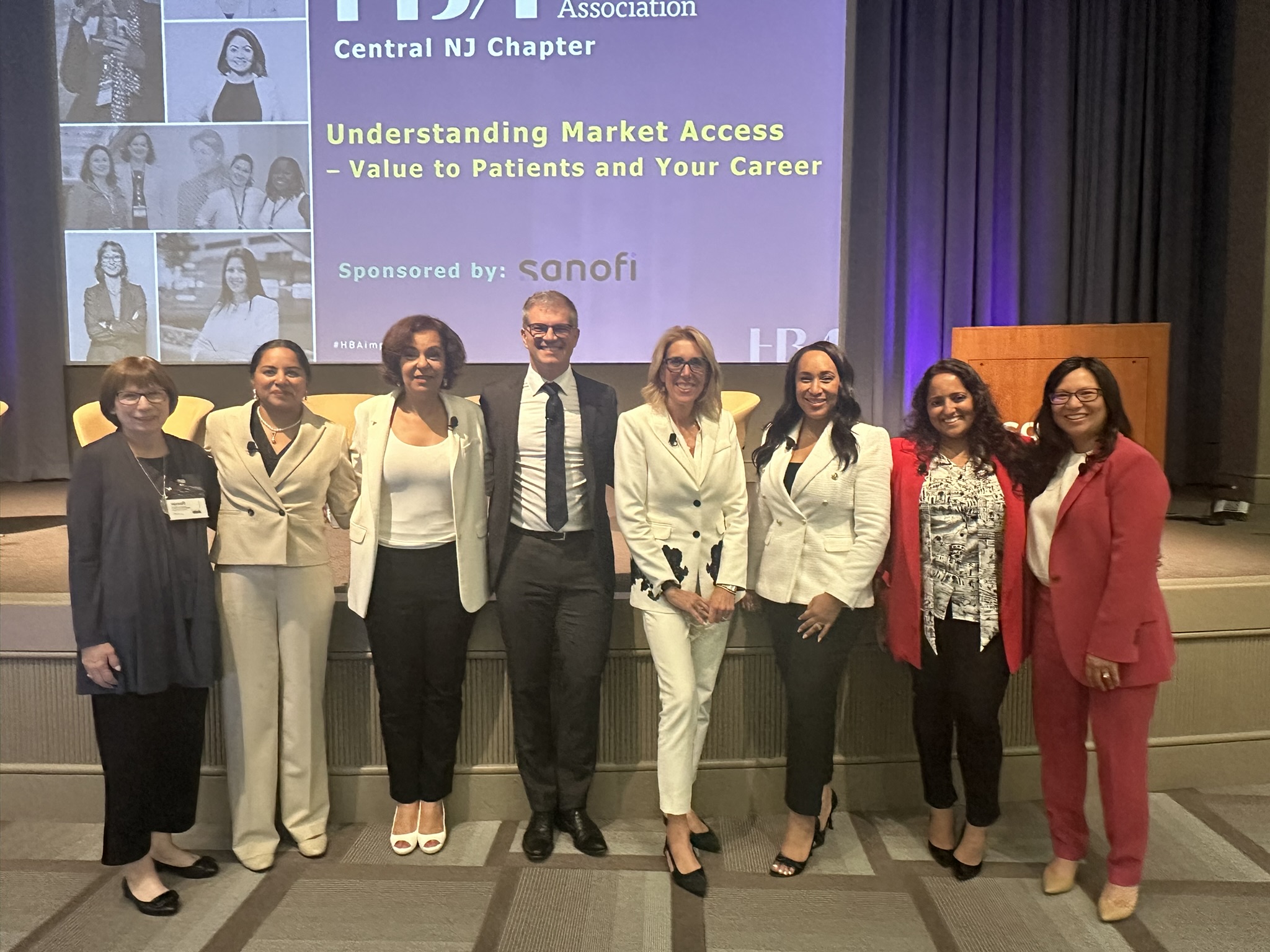
She has appeared in settings where the conversation moves beyond her own business. At a September 2024 professional event in Bridgewater, New Jersey, she joined a panel whose discussion included career paths, transferable skills, and building professional relationships. Around 100 people attended. The format placed experienced executives in front of people bringing their own career questions.
Recognition followed across several years. PM360 named her an ELITE entrepreneur in 2023. She was included in the MM+M 40 Under 40 class of 2024. In 2025, she appeared among the Entrepreneurial Women of Impact honorees, an award presented by the Women Presidents Organization and Women Elevating Women.
The latter recognition places her alongside women building businesses across different industries and regions. An award provides a public moment. The more interesting continuity is that she remains involved in the conversations surrounding the work: how to describe it, how to price it, and how to help someone else take a step forward.
The life around the title
Outside work, her public biography mentions reading, projects with her twins, Marvel movies with her husband, and planning family trips. These details deserve room without being recruited into a theory of entrepreneurial performance. A family film can be allowed to remain a family film. Even a founder gets an evening.
In a personal essay published in 2024, Priya recalled childhood visits from her grandparents and the pleasure of persuading her grandfather that a library trip was preferable to a nap. She described learning and storytelling as family inheritances she hoped to carry into life with her own children.
The detail has a pleasing specificity: a child negotiating for more books, with an adult willing to go along. It belongs beside the later picture of someone who keeps taking courses and joining learning communities. The connection is hers to describe; the library memory gives it a human setting.
Her professional title identifies her responsibility. The smaller details reveal the person holding it: a parent, a reader, a participant in other founders’ communities, and someone alert to the trouble an imagined tone can cause. A company may announce its next chapter with a new name. A working relationship often begins again with something much less elaborate: a question asked before an assumption hardens.