The gathering was above a department store. During the annual investment conference first associated with H&Q and later J.P. Morgan, Lisa Burns welcomed industry guests to the Rotunda at Neiman Marcus. Founders, investors and analysts came together in a room that made her working life unusually easy to picture: people with different interests, a host who knew how to connect them, and business conducted in the company of friends.
It is a pleasing setting for a career in investor relations. Capital markets are generally represented by screens, numbers and people looking concerned in expensive chairs. Burns’s reception offered another view. An industry also consists of people who need to get to know one another. Someone has to make the introduction.
Burns founded Burns McClellan in 1988 and led it for 36 years. By the time her death was announced in July 2024, colleagues had accumulated memories that went well beyond a client list. They remembered career advice, early jobs and conversations that stayed with them. The company carried her name. Other people carried lessons from working beside her.
A firm with a particular address book
She arrived at entrepreneurship with a decade of senior management experience at public relations firms, including Fleishman-Hillard, Edelman and Burson-Marsteller. She had worked inside established agencies before choosing the narrower proposition of her own: a firm devoted to life sciences communications and investor relations.
The decision had a practical question behind it. Investment banker Mary Tanner remembered Burns asking, before the agency opened, whether biotechnology was “for real.” It is an appealing detail because it preserves the uncertainty before the long career. The founder did some asking around. The decision came before the evidence of several decades.
A specialist agency makes a particular bargain with its clients. It promises familiarity with their world: its vocabulary, its participants and the questions that recur across different companies. That familiarity takes time to acquire. The same is true of the relationships that allow an adviser to make a useful introduction rather than simply forward a name.
Burns’s advisory work included helping companies position themselves for private financing and public markets. Her relationships extended to venture capitalists and institutional investors. The assignments encompassed seed rounds, initial public offerings, reverse mergers and subsequent financings. Each route had its own audience and its own questions.
That range helps explain why the job required more than a memorable sentence. An investor needs to understand what a business proposes, what it needs and what could happen next. A management team needs to anticipate the questions its own enthusiasm may obscure. An adviser works between those perspectives, where a weak explanation can make a substantial idea difficult to assess.
The name beneath the announcement
Look at an ordinary corporate announcement and the job becomes more tangible. On March 24, 2006, OSI Pharmaceuticals announced a resale registration statement related to previously issued convertible notes. Burns was listed as its investor contact, alongside colleagues handling media inquiries.
The arrangement is revealing in its modesty. The corporate action received the headline. The people responsible for answering questions appeared underneath. For a reader considering the company, that contact line was a way into a conversation with someone expected to understand what had been announced. The distinction between media and investor responsibilities also made the intended route clear.
A decade later, a January 2016 Kite Pharma announcement about its forthcoming conference presentation again named Burns for investor inquiries. In September 2018, Arix Bioscience’s interim results listed her among its US media and investor relations contacts. Silence Therapeutics’ interim results that month placed her among the US investor relations team.
These records show a working career across years and across companies. They also show the international character of the job. A company based outside the United States could need advisers who understood American investors and their expectations. The contact listing is small; the distance it helps a conversation travel can be considerable.
The careers inside the company
The firm's influence also travelled through people learning their profession. Kim Wix joined Burns McClellan after graduating from the University of Maryland. Watching Burns work, she saw how business judgment shaped communications. The lesson involved understanding the company behind the announcement, alongside the craft of writing it.
Wix remembered Burns as someone who “had all the biotech CEOs on speed dial.” The phrase captures access, but her account also emphasizes what Burns did with it. Creativity and commercial understanding belonged together. A polished release still needed a sound idea behind it.
“She was one of the most creative people I’ve ever met.”
Kim Wix, former Burns McClellan employee
Wix went on to work at Berlex Laboratories and Bayer before joining Daiichi Sankyo in 2008. She credited her agency experience with developing a service orientation and the habit of working to deadlines. Those are portable skills. Clients change, employers change, and a person still has to listen carefully and deliver when promised.
There is something useful about considering a founder through a former employee’s subsequent career. Company histories naturally concentrate on what happened inside the business. An employee eventually leaves with habits, examples and standards that belong to a much longer working life. Some of the training becomes visible elsewhere.
A lesson in a parking lot
In the tributes after Burns’s death, Lilian Stern recalled a suggestion Burns made in the 1990s: try investor relations. Stern described the advice as the beginning of a career that continued for decades. A recommendation that might occupy a few minutes of one person’s day can alter the direction of another person’s life.
Stephen Israel remembered a different setting. He first met Burns in 1991 in a parking lot at Torrey Pines Science Park in La Jolla. There, he received his first lesson in investor relations and corporate communications. The education continued over the years. Professional development evidently did not require a conference room booking.
Nina Kjellson’s remembrance emphasized Burns’s generosity, laughter and insight. Steve Hochberg recalled that their companies began in the same year and that they shared clients while building their respective businesses. His account placed professional commitment beside the friendship that grew around it.
These recollections have distinct shapes. One person remembers a possible career. Another remembers an explanation. Another remembers the companion who understood what starting a company required. Together, they suggest why the word mentor can cover so much ground, from practical instruction to the encouragement that makes someone willing to attempt the work.
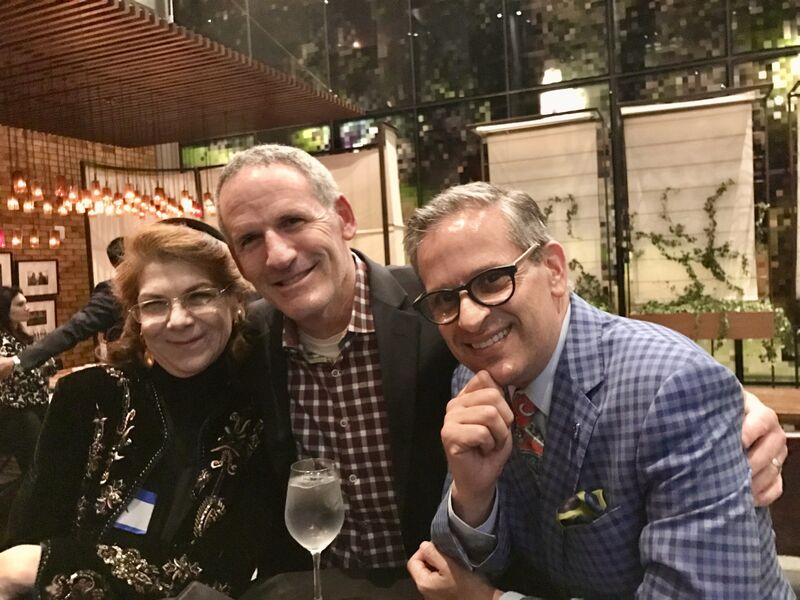
When a staffing decision becomes a love story
Jim Weiss supplied a particularly personal example. He remembered Burns moving the woman who would become his wife west to run the San Francisco office. Without that decision, he wrote, he might never have met her. Staffing plans rarely receive credit for romance. This one did.
Weiss also remembered professional debates and different approaches. His tribute leaves room for disagreement within affection, a more convincing picture of a working relationship than permanent harmony. People can influence each other precisely because they see a problem differently and remain interested enough to argue it through.
He associated Burns’s leadership with keeping operations intimate and effective. That observation fits the personal scale of his recollection: a decision about an office, a relationship between colleagues, consequences that continued outside work. An organization chart records where a person reports. Life is less tidy about where the effects of a decision end.
The founder who planned the handover
Burns also made arrangements for the company’s future. The July 4, 2024 announcement of her death set out a succession plan she had already established. Diana Boter would become chief executive, responsible for business and operational functions. Lee Roth would become president, overseeing account service and client-facing responsibilities.
Boter had joined the firm in 2009 and worked alongside Burns as its chief financial and operating officer. Her responsibilities included financial oversight, business planning, staffing, contract negotiations and long-term strategy. The person taking charge of operations had spent years doing the work on which those operations depended.
Roth had joined in May 2019 to lead investor relations. His new remit put him in charge of client-facing work. The division gave each successor a defined responsibility, an especially practical detail for a business in which relationships with the founder had been so important.
Diana BoterCEO · Business & operations
Lee RothPresident · Clients & account service
A succession plan cannot reproduce a founder’s personality. It can give colleagues authority and give clients clarity about whom to call. In a professional services business, those are substantial provisions. The personal history remains, while the next assignment needs someone responsible for carrying it out.
The firm continues to identify Burns as its founder. Its present description places strategy before tactics and stresses the combination of financial, scientific and communications experience within its team. Those choices describe an organization built around understanding a business before deciding how to explain it.
The reception above the shop offers one picture of Burns’s career. The handover offers another. In one, she brought people together herself. In the other, she entrusted colleagues with the company they would continue to run. The introductions mattered. So did deciding who would take the next call.