The Lifestyle
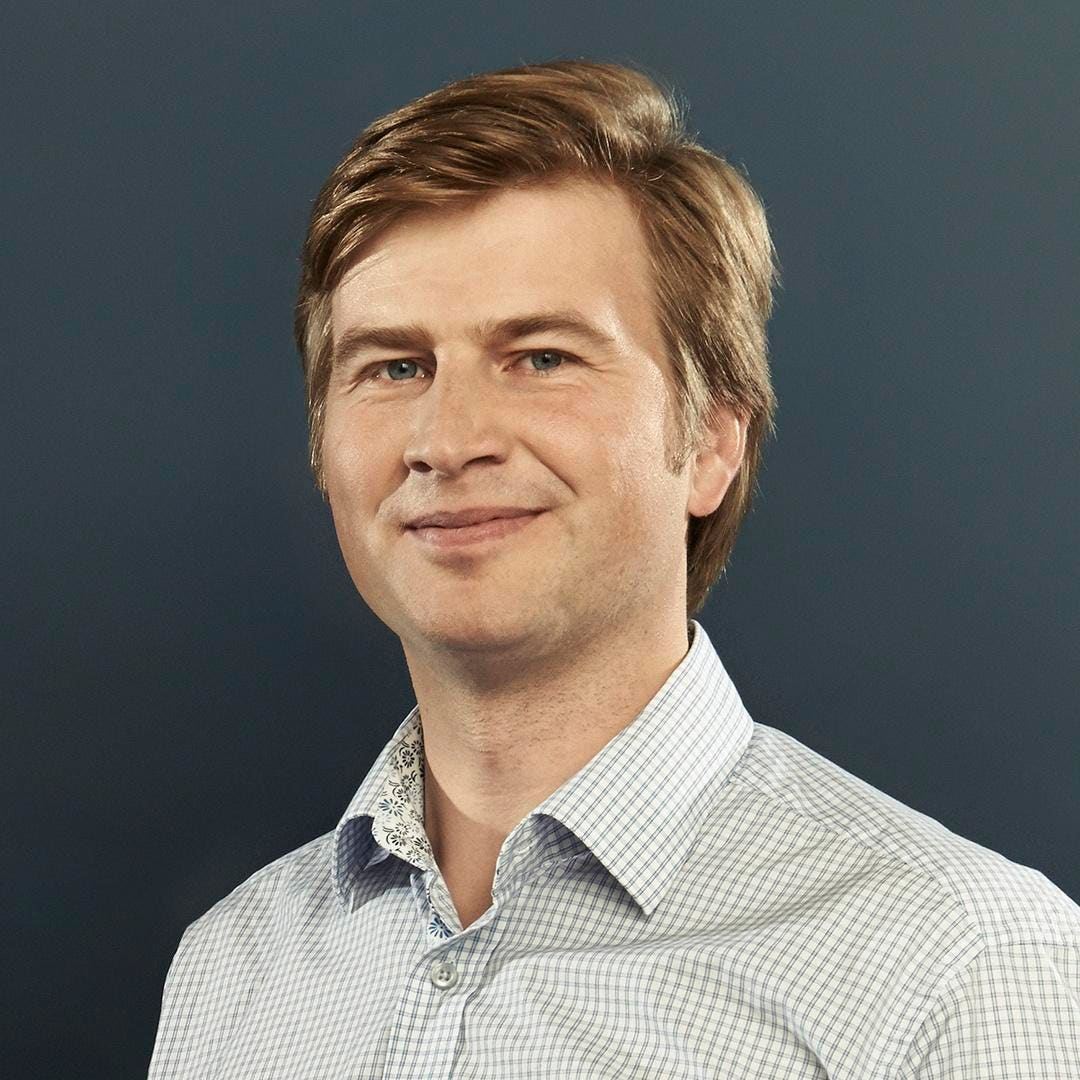
Kristo Käärmann is worth $2.2 billion. He still looks for discount prices in supermarkets. He lives in London with his wife, lingerie designer Kriss Soonik-Käärmann, and their two young sons. When the children arrived, English breakfasts disappeared. Oatmeal porridge took their place. On weekends he takes the train out of the city to hike, swim, and cycle with the boys. He says he does not own many physical things because using them takes time, and he does not have time. His office in Tallinn has a band room, a karaoke room, and saunas with hot tubs. He does not mention a private jet.
This is the operating system of the man: see a problem, write code, move on. He is forty-five, soft-spoken, and built like someone who spends more time in front of spreadsheets than mirrors. In a rare television interview in early 2026, he noted that in the previous quarter Wise gained as many new customers as there are people in Estonia. He said it the way another man might mention the weather.
The Numbers
Wise is not a bank. It does not lend your money to strangers. It holds it, moves it, and charges an average of 0.67 percent. In the first quarter of 2024, sixty-two percent of all transfers were instant - completed in under twenty seconds. The company processes over €170 billion annually for customers in more than 170 countries. It saves them an estimated €2 to €3 billion per year compared to what traditional banks would charge. Käärmann measures success by how much money he has saved people, not by how much he has made. This is either sincere or excellent branding. With him, it is hard to tell the difference. That is the point.
Revenue for the fiscal year ending March 2024 hit £1.0 billion, with operating income of £262.3 million and profit of £354.6 million. The company employs roughly 5,500 people and is valued in the low tens of billions. It turned profitable six years after founding. Most fintechs burn cash for a decade and call it growth. Käärmann calls it inefficiency.
We started Wise to make the best tool for moving and managing the world's money. Part of this mission is to make sending and receiving money internationally cheaper and faster for customers.
— Kristo Käärmann, 2024
The £10,000 Mistake
Käärmann did not wake up one morning wanting to disrupt global finance. He woke up wanting his money back. It was 2008. He was twenty-nine, a management consultant at Deloitte, living in London. His Christmas bonus arrived: £10,000. He sent it to his Estonian account through HSBC. The receipt said £15 in fees. Reasonable. What the receipt did not say was that the exchange rate had been shaved by five percent. By the time the kroon landed, more than €500 had evaporated.
Käärmann was not inspired. He was furious - mostly at himself. He had assumed the bank would use the rate he saw on the news. They did not. Banks call this a service. He called it a trap. The emotion that followed was not ambition. It was annoyance. Annoyance is an underrated fuel. It does not require a vision board. It requires a spreadsheet and a grudge.
The Party
The idea did not arrive in a boardroom. It arrived at a house party. Käärmann met Taavet Hinrikus, the first employee at Skype and a man with the opposite problem. Hinrikus lived in London but was paid in euros. Käärmann lived in London but needed euros. They worked out a simple swap: the mid-market rate, no banks, no hidden margins. It saved them both thousands. They assumed they were the only two people on earth with this problem. They were not. They were two million. Then sixteen million.
In January 2011 they registered TransferWise in London. The name was literal. It was a transfer. It was wise. The branding was done before lunch. They spent the first nine months securing a license without a lawyer, because they were busy and broke. When the license arrived, they opened the website and waited.
The First Year
They did not wait long. A TechCrunch article brought the first customers. Käärmann spent the next twelve months answering customer support tickets himself. Not as a stunt. Because there was no one else. He sat at a desk and read every complaint about delayed transfers, confusing forms, and missing passwords. Most founders delegate support by month three. Käärmann stayed for a year. He says it was the best product education he ever received.
You can still see the fingerprints. Wise's interface is obsessively simple because its CEO once had to explain it to a crying customer at midnight. The company now has around 8,000 employees, but Käärmann insists the work gets done even without him. This is not false modesty. This is the confidence of a man who knows which wires connect to which switches because he installed them.
I have a six-year-old and a three-year-old son. The good thing is that when we have 8,000 employees, the work gets done even without me. When needed, I can take a vacation and spend time with my family.
— Kristo Käärmann, ERR Interview, 2026
The Rejections
Fifteen European investors said no. The pitch was too risky. The banking lobby too powerful. The idea too small. Käärmann and Hinrikus flew to New York and knocked on the door of IA Ventures. The check was $1.3 million. It was not love at first sight. It was math. The venture firm saw the spread between the bank rate and the real rate and realized it was a tollbooth on every international border.
Peter Thiel's Valar Ventures followed with $6 million. Richard Branson put in money later. Andreessen Horowitz led a $58 million round in 2015. By 2016, the company was profitable. By 2019, Käärmann was on Fortune's 40 Under 40 list. By 2021, he was a billionaire. The timeline looks inevitable in retrospect. At the time, every step felt like a negotiation with gravity.
The Direct Listing
In July 2021, Wise went public via direct listing on the London Stock Exchange. No underwriters. No roadshow. No lock-up period theater. The company was valued at $11 billion. Käärmann and Hinrikus became Estonia's first billionaires. The stock opened strong and kept climbing. Käärmann did not ring a bell. He did not throw a party. He sent an email to staff saying the hard part was just beginning. He was forty-one.
The direct listing was a statement. Käärmann does not like middlemen. Not in banking, not in stock issuance. He had spent a decade proving that intermediaries extract value they do not create. Applying the same logic to his own IPO was consistency, not arrogance. The market rewarded it. The press called it rare. He called it obvious.
The Fine
In October 2024, the UK Financial Conduct Authority fined Käärmann £350,000. The reason: a breach of senior manager conduct rules. He had failed to promptly disclose a significant tax default from the 2017-2018 tax year. The amount was £720,000. He paid the fine. He remained on the FCA's public list of deliberate defaulters for twelve months. It was a careless mistake, the regulator said, not a criminal act.
For a man who built a company on transparency, it was an ironic blind spot. He did not contest it. He kept working. The incident did not slow the US listing plans. It did not trigger a leadership crisis. It sat there, a dent in an otherwise polished narrative, reminding everyone that billionaires can still forget to file paperwork.
The US Move
By 2025, the London listing felt like a local newspaper. Wise wanted the Wall Street Journal. The board proposed shifting the primary listing to the United States. Some investors pushed back. Dual-class shares and supervoting rights make corporate governance purists nervous. Käärmann's response was characteristic: he let the shareholders vote. They approved it. They also approved extending his supervoting rights for ten more years.
He is not a founder who apologizes for wanting control. He is a founder who believes control lets him think in decades instead of quarters. The logic is simple: more liquidity, more visibility, more speed. The mission has not changed since 2011. The only difference is the scale. When you move €170 billion a year, the border becomes a fiction. Käärmann is writing the footnotes that prove it.
The ZX Spectrum
Käärmann's first computer was a ZX Spectrum. Then a Commodore 2001. He grew up in Estonia in the 1990s, just as the country was shedding Soviet rule and wiring itself for the internet. At nineteen, he built Investor.ee, an online portal for tracking investments. It was popular. It was not profitable. He did not care. He was learning that code could replace gatekeepers.
He studied mathematics and computer science at the University of Tartu, graduating with a Master's in 2006. Then he did what every math graduate with a tolerance for PowerPoint does: he joined PricewaterhouseCoopers. Then Deloitte. He advised European banks on data strategy, legacy systems, and Solvency II compliance. He saw the inside of the machine. It was slow. It was greedy. It was held together with regulatory capture and inertia. He did not set out to destroy it. He simply saw an opening where the tape was peeling.
Then you also have to start using them, and that requires time, yet I don't have too much time on my hands.
— Kristo Käärmann, on owning physical things
The School
During the COVID-19 pandemic, Käärmann organized an open tech school in Estonian for children being homeschooled. It ran on Thursdays. It was free. It was not a marketing campaign. It was a thing he did because he had a thousand engineers and a country full of bored children. He also used the pandemic to push Wise's remote-work infrastructure, which later became a recruiting advantage.
Estonia prides itself on digital citizenship. Käärmann is the country's most famous export since Skype, and he treats the connection lightly. He does not give speeches about national identity. He gives coding lessons. He pays for scholarships. He stays quiet and lets the balance sheet do the talking.
The Future
He still blogs occasionally at kaarmann.com. He still tweets about exchange rates and oatmeal. He still wants to make money work without borders. In 2025, Wise opened new offices in London, Tallinn, and Singapore. The Tallinn office alone houses 2,500 staff. The language you hear most is English. The second most is code.
Käärmann says he tries to spend his free time at home doing something fun with the kids. He does not talk about legacy. He talks about latency - how fast a transfer can clear, how many price drops they can make in nine months, how many banks they can render obsolete before breakfast. The answer, so far, is most of them.