Kristi Flores’s first career plan had Washington in it, or perhaps somewhere farther away. She studied political science and Spanish at Willamette University and imagined a life in international policy or politics. Then graduation met an uncooperative job market. A recruiter she knew through school offered an entrance to business, and the map changed. Flores took a job in sales support at Planar Systems, the Oregon display company. It was modest work with an excellent view: from there, she could see how customers asked, how products answered, and how a company translated between the two.
She moved into product marketing and, eventually, recognized the field that suited her. Marketing gave her both halves of the puzzle she enjoyed: the creative work of framing an idea and the analytical work of proving that it mattered. But Planar’s marketing function was decentralized. Flores wanted colleagues she could study and mentors who would quicken her learning. After five years, she joined Tektronix, a larger and more global technology company, as a marketing communications manager.
The move began a stretch of more than 14 years. She led communications, content, digital and regional marketing; ran marketing for the Americas; spent time on growth and innovation; and, in August 2020, reached the job she had privately pictured years before: Chief Marketing Officer. The path looks orderly when compressed to a sentence. Its real logic was a taste for the assignments that lacked a queue of volunteers.
“The biggest opportunities often come from the roles no one else wanted, and the ideas you were once afraid to share.”Kristi Flores, 2025
The education hidden inside the awkward assignment
Flores has said that she took on roles others did not want because they offered new ways to learn and contribute. It is a pragmatic theory of career development. Popular jobs arrive with a script and a crowd. Unclaimed work often comes with loose edges, cross-functional exposure, and permission to redraw the process. The reward is breadth before rank.
One of those assignments arrived after roughly 15 years in marketing. Fortive, the parent company of Tektronix, was building an innovation-management practice to encourage more organic growth. A major Tektronix product launch became an early pilot. The assembled team already knew how to release a product. Their instruction was to forget some of that fluency and work more like an agile startup.
Some people resisted the discomfort. Flores leaned toward it. Outside experts introduced rapid prototyping, earlier customer engagement, and new launch methods. The practical lessons mattered, but the larger result was confidence. She saw that her judgment could travel beyond the boundary of marketing. Ideas she once might have kept quiet became contributions to the whole business.
The CMO who widened the job description
In 2022, Flores left Tektronix and moved within the Fortive family to Accruent, the enterprise software company whose systems help organizations manage facilities, real estate, assets, maintenance, and engineering information. Her announcement dwelt less on the change of industry than on two ambitions: creating a place where people love to work and developing stronger connections with customers.
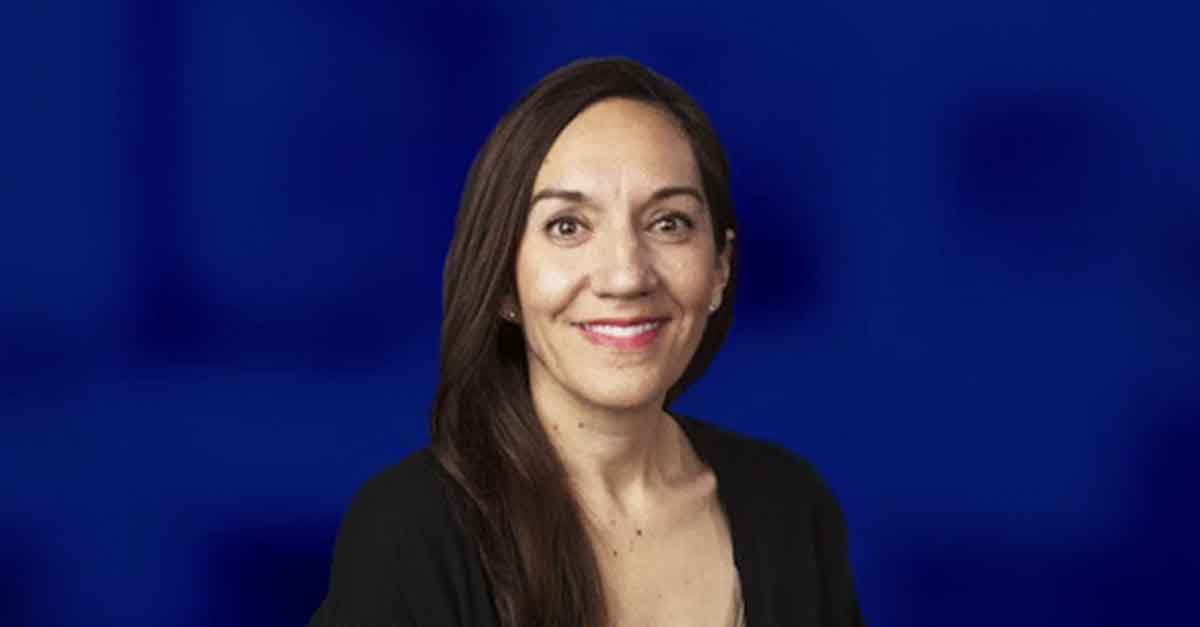
The job has since expanded. As Chief Marketing Officer and SVP of Partnerships and Emerging Markets, Flores leads product, industry, channel, brand and demand marketing, along with communications, public relations, events, campaigns, and marketing operations. She also oversees Accruent’s global partner program and operations in Latin America and Asia Pacific. Her teams span the United States, Brazil, and Europe. A marketing title now sits atop an operating map.
The combination is coherent. Marketing observes what a company promises. Partnerships test whether those promises survive contact with another organization’s reputation, incentives, and customers. Emerging markets punish generic assumptions. Each job rewards the same habit that Flores keeps returning to: listen closely enough that the strategy becomes specific.
When she took responsibility for Accruent’s partnerships, some partners had already worked with the company for more than 20 years. Flores likes speed, but she recognized a limit. “You can’t growth hack a 20-year bond,” she wrote after a partner conference in Lisbon. A new executive in an old community has curiosity before authority. She spent the early period learning the history, hearing partners’ perspectives, and aligning goals. Acceleration came after trust had somewhere to stand.
Listening is a verb with a budget
At Accruent Insights, the company’s annual customer gathering, Flores talks about the week as an operating event rather than a ceremonial one. In 2024, more than 500 customers came to San Antonio. She described the chance to hear what kept them up at night as the energizing part. The meetings, product training, hallway conversations, and peer exchanges create a temporary listening machine.
That phrase, customer listening, is in danger of becoming office wallpaper. Flores gives it consequences. Customer testimony has moved toward the center of Accruent’s brand story. Feedback informs product discussion. Competitive intelligence and “win zones” shape where the company can speak with useful specificity. The marketing mix favors a smaller group of better-qualified accounts over a grand heap of indifferent leads. Listening changes who gets pursued and what gets built.
“Ask a lot of questions and listen more than you talk.”Advice from Flores to rising marketing leaders
Her management style grew partly from an early mistake. Flores has recalled being unable to admit when she did not know something, or when someone else had the better idea. The reflex came from insecurity rather than vanity, but the effect was the same: she defended suggestions past their useful life. Eventually she learned to say, “I don’t know,” and to let a stronger idea win.
That admission became a design principle. She wants teams where uncertainty does not threaten anyone’s standing, where leaders set direction and clear obstacles while the people closest to the work supply invention. A former colleague’s public recommendation described her as someone who listens first and leads with “strength through humility.” It is a less theatrical model of authority, and therefore easier to underestimate.
The mentor, the coaches, and the long game
Flores credits Tami Newcombe, now president and CEO of Ralliant, with seeing leadership potential before she could comfortably name it. In an industry full of electrical engineers and elite MBAs, Newcombe did not treat Flores’s lack of an engineering degree as a deficit. She noticed a marketer who cared about customers and wanted to grow the business. Newcombe gave her the Americas director role, later recruited her as CMO, and encouraged her to take the Accruent opportunity even though Tektronix would lose her.
The example explains Flores’s interest in talent development: sponsorship is belief made expensive. It costs the sponsor comfort, time, and sometimes a good employee. Flores now argues that tomorrow’s CMO is already learning somewhere in the organization and should be helped to articulate an ambition before it feels entirely plausible.
Away from org charts, she reads biographies of sports coaches. Ian O’Connor’s book about Mike Krzyzewski is a favorite. Coaches fascinate her because a team makes leadership visible: trust, accountability, preparation, and resilience are tested in public and on schedule. She would enjoy conversations with Mary Barra and Sara Blakely, and also Tim Cook and Jim Harbaugh. The guest list ranges across cars, apparel, phones, and football, but the question beneath it is consistent. How do you build a group that can do more together than its résumés predict?
AI, applied to Tuesday morning
Flores approaches artificial intelligence with the same experimental instinct she gained in the Fortive pilot. Start with the business priority. Then ask whether AI can increase speed, efficiency, creativity, or clarity. Accruent has used it across product and engineering, legal, marketing, and sales. Her teams run experiments, build account research, personalize messages, and explore tools that summarize data or direct a user toward action.
The emphasis is on use rather than theatre. At Portland State University’s professional education program, her topic is connecting AI strategy to everyday workflows. The description fits her broader career: take the large abstraction, move it closer to the people doing the work, and let evidence improve the idea. She also treats AI-driven changes to search as a genuine marketing problem. The old playbook is being rewritten while everyone is still on the field, so agility matters more than claims of certainty.
Her oldest instinct remains international. Flores was born in Oregon but lived in Australia from ages nine to 14. Her father had worked in mining before she was born. Decades later, she returned to Australia and New Zealand in an Accruent role, meeting organizations in mining, ports, energy, transport, aviation, and education. The political science student who once pictured international work did, in fact, find it. She simply arrived through software, partner meetings, and the systems behind buildings most people pass without noticing.
There is a tidy career fable available here, but Flores’s own version is more useful. Growth is a choice repeated under imperfect conditions. Take the assignment. Admit when the answer is missing. Find the mentor who can see around a corner, then do the same for somebody else. Listen until the generic plan becomes particular. The jobs nobody wanted were never the story’s leftovers. They were where the story acquired its range.