Before Krista Coupar had a company, she had the memory of a dress being made. As a child in the 1980s, she watched her grandmother stitch shimmering fabrics into outfits for rodeo performers. The attraction was tactile and specific: fabric, light, the work of making something someone would wear. Her later career would involve rather more meetings. The interest in what people could make together survived.
Coupar began in retail at The Silk Trading Co. in 2001. In 2004, she went to work with San Francisco designer Kendall Wilkinson, learning the creative and technical sides of the trade. “That was my business school,” she said. By 2007, she had founded COUPAR, a consultancy that would help other creative businesses carry out their work.
A business built for changing workloads
The choice of customer mattered. Interior designers have a particular combination of responsibilities: a visual point of view, a client relationship, and a project that must become physically real. A fabric selection eventually involves an order. A room plan needs drawings. Someone must keep track of the details while the principal keeps track of the whole.
Coupar assembled services that a firm could use as needed. Her team could supply technical assistance, management, and marketing without requiring a client to take the entire package. The proposition made room for businesses whose workload changed. Help could arrive around a project, a growth period, or a particular missing skill.
The range is revealing. COUPAR’s production work includes drafting, sourcing, purchasing, expediting, site visits, and installation support. Its marketing work includes websites, newsletters, photography management, and public relations. Pipeline management addresses processes and purchasing strategy. The company operates in the intervals between an idea, its execution, and the next commission.
The arithmetic of a working life
Coupar’s advice to business owners also starts somewhere concrete: the life they want their work to support. Her approach includes working backward from financial and personal goals for the year to the weekly hours and number of projects required. Ambition acquires a calendar. The calendar gets a vote.
That sequence gives a creative founder something more useful than a general instruction to be busy. It connects income, time, and capacity. A desired year can be examined as a series of working weeks, with actual projects occupying them. For a profession where each commission arrives with its own demands, the exercise makes the trade-offs visible.
Her appearances with LuAnn Nigara ranged across hourly billing, branding, and planning a new working year. These are unglamorous subjects with considerable influence over whether a glamorous project is enjoyable to complete. Coupar’s contribution was to make them part of the design conversation. A well-composed room still belongs to a business that must decide how to spend Tuesday.
A dining room with homework
At home, the same interest in use was visible at the dining table. Coupar, a mother of six, had a San Francisco dining room that combined metallic finishes with the demands of family life. Weekday breakfasts, math flashcards, and birthday parties all took place there. The room had several constituencies. None appears to have filed a formal design brief.
Its brass, chrome, and other metallic details worked together through a shared brushed finish. Sideboards anchored the composition. A mirror frame, wallpaper sheen, and silver-rimmed plates added quieter layers. The decorative choices produced a room with visual interest that still accommodated the ordinary business of being a household.
It is a useful glimpse of Coupar beyond the consultancy’s service list. The dining room made space for adult taste and children’s routines at the same table. That gives her interest in flexible environments an everyday setting. A room can be considered and lived in, with the flashcards left in the picture.
“That was my business school.”
Krista Coupar, on working with Kendall Wilkinson
A small audience of the right people
Her thinking about marketing has a similarly practical scale. She once described a talented client with only 330 Instagram followers. The significant detail was who those followers were: leading designers who actively engaged with the account. A modest number could contain a useful professional community.
The anecdote puts a human question inside a numerical one. Who is paying attention? What might the relationship become? A firm’s public presence has to reach people who can understand its work, recommend it, or commission it. Counting everyone together can obscure the people who matter to a particular business.
Coupar’s approach to branding starts with the owner and the story that makes that person recognizable and relatable. Their interests and experience help explain which clients they want to work with. The emphasis suits someone whose own professional story begins with a grandmother sewing. It gives the polished presentation a person to belong to.
Her company’s marketing remit has also widened beyond interiors to architects, builders, subcontractors, and artisans. That brings attention to contributors whose work may be physically everywhere in a finished project while their names are less visible. Writing their stories requires understanding what they actually do. The finished photograph is a beginning; the explanation takes more work.
The work can involve assembling a website and a portfolio, writing a journal, and carrying those stories into newsletters and social media. Award submissions are part of the remit too. COUPAR’s account of its work includes QuarryHouse’s 2022 Julia Morgan Award for craftsmanship and artisanship. Here, marketing means making a particular contribution legible: giving a potential client enough detail to understand the people behind the finished space.
The pop-up that stayed
In spring 2016, Coupar’s San Francisco Design Center space acquired another purpose. Furniture company Quintus installed a pop-up there. Designers could work, meet, and experience furniture in a setting already connected to their professional lives. By September, the temporary arrangement had become a permanent showroom.
Designed for Quintus by Elisa Carlucci, the space included an evolving selection of furniture, lighting, and accessories. It gave designers somewhere to encounter the collection outside the usual sales-focused environment. The collaboration joined two businesses with different offerings around a shared audience and a physical place.
For Coupar, the attraction included combining the flexibility of a pop-up with an established location. It was a practical experiment in what an office could accommodate. A workspace could also help someone make a selection. People already coming together for one kind of work had a reason to stay for another.
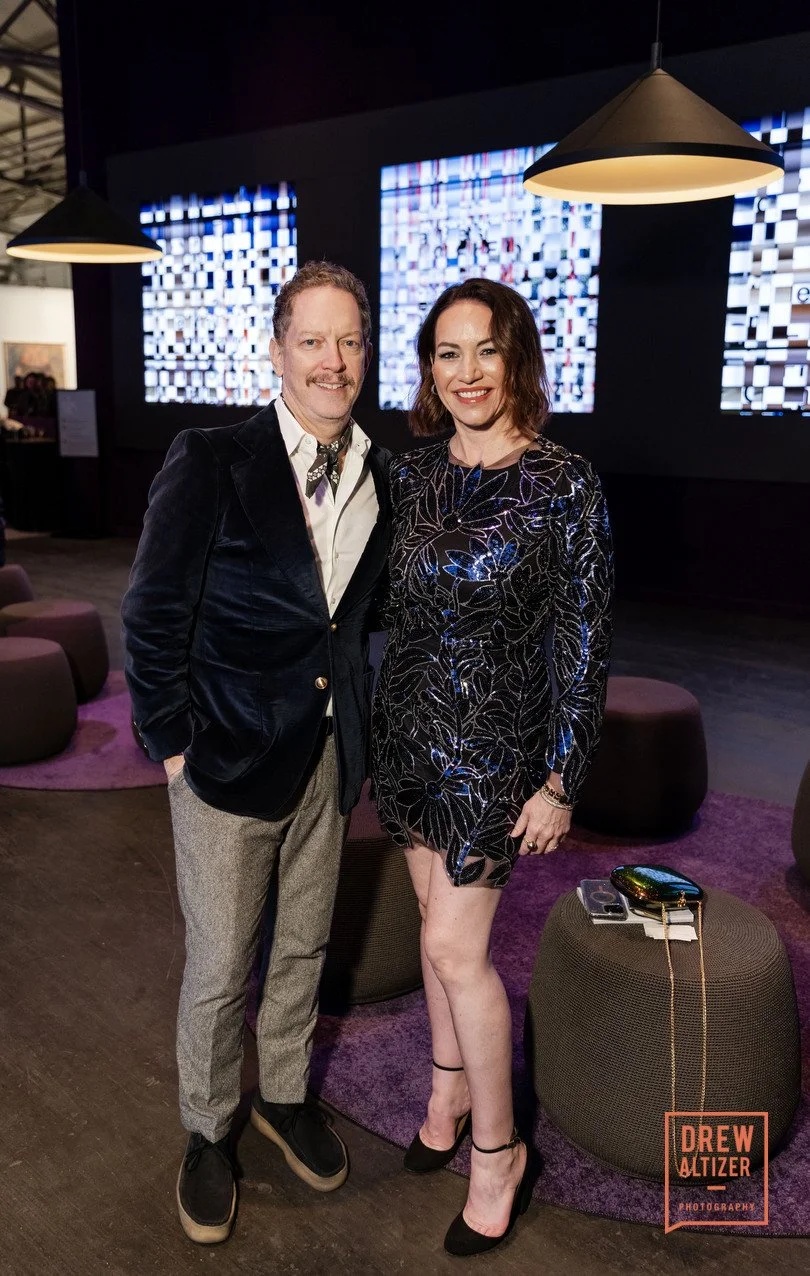
The 2024 photograph belongs to a busy local circuit. That year, COUPAR’s team visited FOG Design + Art at Fort Mason, attended the Tai Ping showroom opening, and toured the San Francisco Decorator Showcase. Different colleagues took part in different events. The occasions gave the people doing the work time to look at other people’s work together. A consultancy’s connections can sound abstract on a service page; here they have venues, colleagues, rugs, and an evening walk through somebody else’s rooms.
A founder among peers
Collaboration also appears in the way Coupar organizes her own professional life. She has been a member of Vistage since 2017. Monthly meetings with other business owners give the consultant a place to work through decisions herself. The person advising a firm can use a roomful of advisers too.
Her involvement extends to design and education organizations. She serves on the Northern California board of the Institute of Classical Architecture & Art, participates in the host committee for Enterprise for Youth’s (Private) Collections, and supports the San Francisco Fall Show. These are specific commitments within the community around her work.
A 2024 interview with Tom Dioro explored her play-based approach to business and her interest in giving younger designers autonomy within a supportive team. Alongside the procurement lists and project processes sits an appetite for discovery. Both belong in the working arrangement: enough structure to carry a project, enough freedom for someone to develop judgment.
From private interiors to the pavement
The addition of COUPAR Design brought another application for those relationships. With principal Teresa Kintz, the company undertakes independent residential interiors while the consultancy continues supporting other firms. Its founder now participates in both sides of an arrangement she has spent years examining: the design business asking for help and the organization bringing people together to deliver it.
By 2024, that independent practice was receiving design coverage. It draws on relationships with architects, builders, artisans, and vendors developed through the consultancy. The move gives Coupar’s interest in how a project works a direct residential expression, with the homeowner’s life becoming part of the assignment.
On Sacramento Street, her interest in art has become visible from outside. Coupar and curator James Bacchi conceived Window Shows, a series of public art installations at COUPAR Design. The windows turn the edge of a private working space into somewhere people can encounter art without arranging a visit.
The fifth Window Shows installment: paintings and sculptures by Mark D. Powers, curated by James Bacchi.
That fifth installment ran from April 1 through July 31, 2026. Coupar connected the series to her enthusiasm for collecting art, her friendship with Bacchi, and the Sacramento Street shopping district. It also paid homage to San Francisco’s retail window displays from the 1950s through the 1970s.
There is pleasure in that last detail. A window display is an invitation that can reach someone with no intention of buying anything. A passerby gets to stop. Through this series, Coupar has given the room behind the glass another audience.
The grandmother’s fabrics, the breakfast table, the furniture showroom, and the art-filled windows belong to different parts of her life. Each involves something made with care and a setting where people can use or encounter it. Coupar’s career has kept returning to that meeting point. There is the work itself, and then there is the question of making room for it.