At thirteen, Ron Young found a boat and a small administrative difficulty. The local Sea Scouts accepted members from fourteen. He joined anyway. The boat was a ketch-rigged whaleboat named Ranger, and the boy from San Francisco had found an occupation considerably more absorbing than waiting for his next birthday.
It is a useful place to begin a life that would include marketing at Levi’s, an America’s Cup challenge, a professional social network and a very durable lunch appointment. Young’s activities can look like several separate careers. Put the people back into the picture and they begin to resemble one another. There is usually a group to assemble, expertise to recognize and an audience to persuade.
Thirteen was close enough
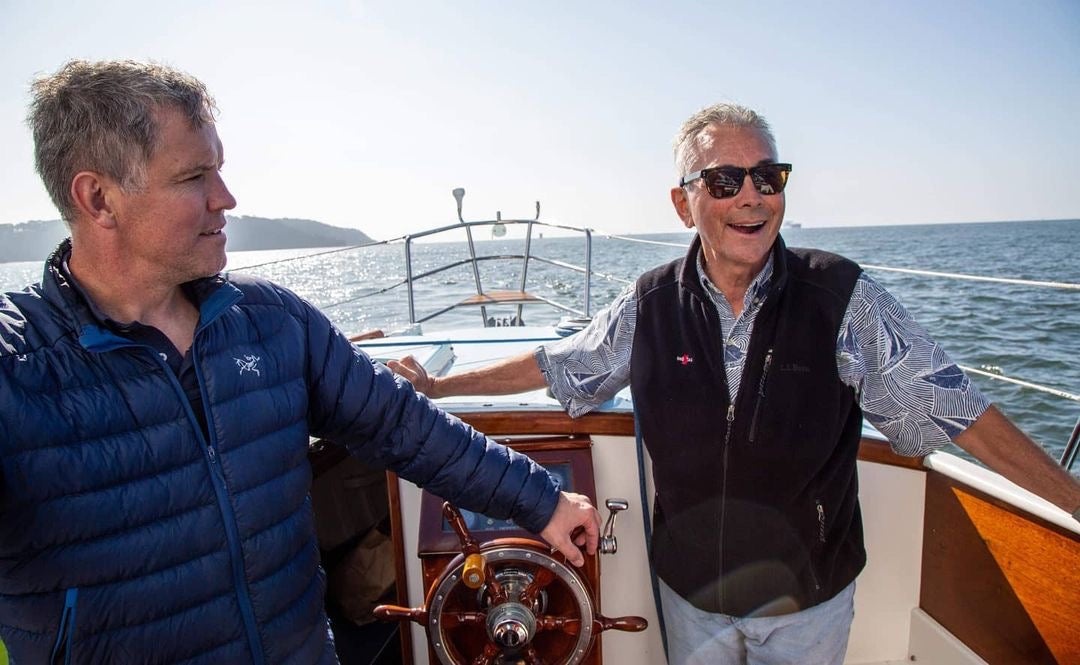
Young was the first sailor in his family. His introduction through Sea Scouts grew into a long involvement with racing, rather than an occasional excursion around the Bay. By the time he appeared on Sail Sport Talk in April 2019, his sailing history encompassed more than 3,000 races across four continents. Those are the accumulated outings of someone for whom the activity has become part of the calendar.
The range of his America’s Cup involvement is revealing, too. Across campaigns, his roles included sail development, advising and work with the mainsheet traveler. Sailing gave him experience of an enterprise in which a title describes only one part of the job. Weather, equipment and the other people aboard have their own opinions about how the afternoon will proceed.
His story also stays close to San Francisco. He was born there, learned to sail there and later worked on a challenge that would put the city into an international sporting contest. Long before he asked marketing professionals to find one another online, he was participating in a world where knowing the right specialist could make a very material difference.
The campaign before the campaigns
The Golden Gate Challenge brought those demands into focus. Young served as its general manager. The undertaking combined sailors, designers, a boat builder and technical specialists in an attempt to produce a competitive America’s Cup boat. Paul Cayard was part of the sailing team; Gary Mull, Heiner Meldner and Alberto Calderon brought different kinds of design and scientific expertise.
In February 2025, Young was listed alongside Cayard and boat builder Kenny Keefe for a St. Francis Yacht Club conversation revisiting that effort. The topic included the team’s experimental combination of a bow rudder and a bulb keel. A racing boat is a particularly direct test of collaboration: eventually, the collection of ideas must leave the dock together.
Young’s commercial career developed across a different set of recognizable names. His marketing experience includes Levi’s, CVS and Electronic Arts. By his 2015 Advertising Week appearance, he had more than thirty years of experience as an entrepreneur and marketing leader. His work had moved between established brands and startups, giving him views of the profession from both sides of the company-name line.
That distinction would matter at Shocase. A well-known employer helps a résumé attract attention. It does considerably less to explain exactly what the applicant contributed. Someone who has spent years selling brands might reasonably become interested in the people whose work disappears inside them.
A résumé needed pictures
Shocase made its public debut on January 21, 2015. Young’s proposition was directed at marketing professionals: give them a place to display their work, keep up with their field and make business connections. Images and video could carry some of the explanation that a list of positions could not. A visitor could see what somebody had helped make.
The intended audience crossed familiar departmental boundaries. Public relations, advertising, design, research and sales promotion all belonged in the same professional neighborhood. Members could tailor their news and recommendations to their interests. A specialist network offered the possibility of fewer irrelevant conversations between a person and the work they wanted to find.
Young described a sequence that moved from displaying work to following industry developments and finding business. It had the advantage of sounding like something a working person might actually want from a website. The last item also made the first two accountable. Looking interesting was meant to lead somewhere.
The timing carried a challenge. In 2015, professionals already had plenty of accounts to maintain. Another network required another reason to visit. Young’s bet was that the shared interests of a profession could supply that reason, and that the work itself could become the basis of introductions.
“Showcase your work, stay abreast of the news, get more business.”
Ron Young, describing Shocase in 2015
Leave room for the collaborators
The portfolio idea became more interesting when it allowed people to describe their involvement in shared campaigns. A finished advertisement may be wonderfully economical. The labor behind it rarely is. Strategy, design, production and client work all leave contributions that are difficult to separate by looking at the final image.
Shocase offered a place for those participants to show their individual parts. For Young, this put a professional relationship inside the display of work. A portfolio could help someone recognize a useful collaborator rather than merely admire an attractive result. The next conversation might begin with a particular skill.
His published argument about integrated marketing in November 2015 followed the same logic. Disciplines needed a common message, ongoing cooperation and respect for one another’s capabilities. He wanted specialists involved throughout planning, execution and evaluation. The practical difficulty was familiar: teams had to coordinate their work while allowing people with particular expertise to do their jobs.
That is an appealing view of collaboration because it leaves room for differences. A designer and a public relations specialist do not become interchangeable by sharing a project. Their separate abilities are part of the reason to bring them together. Young’s platform and his argument both gave those abilities somewhere to be recognized.
A shared result. Several distinct contributions.
People worth showing up for
Young also had to persuade people to join the conversation. Shocase’s early approach included recruiting established figures in marketing. In May 2015, MBLM founder and president Claude Salzberger became an advisor. His experience in corporate identity gave members access to someone who had worked on the sort of branding programs the network’s audience understood.
The effort extended into original video. Shocase Presents featured interviews with people including designer Kit Hinrichs, Cutwater founder Chuck McBride, Epic Signal founder Brendan Gahan, Dream Rockwell of The Do LaB and Mekanism’s Jason Harris. The subjects ranged across the marketing world rather than staying inside one job description.
Young’s place in this work was as founder and CEO; the production itself had a named team. Tim Tobias served as executive producer, with creative and production collaborators from The Confluence Group. There is a pleasing consistency in a portfolio archive that identifies the people making a series about other people’s work. The credits are doing some work of their own.
In those choices, the network becomes easier to understand as an invitation. A person might arrive to see a respected practitioner, encounter an unfamiliar discipline and stay to look at someone else’s project. The product needed material that could start such a visit. Familiar names could open the door; useful work had to occupy the room.
The Wednesday appointment
Young had another setting in which to exercise that skill. At St. Francis Yacht Club, he became a longtime chair and host of the Wednesday Yachting Luncheon. The format provides a recurring appointment with a speaker and an audience. Sailing is the point of departure, with room for history, technical ideas and accounts of life on the water.
His involvement in maritime organizations also included election as chairman of the Sailing Science Center’s board in July 2019. These commitments place the business biography in a wider local setting. The founder of a digital community was also spending time with institutions whose work depended on people meeting, volunteering and returning.
In early 2024, he served as MC for a luncheon supporting kite-foiling competitor Daniela Moroz’s Olympic campaign. Nearly 120 supporters attended, and the gathering exceeded its fundraising goal. Young’s role was to help put an athlete and her undertaking before a room of people prepared to support it.
The occasion makes the word “network” feel less abstract. There was a person with a demanding project, an audience that understood something of the undertaking and a practical reason for the introduction. Nobody needed to invent a new meaning for community. The room had something specific to do.
Back aboard
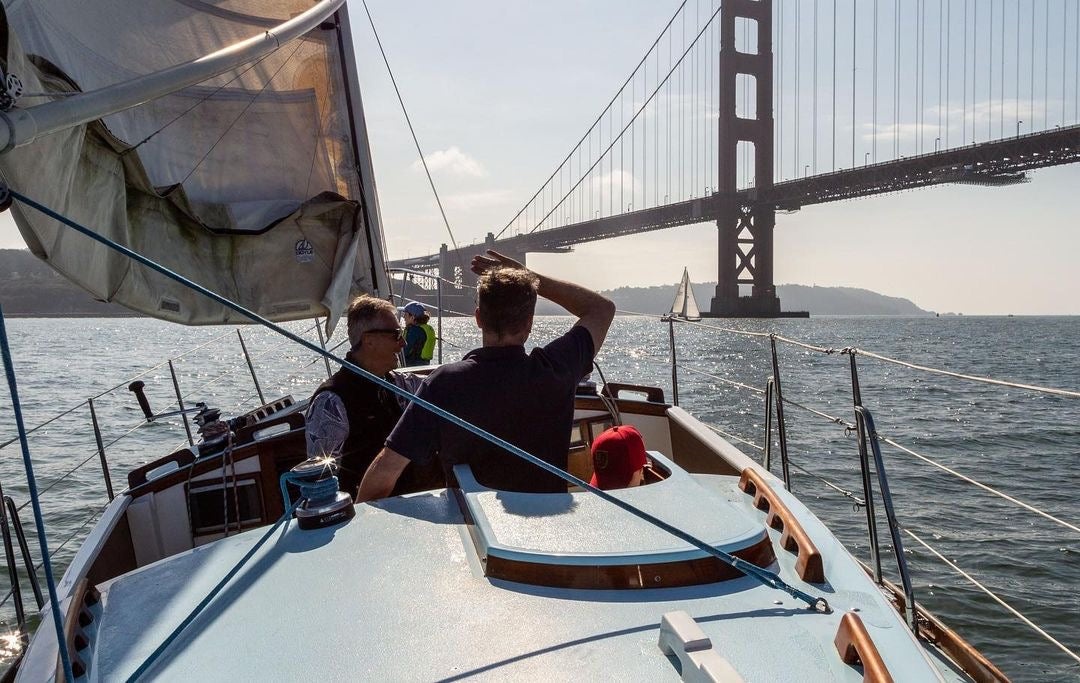
Young’s boat adds a final, agreeable complication to the technology-founder picture. Youngster is a wooden racing boat built in 1937. Ranger Road’s sailing program offers veterans opportunities to cruise or learn competitive sailing under his instruction. The boat serves a contemporary purpose without having to pretend it was invented last quarter.
There are several ways to measure a career like this: companies, campaigns, titles, races. The more revealing unit may be the occasion on which somebody else gets to participate. A teenager finds his way into Sea Scouts. A marketer gets room to explain a contribution. A speaker meets a curious audience. A sailor brings an Olympic effort within reach of its supporters.
By the February 2025 Golden Gate Challenge retrospective, Young could sit alongside colleagues from an undertaking decades earlier and help explain how their different responsibilities fitted together. The crew still had a story to tell. Giving them an audience seems a fitting appointment for someone who has kept so many conversations going.