Mario Muredda once wanted three letters after his name. He enrolled in a doctoral program at Queen’s University in 1998, stayed for eight years, and left without the degree. For someone raised in an Italian-Canadian family that valued education, this was a difficult exit. His later verdict was considerably warmer: “I wouldn’t change it for anything.”
Today his title is Global CEO of Ogilvy Health. The contrast invites a tidy redemption story, the sort in which every disappointment turns out to have been a cunning career move. His account resists that treatment. Leaving was painful at the time. The satisfaction came later. Those are two separate experiences, and giving each its proper place makes the story more useful.
A résumé arranges a life into a sequence of achievements. It gives the impression that its owner knew where each step would lead. Muredda’s story offers a less polished possibility: you can spend years pursuing something, change direction, and eventually enjoy work you had not originally planned to do. The years still happened. They simply did not produce the credential he expected.
“I wouldn’t change it for anything.”
Mario Muredda, on leaving doctoral study
A writer gets a different kind of brief
His agency career began at Precept, in a writing role. Later positions included DazMedia, Cline Davis & Mann, and AgencyRx. These were jobs that required him to move between detailed subject matter, business development, and the practical demands of an agency. The eventual chief executive had spent time doing the work that precedes a meeting with the chief executive.
Writing offers a particular education in attention. A sentence has to survive the journey from the person who knows the subject to the person encountering it for the first time. The writer must decide what belongs up front, what needs explanation, and what can be removed. An agency asks similar questions of a whole project, with more people involved and rather more calendar invitations.
Muredda joined Harrison and Star in 2012. By 2015 he was co-president alongside Mardene Miller. The agency described investments in digital training, mentoring, and manager development. His public remarks at the time emphasized the relationship between the agency and its clients. It is an early appearance of a subject that keeps returning in his career: how people work together over time.
The promotion to CEO was announced in November 2017 and took effect on January 1, 2018. Ty Curran moved into the chairman’s role. It was a succession with continuity built into it: Muredda had already spent several years inside the business. A new title arrived on top of existing relationships, rather than requiring him to introduce himself to everyone on Monday morning.
- 2012Joins Harrison and Star
- 2015Becomes co-president
- 2018Becomes CEO
- 2023President of marketing, Fishawack
- 2024Global CEO, Ogilvy Health
The larger the group, the harder the introduction
In January 2023, Muredda joined Fishawack Health as president of marketing; the appointment was announced the following month. His assignment included bringing together its global and North American teams. By 2024, under the Avalere Health name, the organization described his work as completing the integration of its collected marketing expertise.
Integration is an appealing word from a distance. Up close, it means people agreeing on responsibilities, sharing information, and discovering whether a colleague in another office can actually help with the task at hand. A company can place several businesses under one name quite quickly. Getting their people to behave as colleagues is a more demanding editorial exercise.
His move to Ogilvy was announced on October 22, 2024. He succeeded Kim Johnson, whose three-year tenure had included changes to the agency’s capabilities and client portfolio. The appointment also brought him back into WPP, the network in which he had started at Precept. A career that looked like a departure had, in one respect, become a return.
His brief covered brand strategy, advertising, public relations, influence, experience, and innovation. These disciplines have different habits and different ways of judging a successful piece of work. Bringing them together requires decisions about which expertise a project needs, and when. A room full of capable people can still produce a muddle if nobody knows why they have been invited.
Credit travels in company
There is a small pleasure in watching an executive resist the temptation to make an award entirely about himself. In June 2026, after Ogilvy Health’s Clio recognition, Muredda gave an interview that began with a cheerful struggle to keep his language suitable for publication. The polished corporate vocabulary briefly lost the argument. He was pleased, and sounded pleased.
Then he turned to the creative community and to Liz Taylor’s leadership. He talked about work across countries and disciplines. That distribution of credit is revealing. In his telling, the CEO is one participant in a larger arrangement of people with different responsibilities. It leaves room for the people whose names appear on the actual work.
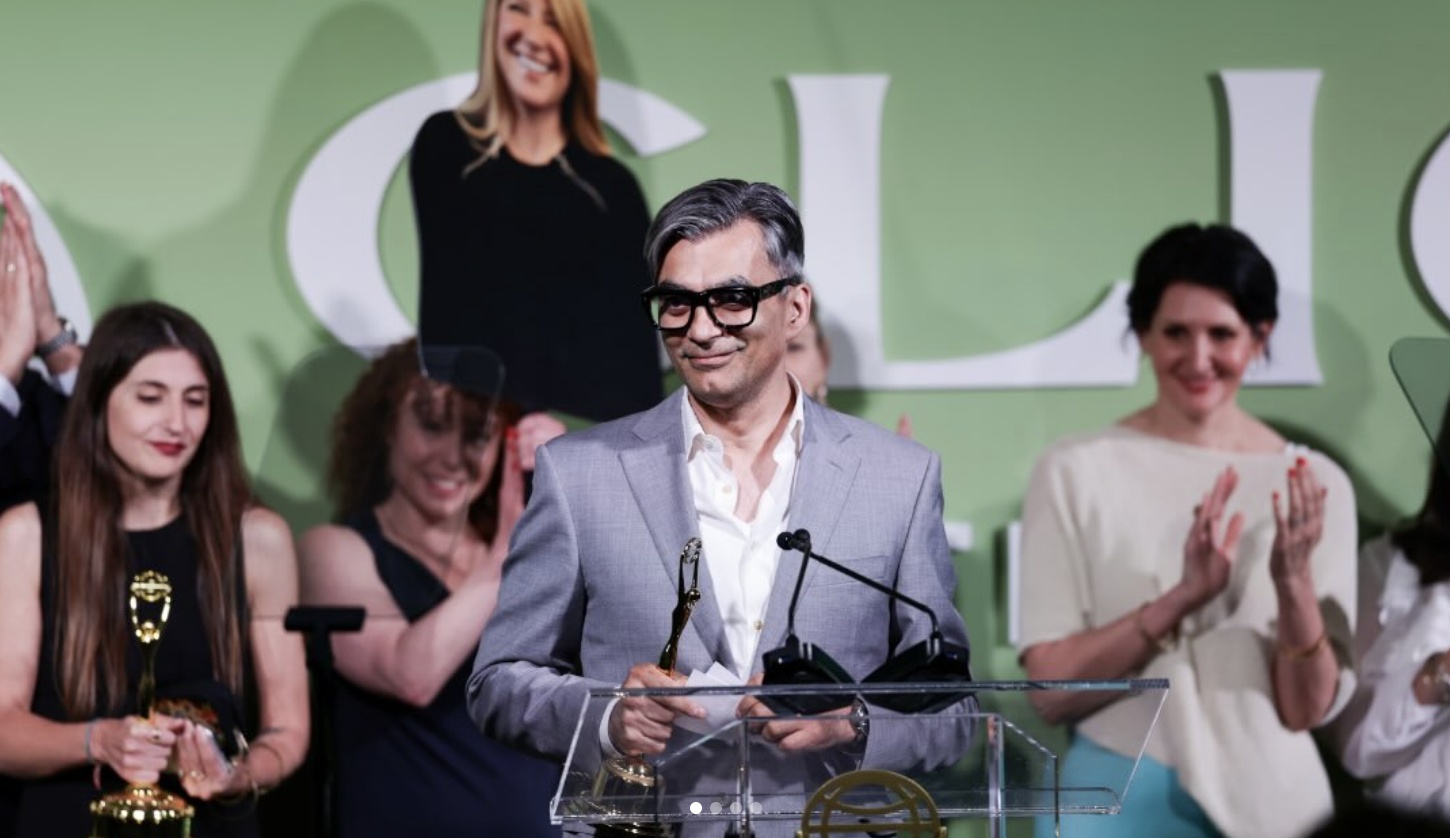
An awards photograph makes the arrangement visible: Muredda at a lectern, a trophy in hand, colleagues gathered around him. The picture offers a welcome correction to the solitary executive portrait. An agency’s output passes through many hands before anyone puts on a suit to collect something for it.
His approach to clients in the same conversation was similarly participatory. He argued that an agency asking a client to take a creative risk should be prepared to share it. The point has practical weight. It is easy to recommend courage while keeping one’s own interests safely elsewhere. Shared responsibility changes the character of that recommendation.
More names on the organization chart
In October 2025, Ogilvy Health announced leadership changes involving Noor Tourte and Christianna Gorin. Tourte became chief strategy officer; Gorin moved into the chief growth officer role. Muredda described the appointments as an investment in the agency’s future capabilities. The announcement also reported double-digit growth over the preceding year.
Those appointments give some substance to the familiar promise of collaboration. Strategy and growth need identifiable owners. Otherwise, collaboration can become a polite way of postponing a decision until the next meeting. Naming people to distinct jobs creates a clearer place for both questions and accountability.
By 2026, his responsibilities had expanded to include the specialist teams at Ogilvy Health, Grey Health, and TANK Worldwide across the Ogilvy Group. The agency’s annual account also reported an 80 percent win rate in advertising pitches for 2025. That figure belongs to the agency’s reported performance; it does not make every successful pitch the personal achievement of its CEO.
A bigger remit adds another problem of distance. The leader has to hear what is happening in teams whose working days he cannot watch. An organization chart can show where authority sits. It cannot show whether someone feels able to bring up a weak idea, a better alternative, or an awkward question before the work reaches a client.
The chief executive asks the questions
Muredda’s podcast, Writing the Next Headline, gives him another public role: interviewer. In its opening conversation, he sat down with Simon Stebbing to discuss trust in an AI world. Other guests have included Renata Maia and Juliana DiBona. In August 2026, an episode with associate creative director John Linitz addressed content authenticity and cultural trends.
The format is worth noticing. A CEO who hosts a conversation has to make space for someone else’s expertise. The guest can explain a problem in the vocabulary of their own work, rather than appearing only as a name in a list of company capabilities. Listeners get to hear how a colleague thinks.
A recurring closing prompt asks guests to choose a David Ogilvy quotation and explain its meaning to them. It is a modest way to put the founder’s words back into circulation. An old advertising maxim can be decorative when printed on a wall. Ask someone why they chose it, and it becomes a statement about their present responsibilities.
The conversations also bring the questions facing an agency into the open: what people trust, how content earns attention, and what happens to authorship when new tools arrive. These questions do not come with a permanent answer. An interviewer can revisit them with different colleagues, allowing the discussion to change as the work changes.
A seat at a smaller table
His commitments extend beyond his executive role. In 2018, Muredda helped establish Dream Foundation’s New York Advisory Council, with an emphasis on fundraising, partnerships, and raising the organization’s profile. He became board chair in 2023. The foundation’s 2025 annual report lists him as past chair and a member of its board.
The change in title matters because service has a chronology too. Chairing a board is a period of responsibility, followed by a different relationship to the same organization. The useful detail is the continuity of involvement. Business development and partnership building can also be put to work outside the agency’s client roster.
In July 2026, he joined Ogilvy Health interns for breakfast and a conversation about career growth, constructive feedback, and navigating an agency. There is something fitting about that smaller table. Interns are near the beginning of a working life; Muredda has already experienced the gap between an intended destination and the career that eventually emerged.
Feedback, growth, and finding one’s way are sensible subjects for a conversation between people at different stages. A question can travel across the table more easily than through the layers of a large organization. These exchanges return the story to a scale that an executive title can obscure: one person speaking with another about the next piece of work.
His unfinished doctorate belongs in the story because he has spoken about it himself. His later career belongs beside it because it shows how much can happen after an ending. The writer became a leader, the leader became an interviewer, and the interviewer keeps inviting other people to speak. For someone working in advertising, that is a useful habit to carry into the room.
Continue the conversation
Follow his work, watch the interviews, or explore the career behind the title.
- Mario Muredda on LinkedIn
- Ogilvy Health website
- The October 2024 appointment
- What It Takes to Build a Network - interview
- Writing the Next Headline - Simon Stebbing video
- Writing the Next Headline - Renata Maia video
- Writing the Next Headline - Juliana DiBona video
- The decision to leave doctoral study
- Dream Foundation’s 2025 board listing