An electronic organ is an unlikely place to begin a story about medical manufacturing. Yet that is where Kimball Electronics started: in 1961, making electronics for the Kimball organ business. Someone had to turn a musician’s touch into a dependable electrical response. Today, the company’s customers have rather different concerns: steering systems, medical devices, industrial equipment. The connection is the work hidden between a design and a product that keeps behaving as intended.
- The work: electronics assembly, medical manufacturing, engineering, and lifecycle support.
- The buyers: automotive, medical, and industrial companies, including Nexteer, Philips, and ZF.
- The next bet: a €90 million acquisition adding precision medical molding.
The organ that became a factory
The revealing date is 1968. Kimball’s corporate history begins with instruments, but its electronics timeline records an outside contract with GE Appliances that year. A capability developed for an internal customer had found another buyer. By 1985, the last organ had been produced. The electronics operation had acquired a life beyond the product that created it.
That history gives the business a useful shape. Kimball sells manufacturing competence to companies whose names usually get the attention. Its medical business began with a Bayer contract in 1999. In 2014, a spin-off from Kimball International made the electronics operation an independent public company. The ticker is KE. The less visible continuity is a willingness to make somebody else’s product.
The product is somebody else’s promise
For a customer, the problem begins when a design must become repeatable production. Components need sourcing. Boards need assembly. Finished systems need testing. A product already made elsewhere may need transferring without introducing defects. Kimball’s service offering stretches from design and prototypes through manufacturing and aftermarket support. A customer can enter at a particular stage rather than hand over every task. Kimball also assigns a business manager as a single point of contact. For customers with production in several regions, that arrangement offers a way to coordinate local factory work without rebuilding the commercial relationship in each country. The company says it makes the same products at multiple locations for some customers, bringing production closer to their markets.
Medical manufacturing adds another set of disciplines: precision injection molding, cleanroom assembly, single-use devices, and sterilization management. Kimball describes work ranging from diagnostic kits to drug delivery devices and complete electronic systems. For a medical equipment maker, that combination can reduce the number of handoffs between the people building a circuit board and those assembling the surrounding device.
- 01Design &
prototype - 02Qualify &
introduce - 03Build &
test - 04Service &
support
The model is business to business. Kimball manufactures to customers’ specifications and earns revenue from production and associated services. It competes with Benchmark, Flex, Jabil, Plexus, Sanmina, and specialized medical contractors. Its proposition combines durable electronics, medical processes, and a global factory network. Those capabilities matter most when a buyer needs engineering controls and continuity over a long product life.
The arithmetic behind the handshake
Relationships are central to Kimball’s pitch. Its Guiding Principles connect customers, people, citizenship, and profits. The company describes employee autonomy and continuous improvement as part of how the work gets done. There is outside evidence of satisfied buyers: in the 2025 CIRCUITS ASSEMBLY awards, Kimball won all seven service categories for electronics manufacturers above $500 million in annual sales.
But a good relationship does not guarantee a production schedule. In fiscal 2026, Nexteer supplied 18% of sales; Philips and ZF each supplied 11%. Together, three customers accounted for 40%. Kimball’s annual filing says customers typically make firm production commitments for no more than one quarter. A long history together can coexist with a very short view of orders.
The financial results make the tension visible. Fiscal 2026 sales were $1.431 billion, down from $1.487 billion a year earlier. Medical represented 29% of revenue. Kimball had also lost a major automotive program, a loss it says was unrelated to its performance. The warning is practical: excellent execution cannot protect a contractor from every decision made inside a customer’s business.
A business they decided to leave
The company has tested its own boundaries. In 2018, it acquired Global Equipment Services, entering automation, test, and measurement equipment. In July 2024, it sold that operation to Averna. Kimball’s fiscal 2025 report recorded $22.9 million of pretax impairment charges in fiscal 2024 associated with the planned disposal; the sale produced $18.5 million in cash after selling costs.
“not a good strategic fit for Kimball”
Ric Phillips, explaining the AT&M divestiture, August 2024
That was CEO Ric Phillips’s stated judgment. Making sophisticated equipment did not automatically make the business a suitable investment for Kimball. The company chose to concentrate on its core manufacturing operations. The distinction matters: a contractor can keep testing customers’ products without owning a separate business that sells testing equipment. What changed was the portfolio, not the need to verify the work.
The €90 million next chapter
The subsequent move was more specific. On July 1, 2026, Kimball acquired Helvoet for approximately €90 million, or $103 million, subject to customary adjustments. Helvoet brings automated micro-molding and precision injection molding for microfluidics, diagnostics, and drug delivery, with manufacturing in the Netherlands and India. The deal deepens a medical capability Kimball already sells.
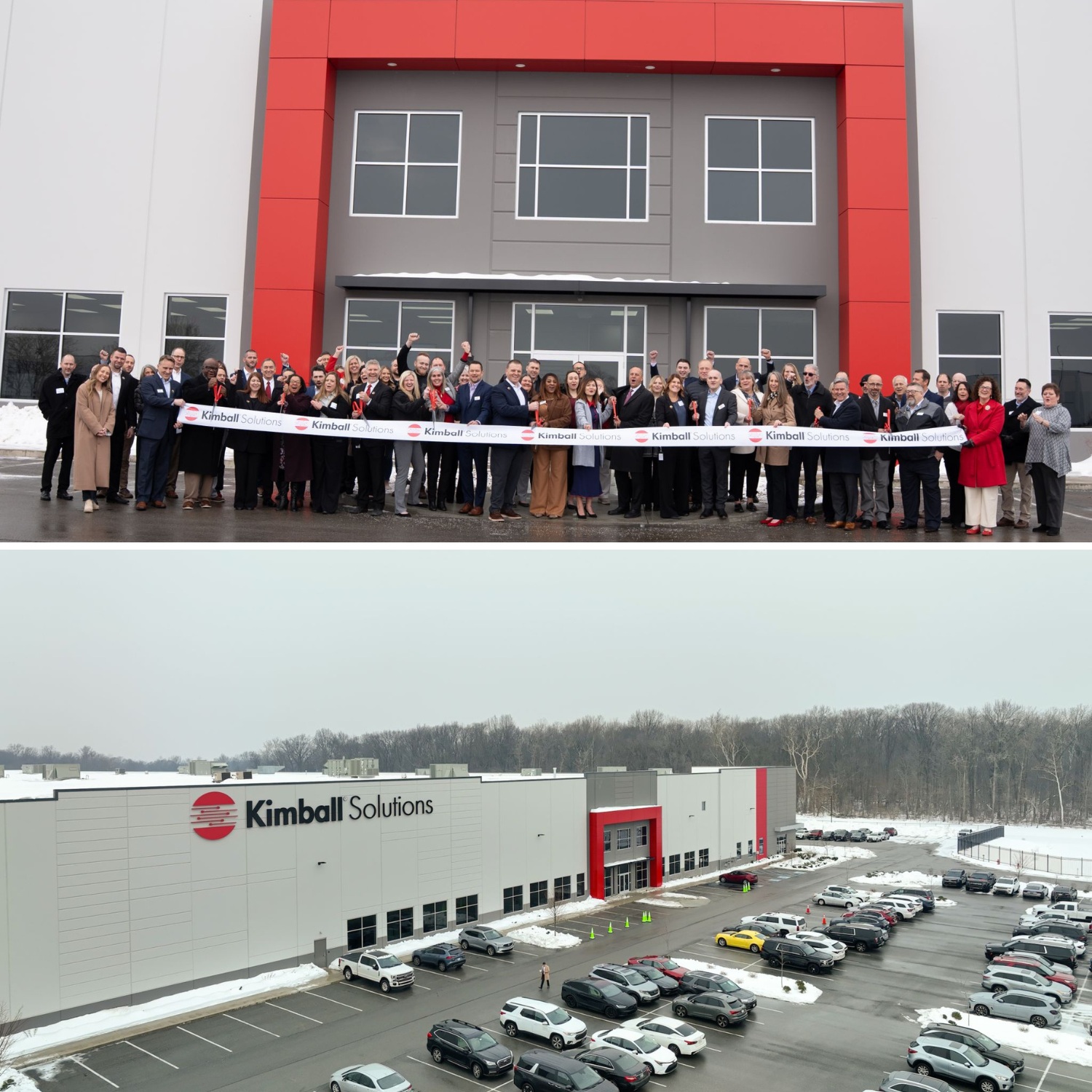
A new Indianapolis facility, celebrated with a February 2026 ribbon cutting, supplies another piece of that expansion. Kimball has also announced an intended rebrand to Kimball Solutions. The broader name fits a business whose offer now includes molded components and medical assembly alongside electronics. The proposed name itself cannot fill a factory; qualified programs must do that.
Buy the relationship, inspect the details
For a product team, the useful lesson is concrete: ask who owns component sourcing, validation, transfers, and support after shipment. Establish those responsibilities before comparing assembly prices. Kimball’s model is relevant when reliability, regulated processes, and years of service justify that coordination. It becomes harder when orders swing, customers bring production in-house, or a program disappears before dedicated investment pays back. The organ business left behind a skill. Every new contract still has to prove what that skill is worth.
Inside the operation
Company website ↗ · Company news ↗ · Earnings webcasts ↗
LinkedIn · X · Instagram · Facebook · Company videos on YouTube ↗