Kevin Weschler found his company in the half-second between a planted foot and a turn. In an ordinary sneaker, the rubber sole wants the floor to hold still. In salsa, the dancer wants something subtler: enough grip to arrive, enough slip to rotate, then enough grip to leave again. The wrong shoe makes a simple pivot feel like a negotiation conducted by the knee.
Weschler encountered that negotiation after signing up for salsa classes in Williamsburg, Brooklyn. The Miami native already liked to dance and wanted the community that came with learning it properly. Soon he understood why dance shoes existed. Suede soles made turning easier. The trouble was everything around the turn. Traditional options felt formal, stayed indoors, and did not resemble the sneakers he wore with the rest of his life.
So he went shopping for a casual, lightweight shoe that could travel from pavement to studio. Nothing quite did the job. Many founders would call this a white space. Weschler first experienced it as a wardrobe nuisance. That specificity became his advantage: he did not need a consultant to identify the customer. He could look down.
The useful inconvenience
The founding idea behind Fuego is tidy enough to fit on a shoebox: merge the function of dance footwear with the shape and attitude of streetwear. But tidy ideas can hide stubborn engineering. A normal street shoe is designed to resist slipping. A dance shoe often assumes a particular floor. Weschler wanted one pair that could move over hardwood, concrete, carpet, tile, Marley, or grass, then survive the walk home.
He launched Fuego in 2019 while pursuing an MBA at Wharton. The company built its early shoes around a custom sole and pivot points beneath the forefoot and heel. The geometry gave dancers defined places to rotate while the surrounding material managed traction. Fuego later secured US patents for the outsole design, a footwear sole with a pivot point, and another shoe design, with Weschler named as inventor.
“I wanted something that fit in with my style, something that was more casual, more of a sneaker.”Kevin Weschler on the original brief
His product instinct was cultural as well as mechanical. He wanted the shoe to belong to dancers without requiring them to dress for an old image of dance. Salsa supplied the original complaint, but the design brief stretched toward bachata, hip-hop, ballroom, shuffle, jazz, swing, and dance fitness. Each community moves differently. They share a need for footwear that understands movement is the purpose, not an accident.
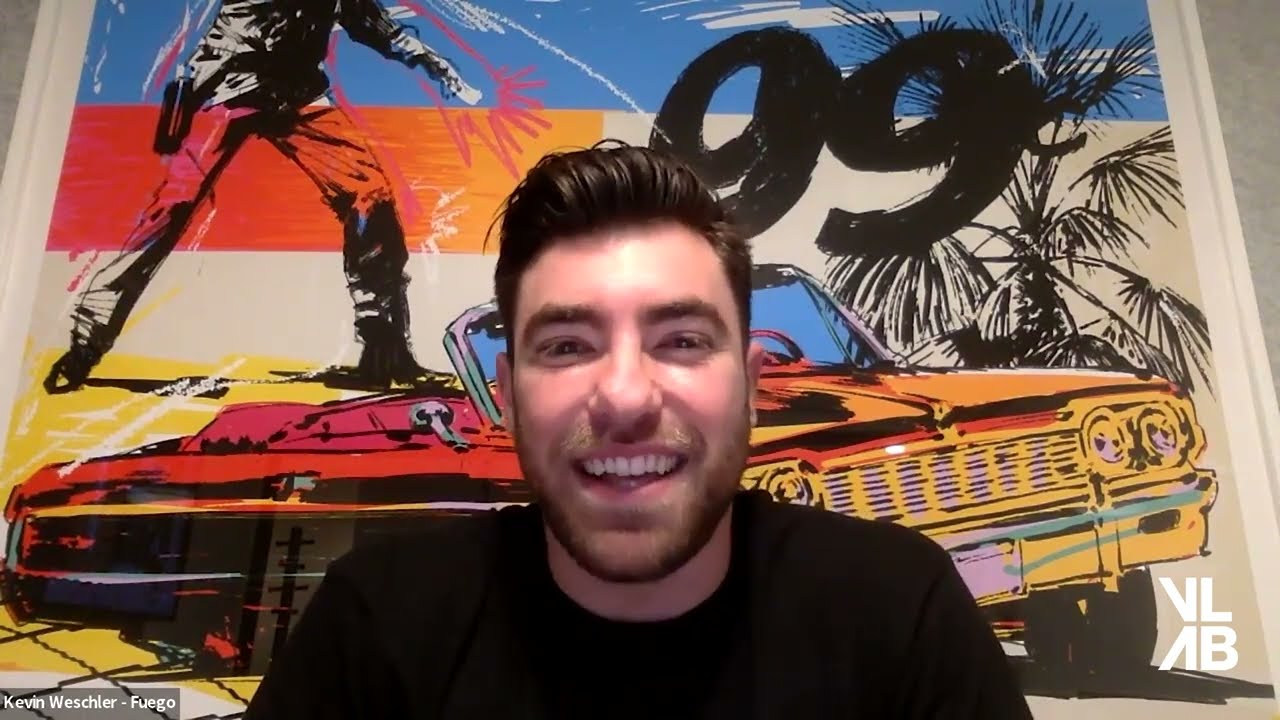
A founder before footwear
Shoes were not Weschler's first lesson in operations. While at the University of Florida, he co-founded 2 College Brothers Moving & Storage. The business was acquired after two years. Moving companies are excellent, unglamorous schools: trucks arrive or they do not; crews show up or customers notice; a dent is never theoretical. Later, at Deloitte Consulting, he worked on acquisitions and mergers for private equity firms and large companies, dealing with operations, risk, and process improvement.
Fuego demanded all of those muscles while adding factories, materials, patents, creative direction, and the peculiar arithmetic of shoe sizes. Weschler bootstrapped the company during business school. Early demand created a dilemma. Investors worried that he had no team. He kept putting scarce capital into inventory because the inventory kept selling through. Hiring people to create more demand seemed odd when he could not fulfill all the demand already present.
The conflict reveals something honest about early companies. A founder can be right about the immediate constraint and investors can be right about the organizational risk. Weschler eventually built the team. New York Angels connected him with consumer-products operator Bruce Kamenstein, who became a Fuego board director. The company also reported backing from Dorm Room Fund, the Penn Wharton Innovation Fund, Robin Hood Ventures, New York Angels, and New World Angels.
At Wharton, his classmates supplied a less conventional signal. In 2020, the MBA class voted him the inaugural recipient of its Entrepreneurial Spirit Award. More than 800 peers had watched him turn a school-years project into an operating company. Peer recognition can be sentimental. It can also be due diligence performed in hallways.
Two circles on the bottom
Much of Fuego's strategy is visible in the outsole. The patent granted in 2023 describes a sole with at least one pivot point whose coefficient of friction is lower than the surrounding sole. In plain English: make the turning zone turnier. The production shoes use two pivot points, one under the ball of the foot and one under the heel, while cushioning, flexibility, light weight, and water-resistant materials support the rest of the movement.
The sole is the pitch
A simplified view of the product logic
The product contains a broader founder lesson. A useful demonstration is often part of the object itself. Put the shoes on a dancer, point a camera at concrete, and ask for a spin. Movement shows the benefit before a spec sheet gets involved. Fuego's social feeds are full of that compact proof, which helps explain why Weschler sees modern consumer companies as media businesses.
“Whatever business you're in, you also need to operate like a digital media company.”Kevin Weschler on building consumer brands
When the studio disappeared
Fuego launched only months before the pandemic closed dance studios. On paper, the timing looked rude. Yet dancers did not stop being dancers when the room vanished. They moved into kitchens, courtyards, parks, sidewalks, and living rooms. A shoe designed to cross surfaces suddenly had a job that was easy to explain.
Weschler has said Fuego picked up momentum in 2020. By May of that year, a TechCrunch profile reported that it had sold thousands of pairs to customers in 24 countries. By 2023, Fuego said its community extended across more than 120 countries. The growth was geographic, but the more interesting shift was conceptual. The company was attached to the desire to dance, not to the building where dance usually happened.
The floor got bigger
Publicly reported reach
That reach also widened the age profile. In 2020, Fuego said a quarter of its customers were over 55, an early reminder that dance culture does not end at the edge of a youth-market slide. A product organized around function could travel across styles, countries, and generations without pretending those customers were identical.
The collaborators can actually move
Fuego's partnerships follow the same logic as its product demos. Krump dancer BDash, bachata artist ATACA, dancer and actor Jade Chynoweth, and choreographer Derek Hough brought distinct audiences, but also distinct movement vocabularies. The collaborator is not merely a billboard. The collaborator can test the promise in public.
The BDash shoe appeared in a performance on The Ellen DeGeneres Show. The Jade collection used knit fabric made from recycled plastic bottles and included a raw stone detail. The Derek Hough collection, launched in May 2025, borrowed visual cues from ballroom footwear and translated them into low-top and split-sole sneakers made with vegan materials. In 2026, Weschler announced Fuego as an official sponsor of the Miami HEAT, with the team's dancers wearing the shoes on court. The route from salsa class to NBA hardwood is delightfully literal.
There is a durable playbook underneath the collaborations. Choose practitioners whose credibility comes from use. Give them a product with a visible benefit. Let different communities interpret the same underlying technology. The brand gains reach, but the audience also gains evidence.
Weschler knew the compromise because he was already making it at salsa class.
A turn on concrete demonstrates the sole faster than technical copy can.
Dance collaborators show the product inside real styles and communities.
When studios closed, the company followed dancers onto new surfaces.
Why Fuego sounds like Miami
Weschler returned to his hometown to build the company. He has described Miami's startup community as collaborative and energetic, and the name Fuego as native to the place. In Spanish it means fire. In English-speaking slang, it still arrives intact. The word is compact, bilingual, and a little flirtatious, which is a fine personality for a shoe expected to dance.
The company's Wynwood office makes the identity physical. In a video tour, Weschler begins at a wall of sneaker drops before introducing the small operations, marketing, and customer-service team. There is no solemn museum treatment. He jokes in the idiom of an MTV house tour, then points to the people doing the work. The performance is light. The operation behind it is not.
The category beneath the category
Weschler talks about building a dance lifestyle brand, but his more revealing ambition is practical. He wants Fuego to use technology to solve problems for dancers across different styles. That keeps the company from becoming only a clever sneaker silhouette. Low-tops led to high-tops, split soles, wedges, kids' sizing, and collaborations. The constraint remains the same: the product has to earn its place in motion.
There is also a useful modesty in the origin. Weschler did not wake up wanting to disrupt footwear. He wanted to dress like himself and turn without fighting his shoes. The company emerged from observing the compromise closely enough to see that it was optional.
Founders are often told to find a painful problem. Pain can be melodramatic. Sometimes the better clue is irritation repeated across a community: change your shoes at the studio door, carry a second pair, avoid the rough surface, accept the grip, tolerate the style. Small accommodations accumulate until someone decides they are strange.
For Weschler, the useful question arrived on the dance floor. Why should a sneaker understand walking but become confused by a spin? Fuego's answer is two circles molded into the sole, an entire company balanced above them, and a founder still looking down to see where dancers want to go next.