The modern car is very good at telling you things. It knows the pressure in its tires, the song you abandoned halfway through, and whether you have wandered across a painted line. Yet after Kevin Malik bought a car online, the machinery around getting it home seemed struck dumb. The price to ship it floated somewhere between seven hundred and a thousand dollars. Payment would happen when a man arrived. Where the car was in the meantime was, apparently, a philosophical question.
Malik had spent most of his career around systems designed to make uncertainty behave. He studied mechanical engineering at the University of Arizona, then worked in enterprise technology from the mid-1990s onward. At Starwood Hotels, where he spent roughly a decade, he helped build global IT systems while the company absorbed Westin and Sheraton and launched brands. After that came IO, a heavily financed data-center company, and later industrial technology, investing and advisory work.
He knew what modern infrastructure could do. He also knew cars. He has said the fascination started when he was about ten, eventually encompassing tinkering, racing and the engineering of the machines themselves. The surprise was finding that these two mature worlds - automobiles and software - had produced such an immature handoff.
“Everything is tracked and everything is one click. Why can’t you buy your car that way?”Kevin Malik, Full Throttle interview, 2024
The expensive object with the cheap tracking experience
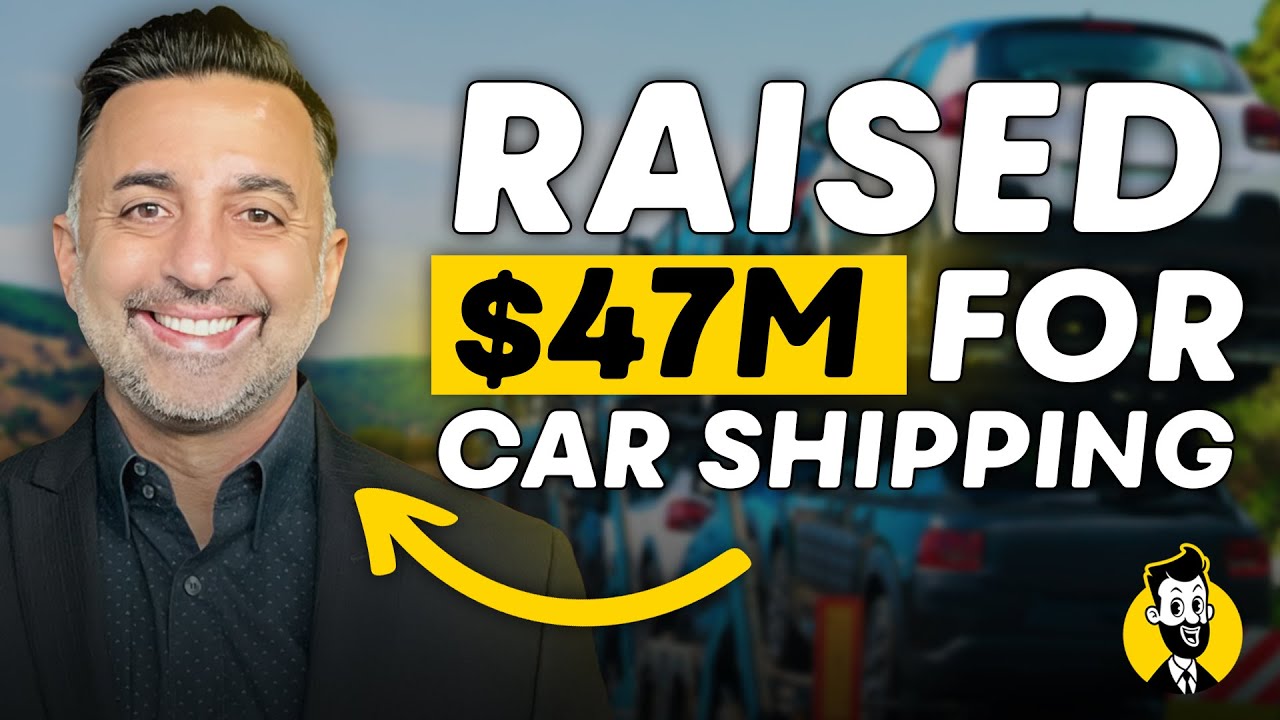
The question became Malik’s route into RunBuggy, the vehicle-logistics platform he now leads as chief executive and a board member. RunBuggy connects people and businesses that need cars moved with the haulers who move them. The simple description conceals a nasty coordination problem: each vehicle has an origin, a destination, a time window and an owner who is considerably more invested than the recipient of a new toaster.
Traditional freight can pass through terminals. A personal vehicle often travels from one driveway to another. The route may begin in Florida and end in Seattle, or involve Alaska or Hawaii. A truck that looks full on one leg may return with empty spaces on the next. Every gap in the trailer is wasted capacity, but filling it demands that the right car, driver, equipment, price and timing meet before the truck has gone.
Then there is the customer. Malik told the Full Throttle podcast in 2024 that RunBuggy handled about 30,000 calls a month even though its process was digital. Many amounted to the same request: tell me where my car is. The detail is comic until one remembers what is in transit. A vehicle is often the second-most expensive thing a household buys. It may also be an indulgence, a necessity or a long-awaited prize. Nobody invites friends over to watch a multipack of printer paper arrive.
That is the governing contradiction of Malik’s business. The platform should make routine work disappear; the company must remain available when the routine object is personally irreplaceable. Code can assign an order. Trust still likes to hear a voice.
A career assembled like a machine
Malik’s résumé makes more sense as a collection of components than a straight road. Mechanical engineering supplied the habit of breaking problems into working parts. Starwood supplied scale: worldwide systems, acquisitions, financial platforms and the unforgiving expectation that technology should simply function. At IO, where his roles included chief innovation officer, he encountered capital-intensive infrastructure and the language of growth. Venture work gave him the other side of the table, reviewing companies, advising founders and making investments of his own.
This is not the usual automotive apprenticeship. Malik came from outside the trade and has been candid about it. That distance helped him see vehicle shipping less as an inherited custom than as a systems problem. It also meant learning why a clean technological argument does not immediately dissolve an established commercial relationship.
RunBuggy found its footing around 2019, just before handshakes became unavailable. Conferences stopped. Prospective customers already had providers and little appetite to change them through a video call. Malik later called the task “way more difficult than we expected.” The hard part was not promising a few dollars off a move; it was winning enough attention to demonstrate the product, then surviving the long pilot and contracting process of large enterprises.
That sales problem reveals something about the category. A dealer group, lender or manufacturer does not wake up hoping to replace a transport workflow. The old process may be slow, but it is known; the new process must prove itself while valuable vehicles keep moving. Malik said that once prospects spent time with the interface and the underlying technology, RunBuggy often earned a pilot. Getting the meeting was harder. His pitch therefore had to operate on two clocks: the quick tempo of software releases and the stately calendar of enterprise procurement. The pandemic stretched the second clock almost to comedy. RunBuggy could build, hire and demonstrate remotely, but a relationship business still missed the room, the conference and the handshake. When in-person meetings returned, Malik said adoption accelerated. The experience left a useful scar on the company’s story. Digital tools can rearrange an industry, but somebody must first persuade the industry to log in.
The systems route
Mechanical engineering
Global hotel technology
Data-center innovation
RunBuggy leadership
The pandemic imposed one useful decision. RunBuggy grew as a remote company, with its tools and processes designed accordingly. By early 2024, Malik said employees were present in 13 states, concentrated in Arizona and Southern California but recruited nationally across engineering, customer service, operations and sales. Geography mattered less than finding the right person. Hiring, in his view, is a startup CEO’s first job.
The algorithm earns its miles
Artificial intelligence entered the pitch with a practical assignment. RunBot, announced in 2023, was built to help automate sourcing, group vehicles, anticipate obstacles and connect drivers with loads. Malik has rejected the idea that this is merely a chat window wearing a dispatch cap. The useful intelligence sits underneath: historical driver behavior, route information, equipment, price, available vehicles and the awkward geometry of a trailer.
His sharpest formulation concerns scarcity. “There’s no shortage of drivers,” he said. “There’s a shortage of filling their trucks to and from backhaul too.” If software knows that a driver is traveling home and that two vehicles sit 50 miles off the route, it can offer work that might otherwise require a small opera of phone calls. Fuller trucks can improve the hauler’s economics, lower the shipper’s cost and reduce empty miles.
RunBuggy said in its September 2025 funding announcement that RunBot automated more than 80 percent of routine order workflows and helped predict delivery challenges. The company also emphasized cybersecurity, continuous monitoring and a zero-trust approach. That concern is less decorative than it sounds. The marketplace touches vehicle locations, drivers, payments and enterprise systems. Convenience without security would be an efficient route to disaster.
“There’s no shortage of drivers. There’s a shortage of filling their trucks to and from backhaul too.”Malik on the logistics constraint
The company’s 2023 CSO50 recognition for Project Guardian illustrates the point. The internally developed system flagged possible duplicate orders and suspicious patterns, cutting manual investigation of duplicate vehicle identification numbers almost to zero, according to RunBuggy. It is not the glamorous end of AI. It is arguably the useful end: noticing that the same car may have appeared twice before somebody pays for the mistake.
Capital arrives; the road continues
In September 2025, RunBuggy announced a $37 million Series B led by Centana Growth Partners, with OMI Capital also participating. Malik described the investment as validation of an approach joining technology and service on a platform built around security and trust. The money was assigned to product development and broader service for transporters and shippers across banks, manufacturers, dealerships, auctions and consumer transactions.
Funding rounds offer a pleasingly neat milestone. The work they finance is untidier. Malik wants the platform to keep becoming more automatic, more real-time and easier to use. He has described a product culture that releases improvements quickly and warns recruits that constant change is part of the arrangement. The aim is to keep a startup’s impatience after the headcount and customer list make the word “startup” debatable.
There is a modest irony in a lifelong car enthusiast devoting himself to the part of ownership when nobody is driving. But Malik’s cars are still in motion, just strapped to a larger machine. His task is to make the invisible system around them legible: the price before the order, the driver on the route, the spare place on the trailer, the likely arrival at the other end.
One-click commerce taught buyers to expect an immediate answer. Vehicle shipping adds weather, distance, machinery, independent businesses and human attachment. It may never be as frictionless as ordering socks. Malik’s career suggests he is not bothered by the difference. The large system is merely the small question repeated thousands of times: where is my car, and when will it be here?