The website did its job, though Kevin Indig remembers it as a bad one. His online gaming group needed a page to apply to tournaments. He was the one who learned enough HTML, CSS and Photoshop to put it together. The design mattered less than the door it opened: a teenager in Germany discovered that making a page was one kind of skill, and getting people to find it was another.
He built more sites. A few sold for pocket money. An online forum led him to search engine optimization, then still a rougher and more experimental trade. Indig has described the sequence with the plain pleasure of a person who remembers where the rabbit hole began: “It all started with computer games.” It is a modest origin for a career that later took him into growth roles at Atlassian, G2 and Shopify.
The scene has changed around that first lesson. Websites still need to be found, but discovery can now happen inside a chatbot or an AI answer at the top of a search page. The result may be a brand mention, a citation, a purchase recommendation or no visit at all. Indig’s work today, as an independent advisor and author of Growth Memo, is concerned with what a company can reasonably measure and do in that unsettled space.
A practical apprenticeship
After college in Germany, Indig tried banking. In an interview years later, he said he had imagined a career in wealth management, then quickly realized the fit was wrong. A trainee position at a German SEO agency put him back near the work that had held his attention as a teenager. The agency served enterprise clients, and its experienced consultants gave him methods he says he still uses. An accidental first project became a deliberate apprenticeship.
There was already a pattern in the way he learned. First build something. Then look for the missing skill. Then find people who have done it longer. He credits mentors and curiosity for his progress, which is a more useful account than the tidy myth of the lone digital prodigy. In a 2018 interview, he recalled learning SEO as a young person in rural Germany through articles and meetups. He valued a community willing to explain its tricks in public.
“Share and receive. Don’t keep the secrets to yourself, put ’em out there!”Kevin Indig, on the search community
Atlassian, G2 and Shopify gave that curiosity much larger systems to examine. Each presented a different sort of search problem: software products, a marketplace for software reviews, and commerce at enormous scale. His own description of the period is concise: he spent about a decade as an operator and leader at fast-growing companies. The job was no longer to make one page visible. It was to help a team decide which parts of a product, site and business were capable of growing together.
The operator leaves the building
In mid-2022, Indig moved into independent advising. His client list has included Meta, Reddit, Ramp, Snapchat, Dropbox, Toast and Nextdoor. Those names are diverse, but the underlying assignment is recognizable: help a company make sensible choices about organic growth. On his site, a Ramp executive describes him helping establish an SEO strategy, run initial analyses and guide early content experiments. A Nextdoor colleague describes his work in realigning a team’s approach. These are workaday verbs, and that is their appeal. Strategy has to survive contact with the people who will carry it out.
Indig argues that “organic growth” is a better description than SEO alone. A visitor may arrive from search, but the page has to answer a need; a product may generate discoverable pages, but those pages have to be useful; traffic can rise while business value stays flat. For him, conversion and product growth belong in the same conversation as ranking. That wider frame also explains why his work with executives includes challenging assumptions and bringing data to decisions, rather than simply offering a list of keywords.
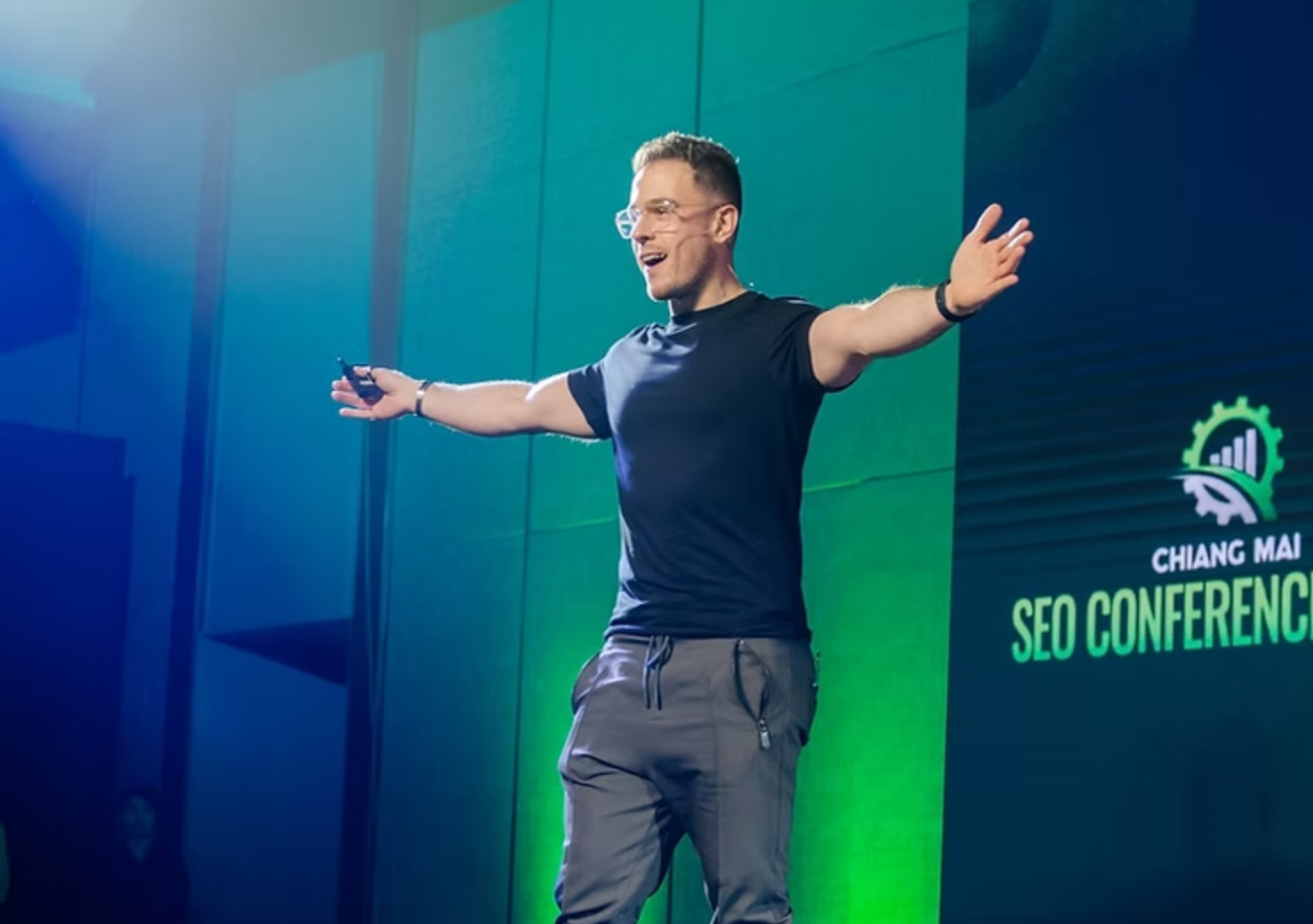
The public side of this work is Growth Memo, his weekly letter about SEO, business strategy and, increasingly, AI search. It had more than 29,000 subscribers by 2026. He added a paid tier in 2023 and later gathered tools, frameworks and templates for members in a library. The letter is a place where he can publish a study without waiting for a client brief. It is also a record of changing questions. An article from one year may ask how a page wins a click; a later one asks what happens when there is no click to win.
The awkward arithmetic of AI answers
For years, search gave marketers an imperfect but legible trail. A person entered a query; a page appeared; sometimes the person clicked. The ranking was visible, and so was the visit. AI interfaces interrupt that trail. A machine can read a page, synthesize its contents, name a business and satisfy a user before the business ever sees a session. A citation alone does not show whether the mention built trust or produced a sale. Indig keeps returning to this measurement problem because a dashboard can display precision while concealing uncertainty.
In one 2026 Growth Memo analysis, he examined 3.7 million citations across ChatGPT, Perplexity and Google AI Overviews. His reported finding was that 91 percent of citations appeared in only one of the three engines. The point is practical: a blended “AI visibility” number can make a brand look steady while hiding where it is absent. A company may need to know which engine, which query context and which sort of answer it is dealing with before it can decide what to improve.
Another study examined 185 documented purchase tasks in Google AI Mode. It found that people often accepted the tool’s shortlist rather than constructing one from scratch. That changes the moment when a buyer discovers alternatives. If a brand never appears in the shortlist, the familiar chance to compete for a click may never arrive. The work does not settle every question about buying behavior, but it gives marketers a better starting point than a diagram of an imagined customer journey.
Indig is careful about distinctions that are easy to flatten. A mention is not the same thing as a citation. A citation is not a referral. A referral is not a purchase. Even an answer’s shape can vary by engine or from one run of a prompt to another. In his midyear 2026 review, he called attention to how quickly AI’s economic effects were growing compared with the tools available to attribute them. That may be an irritating conclusion for someone asked to produce a single return-on-investment number by Friday. It is still a more honest one.
The person behind the spreadsheet
His interviews offer small interruptions to the analytical persona. His first job, at fourteen, was cleaning pots and pans in a hospital kitchen on weekends. He says he grinds coffee beans each morning for a pour-over, a habit sharpened by a couple of years living in San Francisco and an affection for Philz Coffee. He also adds 50 percent to time estimates for tasks, partly to leave a buffer around meetings. It sounds like a growth advisor applying a little operational discipline to his own calendar.
His geography has also made for an unusual view of the industry. Born and raised in Germany, with an American father, he holds dual German-American citizenship. He spent roughly twelve years in the United States, including time in California, before returning to Germany with his family in 2026. That puts his work across the two places where much of the search business is debated: the American technology companies building the products and the European practitioners who have spent years examining their effects. He speaks about both with the ease of someone who has worked in each setting.
He has acknowledged a tendency to overcommit. That admission sits well beside the newsletter’s appetite for research, talks and new projects. His stated ambition, years ago, was to be known for material that felt fresh and useful, and for presentations that informed and entertained. The current output bears the mark of that goal: large datasets, plain-language takeaways, and the occasional irritation at an easy industry slogan. He can be blunt about companies that publish too much thin AI content too quickly, or those that treat a citation count as proof of revenue.
There is continuity in the company he keeps, too. Early on, meetups and agency mentors helped him learn. Later he co-hosted the Contrarian Marketing podcast with Eli Schwartz, and his speaking page gathers conversations with other search practitioners. Recent work includes joint research and discussions with people studying user behavior, technical access and AI systems. The details differ from that first forum thread, but the method remains social: ask a sharper question, borrow another person’s expertise, and put the result where others can inspect it.
What survives the disappearing visit
The teenage website was built for a clear purpose. His friends needed to enter tournaments. It was rough, but it met the need. Search work can drift far from that simplicity: position graphs, dashboards, acronyms that multiply faster than their definitions. Indig’s better questions pull it back. Who is trying to decide something? What information helps them? Where does that decision now happen? Which number would actually change what a team does next?
AI search may rearrange the route between a question and a business, but it does not remove the need for a good answer or a trusted name. Indig’s recent research follows the new route with some skepticism about easy measurement and some optimism about careful experimentation. That combination makes sense for someone who learned the web by making things and then checking whether they worked.
His first page got a gaming team into a tournament. His current work asks whether a brand can get into the shortlist when the shortlist is assembled by a machine. The scale has changed. The underlying problem, finding a place in someone else’s decision, has not.
Follow the work
Writing, talks and public profiles