Dmytro Gerasymenko had a customer’s complaint before he had a search company. He wanted data about the web. The price of buying it made him consider the considerably less convenient option of building the machinery himself. Most people confronted with an expensive invoice negotiate. Gerasymenko began work on what would become a competitor.
Ahrefs turned that decision into a subscription business. Its customers wanted to know which websites linked to which, where competitors appeared in search, and what might explain the difference. Underneath the reports lay a continuing engineering job: crawl pages, record connections, refresh the information. A website can change between breakfast and lunch. A useful map has to notice.
The business eventually gave its founder room to attempt a different transaction. Having sold people tools for understanding search engines, he wanted to build a search engine that paid the people whose work it found. The project became Yep. Its proposed bargain was easy to remember: 90 percent of advertising revenue for content creators, 10 percent for the search operator. The arithmetic fitted on a napkin. The engineering required rather more furniture.
A map worth paying for
Gerasymenko began working on Ahrefs in 2010; the backlink service launched in 2011. Igor Pikovets, a university acquaintance who became its chief technology officer, was an early collaborator. Their advantage was the freshness of the link index. For a marketer checking whether a new link had appeared, the difference between recent information and a month-old picture had an immediate practical value.
Customers could try a limited version and pay for more. Announcements and advertising on specialist SEO forums brought early users. People working on the same problems told one another about the tool. There was something pleasingly literal about a business analyzing connections spreading through connections of its own.
Its name was a programmer’s little accommodation with branding: the HTML notation a href, familiar to anyone who has made a hyperlink. It explained the machinery to people who already understood it. Everyone else got a pronunciation exercise.
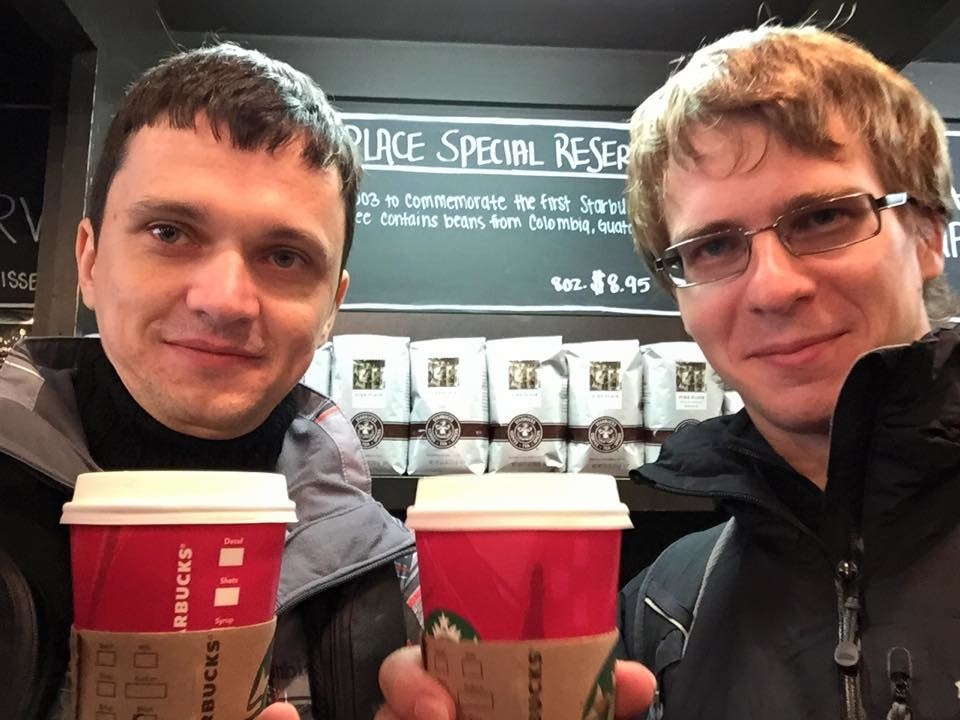
The long route back to search
Search had occupied him well before it became a business. He grew up in Nizhyn, Ukraine, and his father assembled a computer when he was six. At school, Gerasymenko made a project for finding programming documentation. It attracted visitors and earned something from book sales. Then a server problem wiped out the work. A modest internet business had encountered a very traditional ending: the thing containing everything stopped cooperating.
He went on to study at Kyiv Polytechnic Institute. Work included C# and PHP development for a Kyiv web-design studio, followed by freelance programming and project management for a company in the United States. He also returned to document search, this time with PDF files in mind. Finding documents to index meant finding a way to explore the web.
That background helps explain the continuity between his projects. Documents, links and search results all require someone to decide what to collect and how to make it retrievable. The customer-facing tool changed; the underlying interest persisted.
In 2012, he moved to Singapore to concentrate on Ahrefs. He had visited during a trip through Asia and liked the conditions for doing business. Singapore became the company’s headquarters while colleagues worked across countries. Geography gave the business a base without requiring everybody who contributed to it to share a commute.
The ladder he preferred to climb
Gerasymenko has described building a company as a ladder: sell something useful, earn a profit, use the proceeds to make the next thing. Venture funding offers a faster journey, with ownership and control included in the fare. He preferred the steps.
He did take calls with investors out of curiosity. Then he stopped answering the approaches. His explanation was unusually free of mystery: “We were profitable from year one”. A company earning enough to keep developing had less reason to sell a share of its future.
His objection concerned incentives as much as money. Investors managing a portfolio can accept failures in pursuit of exceptional returns. A founder may have perfectly good reasons to value a business that works at a more moderate scale. Those preferences can pull in different directions even when everyone involved behaves rationally.
For him, independence also supplied a practical argument for Yep. A promise to pass most advertising revenue to creators would be easier to preserve without investors demanding a larger share for the operator. The company’s capital structure became part of the proposed product.
“Bootstrapping is hard until it works.”
Dmytro Gerasymenko, 2022
Ninety for the people making the web
He announced plans for a general-purpose search engine in March 2019. Privacy and creator compensation were central to the argument. The criticism was economic: search earns money around information that other people spend time and money producing. Gerasymenko wanted those producers to participate directly in the proceeds.
Google’s own YouTube supplied a precedent for sharing advertising income with creators. Applying that principle to the open web introduced harder questions. A video platform knows who uploaded a video. A search engine must work across independent sites, overlapping material and many kinds of authorship. The percentage is only the beginning of the system.
Distribution posed another problem. A useful search engine still needs people to choose it. Gerasymenko hoped publishers who stood to earn money would encourage their readers to switch. Each creator would have a reason to recommend the service; each additional search could strengthen that reason. It was a plan to recruit the suppliers of information as advocates for the place people found it.
By April 2023, he was candid about the product’s stage: the beta needed better algorithms before it could compete with Google on results. That admission matters. A new arrangement for paying writers still has to answer the question someone actually typed. Sympathy can win a trial. Usefulness has to win the next search.
A sky bison enters the naming meeting
The name took its own journey. The team considered hundreds of possibilities, settled for a time on Fairsearch, and hoped to obtain Fair.com. The desired domain proved unavailable. Fairness was a clear proposition; acquiring the address was less obliging.
Then came a suggestion from Avatar: The Last Airbender. In the animated series, “yip-yip” gets a flying bison moving. The sound helped inspire Yep. A search engine intended to alter the economics of publishing thus acquired a small debt to airborne livestock.
The episode is a useful glimpse of the person behind the architectural diagrams. His public team profile lists interests ranging from globalization and sociology to tennis, trekking and skiing. The list accommodates both the organization of society and a reason to get outdoors. His plans for search touch the former; the bison supplies a little relief.
The machines behind the argument
Gerasymenko’s freedom to experiment depends on the unromantic business of keeping costs manageable. Ahrefs runs much of its computing on hardware it owns in rented data-center space. The company also uses cloud services where they suit the job. It has treated the decision as a calculation rather than a badge of allegiance.
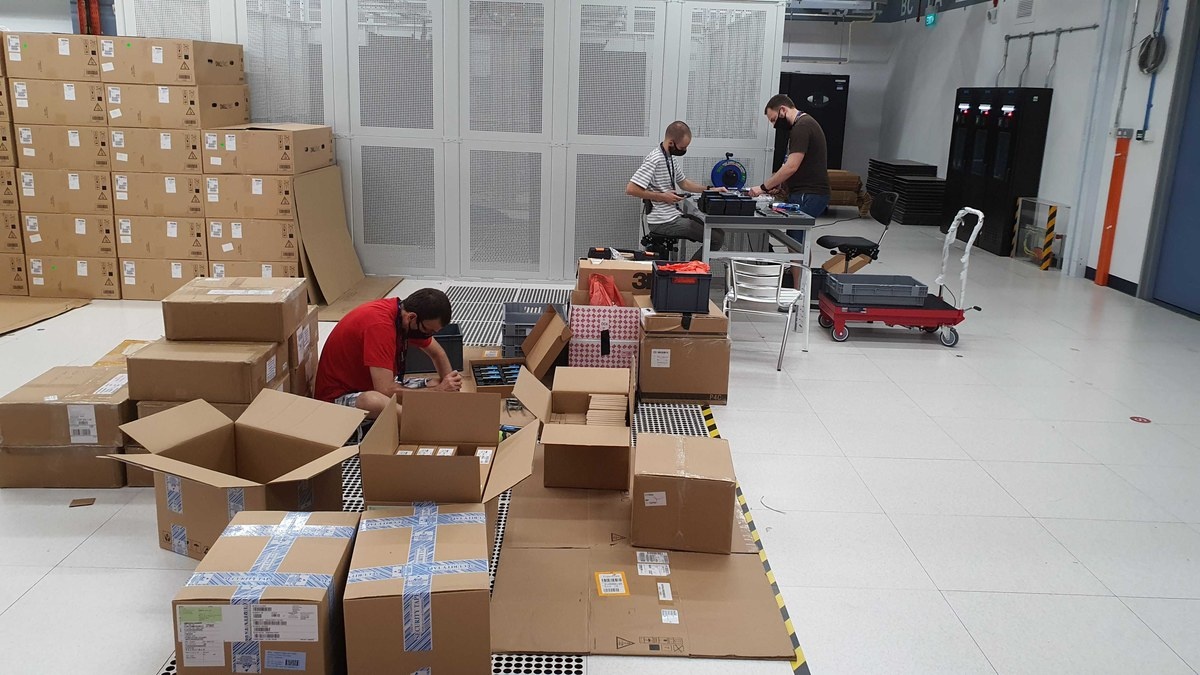
In a 2023 analysis, its infrastructure team estimated that replacing the Singapore setup with comparable AWS capacity would have cost roughly $400 million more over about two and a half years. The comparison used specified hardware and pricing assumptions; it was a modeled alternative, not a cloud bill the company had paid.
The relevance to its founder is straightforward. Spending less on the machinery leaves more room for engineering and new products. A proposal to retain only a tenth of advertising revenue makes the expense of running search especially consequential. Principles eventually meet electricity, storage and network charges. Those charges do not accept a mission statement in settlement.
The search box keeps changing
His business now operates in a changing landscape of discovery. Ahrefs introduced Brand Radar in its March 2025 updates to help companies examine their presence in AI answers. Where a marketer once asked which page ranked, there is now another question: which brand gets mentioned, and which work gets cited?
The company has also expanded into AI-assisted work. On Letaido’s website, Gerasymenko describes Ahrefs using the platform internally, starting with routine automations and moving toward entire workflows. The examples include content pipelines, research and product design. This is his account of how the team uses it, rather than a guarantee of what any particular customer will achieve.
Through those changes, the recurring concern remains recognizable. People make things, other people look for them, and software sits between the two. Gerasymenko has built a business studying that middle ground. With Yep he has tried to change its terms. The next search may take a new form. Someone still has to make the thing worth finding.