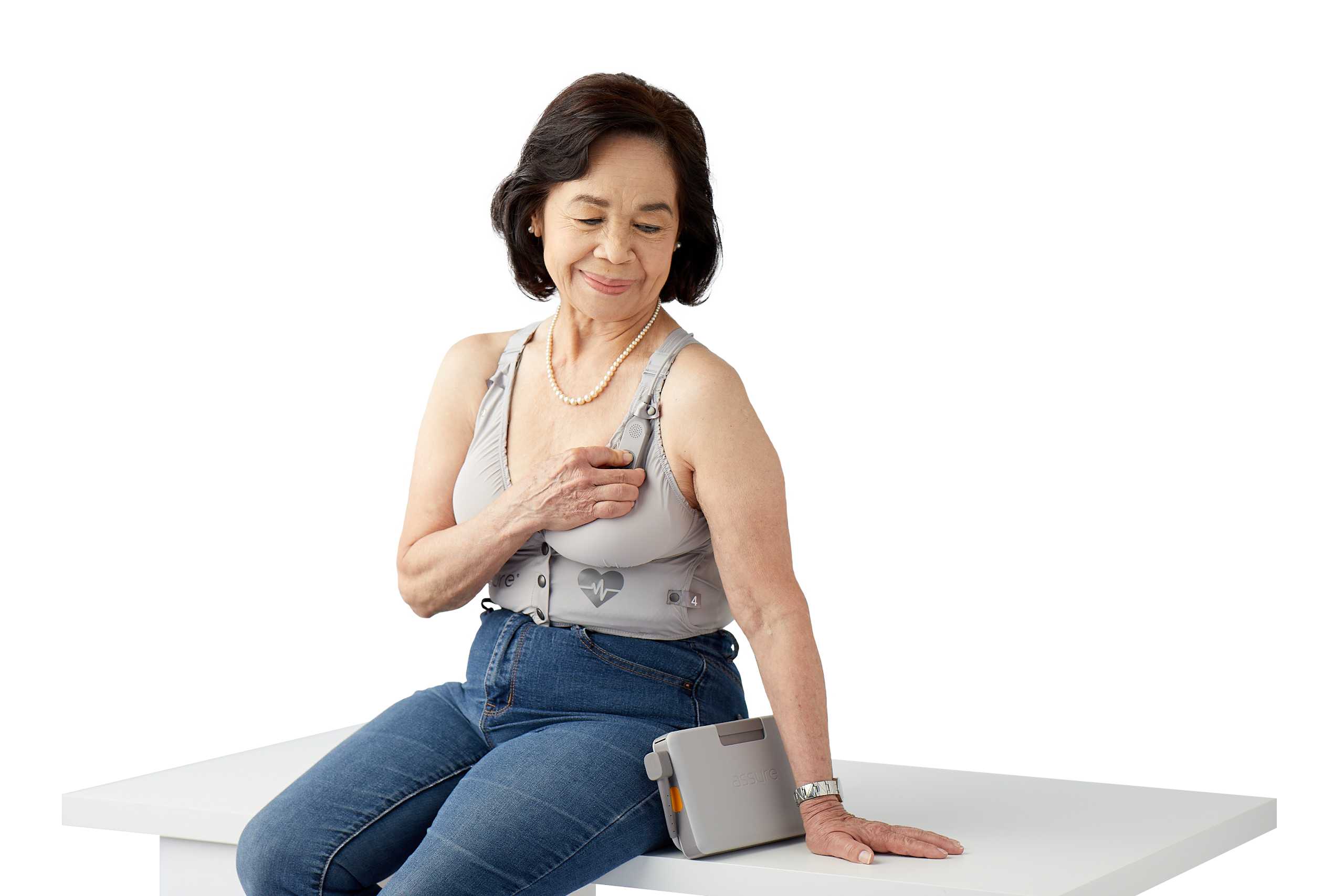
Consider the garment. In Kestra Medical’s product photographs, it looks like something you might put on before getting dressed: gray fabric, shoulder straps, a small button over the chest. A monitor sits alongside it. The visual understatement is useful. This is equipment intended to accompany someone through the ordinary business of being alive, while remaining ready for an extraordinary electrical failure.
- The product: prescribed wearable defibrillation.
- The design bet: make daily wear easier.
- The business: monthly leases; growth and losses.
The garment is part of the medicine
Kestra’s ASSURE Wearable Cardioverter Defibrillator continuously analyzes heart rhythms and can automatically deliver a shock for dangerous ventricular arrhythmias. It is prescribed for adults at risk of sudden cardiac arrest who are not candidates for, or refuse, an implanted defibrillator. The distinction matters: this is temporary, external protection during a vulnerable stretch of life.
The intriguing engineering problem begins before any shock. A device on a bedside table cannot protect its owner. A garment that irritates, alarms unnecessarily or makes getting dressed difficult invites its own removal. Comfort becomes part of the conditions under which the therapy can work. That is the organizing idea behind Kestra’s business.
A waiting room you can leave
Some patients with weakened heart function need time for recovery and reassessment before a decision about an implant. They may be home, moving around and sleeping, while their risk remains elevated. An external defibrillator ordinarily needs another person to bring it and act. ASSURE travels with its wearer and is designed to detect and treat without a bystander.
Kestra emerged in 2014 from the world of professional defibrillation. Co-founders Brian Webster and Traci Umberger both held senior roles at Physio-Control; Webster had led that company. Their experience was in equipment whose behavior must be dependable when its user has very little time. Applying that expertise to something worn under clothing added a different requirement: people have to tolerate it for hours.
The FDA approved ASSURE in July 2021. Full commercial launch followed in August 2022. The design includes breathable SensorFit garments, cushioned nonadhesive ECG sensors and a female-specific garment option. Those choices address friction that a specifications sheet can understate. A useful question for any product designer follows: what small inconvenience makes somebody stop using the thing?
“Empathy Powered Design”Kestra’s name for its patient-focused approach
The number to watch is 23
In November 2025, Kestra announced primary results from ACE-PAS, its prospective post-approval study enrolling 21,612 patients. Reported median wear time exceeded 23 hours a day. Ninety-four percent of patients experienced no false positive shock alarms. These are unusually revealing measures for a medical business: they describe the relationship between a machine and a person living with it.
The study also reported 100% successful conversion for its ventricular tachycardia and fibrillation events, and an inappropriate-shock rate of 0.0065 per patient-month. Those are results within the study, rather than a promise about every future emergency. A prospective registry can describe use in routine care; it cannot, by itself, establish superiority over another device in a randomized comparison.
Kestra calls its approach “Empathy Powered Design.” The phrase earns its place when translated into specific choices: where a button sits, how a sensor touches skin, how much noise an algorithm mistakes for danger. In April 2026, the company released an enhanced detection algorithm informed by the registry. Everyday use had become an input to the next version.
Median reported wear time
Patients with no false positive shock alarms
The vest has a support system
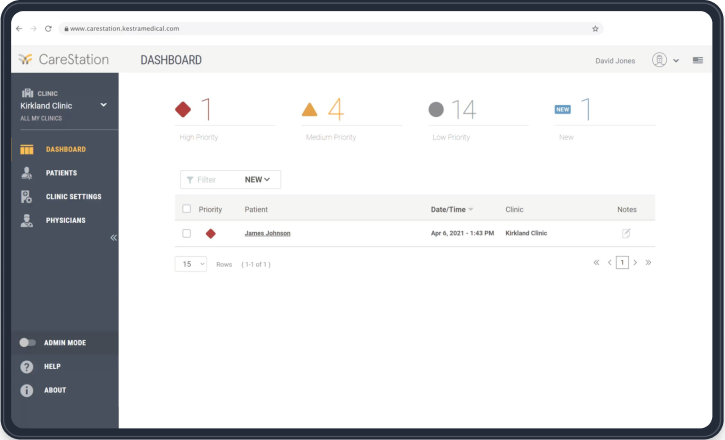
The hardware sits inside Kestra’s Cardiac Recovery System. The ASSURE patient app transmits data and lets people review wear time, activity and educational material. CareStation gives care teams rhythm reports, usage trends and configurable notifications. The patient gets a way to understand daily use; the clinician gets a view beyond the next appointment.
There is also ASSURE Assist, a service designed to connect patients with help after a shock. Its operation depends on the configured phone, connectivity, location permissions and proximity to the device. The nontherapeutic ASSURE Wearable ECG offers continued monitoring after WCD use. Its purpose is observation; it does not deliver defibrillation.
The WCD analyzes and treats locally. The connected tools move information to people elsewhere, helping care teams follow recovery between appointments.
This puts Kestra in a specific corner of the medical-device market. Its principal WCD rival is ZOLL’s LifeVest, a long-established alternative. Kestra competes through garment design, sensing, alarm handling and connected support. A smartwatch occupies a different role. Recording a rhythm and delivering a therapeutic shock impose very different demands on a product.
Protection, rented by the month
Kestra generates revenue by leasing ASSURE to patients month by month. Payment depends on reimbursement arrangements with Medicare, Medicaid and commercial insurers, alongside patient payments. Doctors prescribe; patients wear; payors reimburse. Winning one of those groups does not automatically win the others. The business must make clinical sense, fit into everyday life and successfully collect payment.
In fiscal 2026, ended April 30, revenue reached $95.1 million, up 59%. Kestra reported 20,720 prescriptions during the year. Its net loss was $131.6 million. Those figures belong together. Expanding a fleet of devices, a commercial organization and a support operation takes money well before scale becomes profitability.
Financing has been substantial. A $196 million private round in 2024 preceded the March 2025 Nasdaq debut under KMTS. In July 2026, Kestra announced a loan facility of up to $200 million. Only $75 million was funded at closing, and part retired an existing $45 million loan. The interest rate was three-month SOFR plus 5.5%, with a 3.25% SOFR floor. Availability is not cash, and debt has a price.

Borrow the question, then measure the answer
The latest reported quarter, ended July 31, 2026, brought $31 million in revenue and a $44.1 million net loss. Kestra raised its fiscal 2027 revenue outlook to $141 million. Growth is visible; the cost of getting there remains visible too. Its January 2026 Biobeat collaboration, including a $5 million equity investment, points toward adding blood-pressure insight to cardiac recovery.
The lesson to borrow is practical: identify the behavior your technology requires, then design and measure for it. Here, that behavior is wearing the device. Protection stops when it comes off; the WCD cannot treat every cause of collapse, and its labeling excludes patients with an active implanted defibrillator. Fabric, fitting, algorithms and follow-up all serve the same daily task. The question Kestra keeps returning to is simple: will someone keep it on?