YesPress / Company Profile / Medtech
Element Science, Inc.
A small medtech company in San Francisco built a patch that watches a person's heart twenty-four hours a day - and shocks it back to life when it stops.
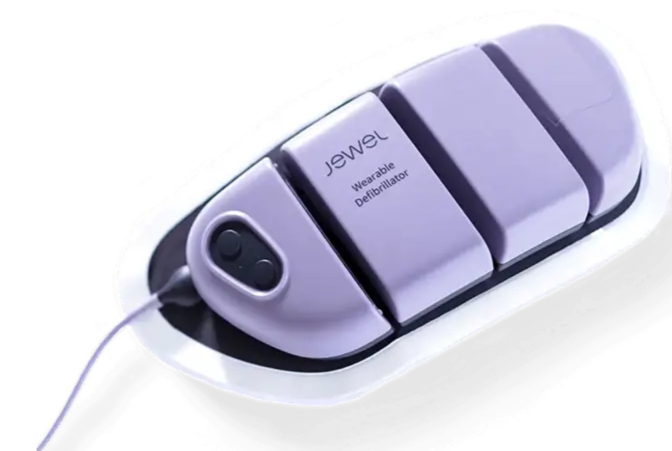
A small medtech company in San Francisco built a patch that watches a person's heart twenty-four hours a day - and shocks it back to life when it stops.
After rounds at one of the cardiac centers piloting the device, a fellow describes a patient discharged with a small adhesive square taped to her chest. She showers in it. She sleeps in it. It hums along, recording her ECG, running machine-learning models against every beat, deciding - quietly, continuously - whether she is still alive. This is what Element Science makes. The Jewel is not a vest, not a wand, not a hospital bedside monitor. It is a patch. As of May 2025 it is an FDA-approved Class III medical device, cleared to deliver defibrillation therapy to patients at temporary, elevated risk of sudden cardiac arrest.
"The most interesting medical devices look boring on a patient. That's the point."- The thesis behind Jewel, restated charitably
Element Science is 83 people in a building on Kansas Street in the Mission. It is also a venture-backed company with $208 million in cumulative funding, a regulatory file thick enough to anchor a small boat, and a product that has been chased - and not quite caught - by the rest of the industry for fifteen years.
Sudden cardiac arrest kills hundreds of thousands of Americans each year. Most of those deaths happen outside hospitals, in living rooms and parking lots, in the windows between discharge and a permanent implantable defibrillator. The clinical answer for that gap has, for two decades, been a wearable cardioverter defibrillator - a vest with electrodes, a battery pack on a strap, and an alarm loud enough to wake the neighbors.
It works. Patients hate it.
"A treatment that the patient takes off is not a treatment. It is furniture."- Paraphrased clinical wisdom, applicable to vests
Compliance, the cardiology literature politely notes, is a problem. People stop wearing the vest. They sweat. They sleep poorly. They feel sick and signalled-out. They take the device off to shower, then forget to put it back on - which is exactly when, statistically, the heart tends to misbehave. Element Science's founders looked at that compliance curve and decided the device itself was the bug. Not the patient.
Dr. Uday Kumar is not a first-time founder. Before Element Science he co-invented the Zio patch - the small adhesive ECG monitor that turned arrhythmia diagnostics from a clinic visit into a couple of weeks at home - and founded iRhythm Technologies, which is now publicly traded. He has, in other words, done the trick once already: replaced a clunky cardiac wearable with something a person can forget they are wearing.
Element Science is the more ambitious encore. Monitoring is hard. Delivering therapy through an adhesive patch - on a sweating, moving, sometimes panicking human - is much harder. It is also a much shorter list of companies who have attempted it.
"Doing it once could be lucky. Doing it twice is a method."- The investor's quiet calculation
The bet, plainly stated, was this - that machine learning had finally gotten good enough at distinguishing real ventricular arrhythmias from noise, that adhesive and battery technology had quietly caught up, and that the cardiology field was ready to forgive a startup for trying again where every previous attempt had stumbled. Deerfield Healthcare and Qiming Venture Partners agreed in 2020, leading a $145.6 million Series C alongside Cormorant, Invus, Third Rock Ventures and Google Ventures.
The Jewel is a Patch Wearable Cardioverter Defibrillator, or P-WCD if you like acronyms - which medtech people, regrettably, do. It adheres directly to the chest. It is water-resistant. It is meant to be worn continuously, including during sleep and during showers, for up to a week between changes. There is no vest, no separate battery pack, no shoulder strap announcing to the world that the wearer is sick.
Underneath the adhesive, the device does three things in sequence and without asking permission. It records the patient's ECG continuously. It runs machine-learning algorithms against that signal to identify lethal arrhythmias - ventricular tachycardia, ventricular fibrillation - and to ignore the things that look like them but are not. And if it decides the rhythm is real and the patient is unresponsive, it delivers a defibrillating shock.
"Continuous monitoring is the easy half. The interesting half is deciding when not to fire."- The unglamorous engineering problem at the center of every WCD
*Patch weight is approximate, based on publicly described device profile. The point of the chart is not the decimal places.
The Jewel IDE Study - the pivotal trial Element Science ran to support its FDA submission - did the unromantic work of proving the device is safe and effective. It enrolled at-risk cardiac patients across multiple US sites, tracked compliance, and measured the device's behavior in the wild. The published readouts emphasized something rare in cardiac wearables - patients actually kept the device on. Compliance was high enough that the company stopped having to defend it as a footnote and started using it as a headline.
"The hardest endpoint in the trial wasn't safety. It was 'did you wear it on Tuesday?'"- The compliance question, reframed
The international regulators went first. In January 2024 the device received CE mark certification in the European Union and UKCA marking in Great Britain. The FDA followed on May 1, 2025, granting full Premarket Approval. Three of the most demanding regulatory bodies in the world cleared the same device in the same eighteen-month window - a sequence that, in the medtech timeline, qualifies as a small miracle.
Element Science describes its mission with the kind of clarity that makes pitch decks short - solutions at the intersection of clinical-grade wearables, machine learning, and life-saving therapies, focused on the leading causes of death in patients with heart disease. The phrase "clinical-grade" is doing a lot of work there. The consumer wearable industry has spent a decade racing to put ECGs on wrists. Most of those readings are interesting. None of them are therapy.
Element Science is on the other side of a regulatory wall most consumer-electronics companies cannot cross. Class III medical device. PMA pathway. The kind of submission where you ship the FDA boxes of documents and the FDA ships back a list of follow-up questions long enough to staff a small department for a year. The Jewel had to be a real defibrillator first, and a beautiful product second. That order matters.
"Anyone can make something pretty. The trick is making something pretty that the FDA will let you sell."- The medtech founder's two-sentence business plan
The Jewel ships data. That data flows into Element Science's connected care platform, where cardiologists and care teams can review compliance, trends, and events without the patient ever returning to the clinic. The platform is where the company's long-term thesis lives. The patch is the demo. The platform is the business.
The medical industry is, slowly, learning to manage chronic disease outside hospitals. Heart failure readmissions cost the US health system tens of billions of dollars a year. Implantable defibrillators are major surgery. The space between - the months when a patient is at elevated, recoverable risk and not yet a candidate for an implant - has historically been filled by a vest no one wanted to wear and a hope no one wanted to discuss. Element Science is filling it with software.
Plenty can still go wrong. Reimbursement remains a slog. Cardiologist habits change slowly. Competitors will eventually arrive at the patch-WCD party, and they will be larger and louder. None of which changes the underlying point.
"The history of cardiology is the history of moving care closer to the patient. Element Science is the latest mile."- The boring, accurate version of the story
Back on that cardiology floor, the patient with the small square on her chest is going home. She is at elevated risk. She is also wearing the device, which is the only sentence in this story that matters. She will keep wearing it - in the shower, in bed, at her daughter's wedding next month - because the device is, for the first time in this category, small enough to forget. Filed: Editorial