Origin Story
The Impatient Engineer
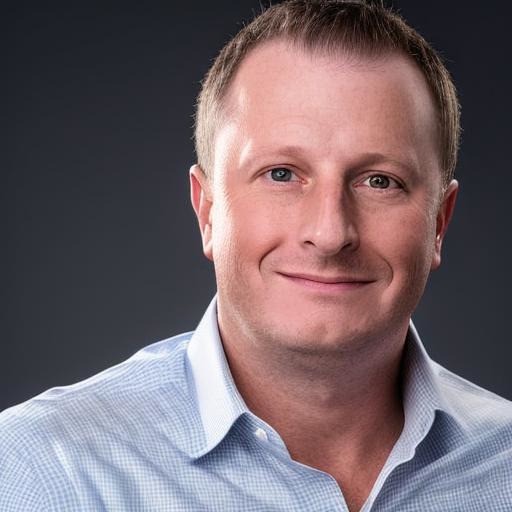
Most PhD students dream of publishing papers. Brian Fahey, halfway through his biomedical engineering doctorate at Duke, realized he wasn't one of them. The lab was fine. The research was fine. But fine wasn't fast enough. He wanted to build things that reached patients in five years, not fifty.
The Stanford Biodesign Innovation Program gave him the vocabulary for what he'd been feeling. It isn't a technology program - it's a problem-identification program. The insight: don't start with a technology and look for nails. Start with the clinical need and engineer backward. Fahey absorbed this like a doctrine. He's been practicing it ever since.
His PhD focused on novel ultrasound technologies - a detail that aged interestingly, given that he'd spend the next two decades implanting sensors into human hearts. The thread isn't obvious until you see it: he's always been obsessed with measuring what the body is doing from the outside - or in Adona Medical's case, from deep inside the left and right atria of a failing heart.
I wanted to work on projects that could help improve medical care in five years or less, not in ten or twenty years.
- Brian Fahey, Duke Graduate School Alumni Profile
That impatience isn't recklessness - it's strategy. Fahey has articulated a clear philosophy about medical device development: be your own harshest critic. Identify your highest risk factors. Then figure out which of those is fastest to mitigate and start there. It's a framework that keeps companies from burning capital on elegant engineering while dodging the harder questions about reimbursement, market fit, and clinical endpoints.
"Investors often don't worry about the prototype," he's said. "They're worried about market risk or pricing or reimbursement." He doesn't fight this. He prepares for it.
Chapter One
Niveus Medical: The First Bet
In 2008, Brian Fahey co-founded Niveus Medical. The premise was unglamorous and important: patients who spend extended time in the ICU - sedated, immobile, intubated - suffer profound muscle atrophy. Getting them moving again, faster, matters enormously for recovery. Niveus built rehabilitation solutions to accelerate exactly that.
Tom Fogarty - the man who invented the Fogarty balloon catheter, one of the most consequential medical devices in history - became one of Fahey's first investors. Fogarty is the kind of mentor whose involvement signals something. He has seen enough companies succeed and fail to not waste his money.
Fahey ran Niveus the way few venture-backed companies are run: lean. Four rounds of capital, each at a higher valuation than the last. No sprawl. No premature hiring. Over a decade, Niveus delivered treatments to more than 10,000 patients across 20 hospitals in the United States. Then Stryker acquired it in 2017. Fahey had his exit. He didn't stop.
The Fogarty Connection
Adona Medical became the first medtech startup admitted to Fogarty Innovation's incubation program - the same Thomas Fogarty who backed Fahey at Niveus Medical a decade earlier. When one of medicine's legendary inventors chooses to incubate your company twice, it carries weight.
After Stryker, Fahey didn't take a victory lap. He moved through three roles in quick succession: Johnson & Johnson Innovation (drug-device combinations in oncology), Arrinex (a neuromodulation company targeting chronic rhinitis - also later acquired by Stryker), and then Shifamed as executive-in-residence. That last role was the setup. Shifamed is a Silicon Valley medtech incubator. It's where Adona Medical was born in December 2019.
"Successful companies are almost always enormous group efforts," Fahey has said. The post-Stryker circuit wasn't wandering - it was deliberate knowledge accumulation about what makes medical devices succeed or fail in markets far more complex than a laboratory ever reveals.
Chapter Two
The Device Inside the Heart
Heart failure affects roughly 64 million people worldwide. The heart's pressure balance between its two upper chambers - the left atrium and right atrium - goes wrong in complex, individualized ways. Standard treatments offer a fixed response to a condition that behaves differently in every patient.
Adona Medical's answer to this is, on paper, a shunt. A small device implanted between the left and right atria to regulate pressure. But describing it as "a shunt" is like describing a smartphone as "a phone." The Adona shunt integrates bi-atrial pressure sensors - live readings from inside both chambers. It features an adjustable lumen: the diameter can be altered post-implantation, between 5mm and 14mm, using a proprietary induction catheter that operates through the skin. No return surgery. No invasive adjustment procedure. A physician reviews the daily pressure readings, decides the shunt needs to be larger or smaller, and makes that change remotely.
The material enabling this is shape memory nitinol - an alloy that returns to a predetermined geometry when energized. Biocompatible insulation keeps the pressure sensors functional inside the body. The result is a device that is simultaneously diagnostic and therapeutic, adjustable and self-reporting.
The Adona Interatrial Shunt
Investigational Device · Clinical Stage · First-in-Human Trial Complete
🫀
Bi-Atrial Sensors
Integrated pressure sensors read from both left and right atria simultaneously - the first such device of its kind.
⚙️
Adjustable Lumen
5mm to 14mm diameter adjustment post-implant via inductive energy transfer - no return surgery required.
🔬
Shape Memory Nitinol
Shape memory alloy responds to energy input to change geometry with precision inside the human body.
📡
Remote Monitoring
Daily pressure readings transmitted for physician review, enabling personalized, data-driven heart failure management.
Fahey was candid about what this kind of product requires to succeed: it must be transformational, not incremental. "We have to aim to be like 500% better than everything else," he told Medsider. In cardiovascular medicine, where the competition includes established surgical interventions, pharmacological regimens, and other interatrial shunt devices, the bar for "better" is precise and brutal.
Adona Medical initiated its first-in-human clinical study and completed enrollment - milestones that represented, in Fahey's own words, the culmination of years of focused development work. The company grew from a $2.5M seed round in 2019 to $95.5M in total capital, with 33 employees operating from Los Gatos, California.
In December 2025, Fahey stepped down as CEO. He described the transition with characteristic directness: it was time for another leader to guide the company through its next phases. He reflected on what had been built - from scratch - and expressed gratitude for being part of an "elite team that accomplished so much." Exactly the kind of sentence a capital-efficient operator writes when they know the hard work is finished and the scale-up belongs to someone else.
There's nothing more rewarding than helping patients become more independent and improving their quality of life.
- Brian Fahey, Fogarty Innovation
In His Own Words
The Fahey Playbook
“
You've got maybe five chances to do something in your entire professional career.
“
Focus your time on being well-prepared for your best shots.
“
It's always a funny journey; it never takes that linear path that we all think we're going to have when we're younger.
“
Investors often don't worry about the prototype - they're worried about market risk or pricing or reimbursement.
“
Successful companies are almost always enormous group efforts.
“
Tom Fogarty was one of my first investors - having a mentor like Tom was invaluable as it helped me avoid many mistakes.
How He Thinks
Seven Principles
01
Problem before product. Stanford Biodesign's lesson stuck: identify the clinical unmet need first, then build toward it.
02
500% or nothing. Incremental improvements don't displace entrenched treatments. You need transformational evidence.
03
De-risk by priority. Find the highest risk factor that's also the fastest to mitigate. Start there, not with the engineering.
04
Lean capital as discipline. Raised four rounds at Niveus with minimal overhead. Efficiency isn't just a preference - it's a proof of concept.
05
Be your own harshest critic. Address fundamental project risks early, before anyone else forces you to.
06
Selective fundraising. Pitch only the investors most likely to fund your stage and sector. Quality of audience over quantity.
07
Complementary teams. Surround yourself with people whose skills address your blind spots. Self-awareness is a management strategy.