Kendra Canton was 18 when a hometown newspaper caught her in motion. The Rogers High School senior had a 3.9 GPA, advanced classes, a track captaincy, cross-country meets, student-government duties, National Honor Society responsibilities, freshman mentoring, church, friends and a cellphone she cheerfully admitted she was attached to. At home, she also helped care for her younger sister after school. Her schedule read like somebody had tried to fit a week inside a Tuesday.
Her explanation was simpler than the calendar: “I always do my homework before anything else, going out or anything. I can't tell you how much I love school.” The line is almost suspiciously wholesome. It is also the cleanest early clue to the career that followed. Canton did not build a public record out of grand declarations. She built it out of preparation, representation and a knack for turning a place in the room into useful work.
The first room was crowded
Canton grew up in Spokane. When she was four, her parents divorced and she moved with her mother into her grandparents' home. After her grandparents died and the family hit difficult stretches, she took daytime responsibility for her younger sister, picking her up from school, helping with homework and caring for her until their mother returned from work. She remained close to both parents. The practical objective behind her academic drive was not abstract upward mobility. She wanted an education that could help her family.
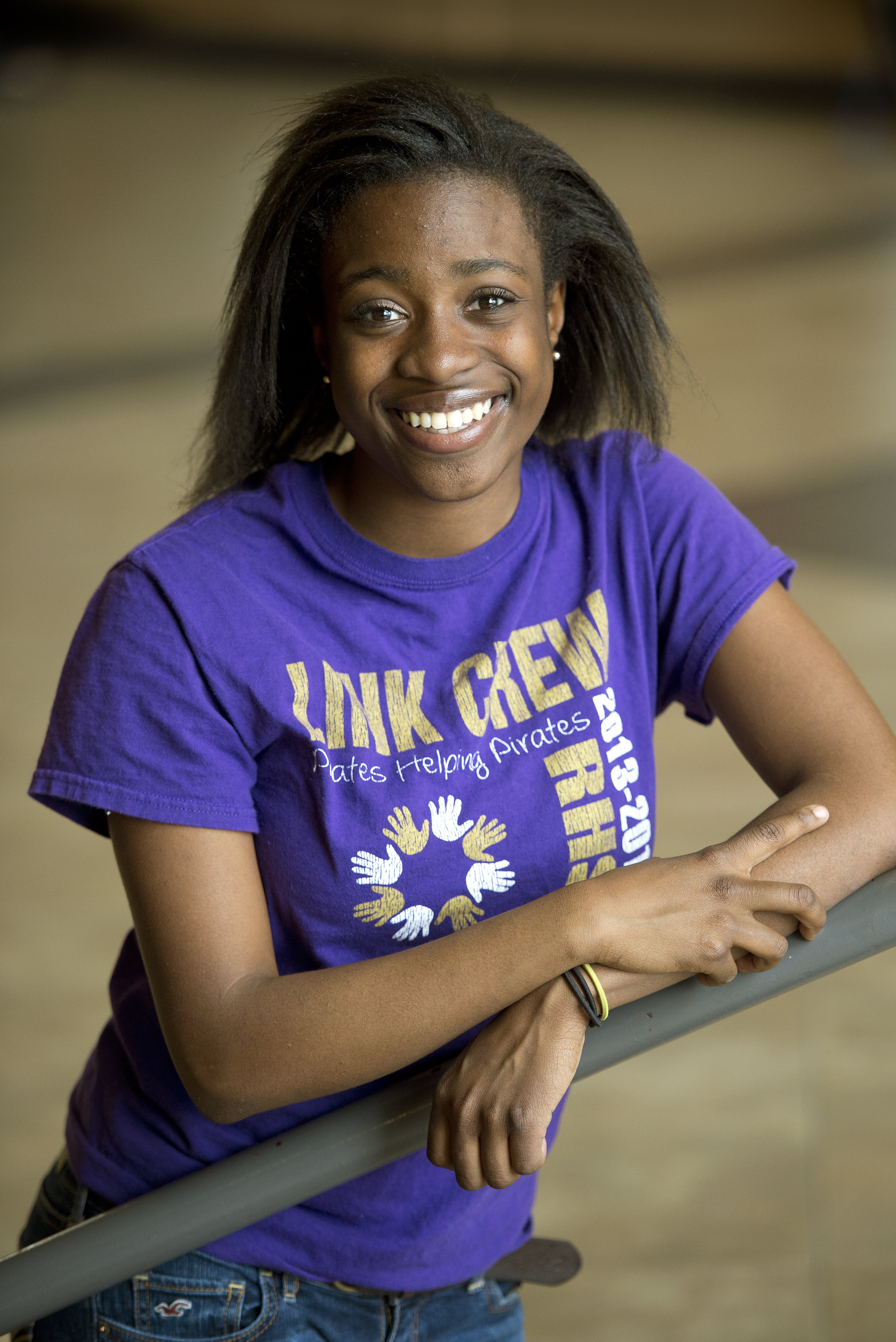
At Rogers, she was historian for the Associated Students, vice president of the National Honor Society and captain of the track team. She ran cross-country and had played basketball and volleyball before giving up the latter two to make room for advanced coursework. She joined Link Crew to mentor freshmen. She was also named a Spokane Scholar in history. It was an exuberantly full life, held together by discipline and faith.
College presented a choice with recognizable first-generation arithmetic. She had been accepted by several historically Black colleges and universities and was interested in studying among more people who shared her heritage. Distance and cost mattered, as did family. Washington State University and the University of Washington offered enough space to grow and enough proximity to get home if needed. She chose the University of Washington.
“If you have passion for something, you can achieve what you work for.”Kendra Canton, at 18
A student voice in an unusually adult room
Her early plan was to study pharmacy. The plan evolved, as teenage plans are mercifully allowed to do. At UW she graduated in Medical Anthropology and Global Health, but the deeper pattern had already appeared outside the classroom. In 2016, she was selected as the undergraduate representative on the university's Population Health Initiative Executive Council. The 30-member group included the university president, provost, deans, professors and senior administrators. Canton brought the undergraduate seat.
A seat, however, can be decorative. Canton treated hers as a job. The following academic year, she served as Director of Diversity Efforts for the Associated Students of the University of Washington. The position supported several diversity commissions and carried student perspectives to the student-government board. She also represented students on the UW Diversity Council and the Race & Equity Initiative Steering Committee.
Her work was not confined to meeting rooms. She spoke at a welcome event for first-year students and their families. In Olympia, she advocated for state-funded tuition grants and stood in for undocumented students who could not safely reveal their status by lobbying in person. Canton had received a State Need Grant and a Washington Opportunity Scholarship herself. Her reasoning was direct: “It is my duty to be here and help those students because the things they are fighting for have helped me so much.”
That sentence is the hinge of her story. Gratitude is usually presented as a private emotion, something framed beside a diploma. Canton made it operational. Assistance had changed what was possible for her, so she argued for systems that could change what was possible for the next student. The beneficiary became a representative without pretending the benefit had arrived by willpower alone.
The plan changes; the motive stays
As an undergraduate senior, Canton imagined becoming a pediatrician or family-medicine physician and opening a practice for underrepresented communities. By graduate school, the title had changed again. She returned to UW for a Master of Public Health in Health Services. Her focus included access, disparities, community health and program management. The recurring concern was unmistakable: how institutions can serve people they have too often overlooked.
The degree also made a second point about her path. Canton was the first person in her family to pursue a four-year degree. Graduate school meant another round of costs and calculations. She received the Health Services Excellence, Equity and Distinction award for 2022-2023 and a Mortar Board Alumni/Tolo Foundation scholarship for 2023-2024. She was also selected among the APHA/Kaiser Permanente Community Health Leadership Program scholarship winners.
“As a first-generation college student, pursuing a higher education is one thing I am most grateful for.”Kendra Canton, on the support that made graduate school possible
She described the award as relief from the financial pressure of graduate study and as a chance to gain the skills needed for her goals. There is no romance in a tuition bill. There is, however, consequence in removing one. Scholarships bought Canton more than classroom time. They gave a working advocate room to become a more capable researcher and program designer.
Listening becomes a deliverable
During her MPH, Canton worked as a graduate student assistant at Seattle Children's and developed a capstone project with the Tubman Center for Health and Freedom. The work shifted her from representing a constituency to helping design the machinery through which people could represent themselves.
Her Seattle Children's practicum focused on the beginning stages of a Youth Advisory Council for a regional pediatric preparedness network. The assignment sounds institutional; the method was human. First, understand whether a council was needed. Then listen to community stakeholders. Identify what participants needed and which topics would be useful in training. Canton synthesized the conversations, drafted a curriculum outline and presented the findings to network members.
It was a compact exercise in the difference between consulting young people and building a structure in which their judgment can matter. Canton's contribution was not the finished council. It was the careful work before the launch: the questions, the synthesis, the outline and the presentation. Beginnings are less photogenic than ribbon cuttings, but badly designed beginnings have a habit of haunting everything that follows.
At Tubman Health, she contributed to a team committed to community ownership and community design. In 2024, she joined the organization's leadership and Congressman Adam Smith at a Minority Health Roundtable in Renton. The setting was different from the university councils of 2016 and 2017, but the geometry was familiar: community voices, institutional power and Canton working somewhere along the bridge between them.
A career built from verbs
Profiles love nouns. Founder. Executive. Celebrity. Canton is better understood through verbs: study, mentor, listen, represent, organize, present. The nouns changed from historian to director to graduate student to intern. The verbs accumulated.
There is also an appealing refusal of tidy prophecy in her path. Pharmacy became medicine, then public health. A young woman who once imagined serving people one practice at a time found herself working on councils, systems, research and policy. Changing the route did not mean discarding the aspiration. It meant finding a scale and a method that fit.
The connection between the 18-year-old caring for her sister and the graduate student sketching a youth council should not be made too sentimental. Family responsibility is not a leadership seminar. Still, both moments reveal the same kind of attention: someone needs to be picked up, somebody's homework needs help, a voice is absent, a process needs a shape. Canton notices the practical gap.
Her public story ends, for now, not with a corporate title but with an MPH, a roundtable and a set of projects still close to the ground. That makes it more honest than most career narratives. Work worth following is often unfinished. The next room has not yet been named.