Consider the investor lunch. In spring 2024, the Venture Capital Club at University of Washington introduced a series called “At the Table.” Its first guest was Jason Stoffer of Maveron. The setting was modest enough: students, an investor, lunch. Yet the format contained an interesting proposition. A student could encounter venture capital as a conversation, with room for another question, rather than as a collection of unfamiliar job titles.
- Student-led venture education for aspiring founders, investors and the curious.
- Practitioner talks, accelerator panels and small-group investor conversations.
- An Analyst Program added practical learning in winter 2025.
That is a useful place to begin understanding this organization. Its work concerns the distance between knowing that venture capital exists and understanding what its practitioners actually do. The club approaches that distance through meetings, relationships and, increasingly, practice. For a university surrounded by Seattle’s startup community, the question is wonderfully concrete: how do you bring the people on either side of that distance into the same room?
Six meetings before the big questions
The club’s first fall-quarter recap, published in 2023, supplies a compact answer. Six meetings covered venture basics, firm structure, valuations, due diligence and term sheets. Nolan Van Nortwick, Ken Horenstein and Minda Brusse were among the visiting practitioners. The topics followed the mechanics of the industry: who makes decisions, what a business might be worth, what deserves scrutiny and how an investment gets put into writing.
Horenstein’s response was telling. “I wish this club was at UW when I was an undergrad!” he wrote. The appeal was recognizable to someone who had already traveled the route. Students were getting an opportunity to ask questions earlier.
“I wish this club was at UW when I was an undergrad!”Ken Horenstein · first-quarter recap
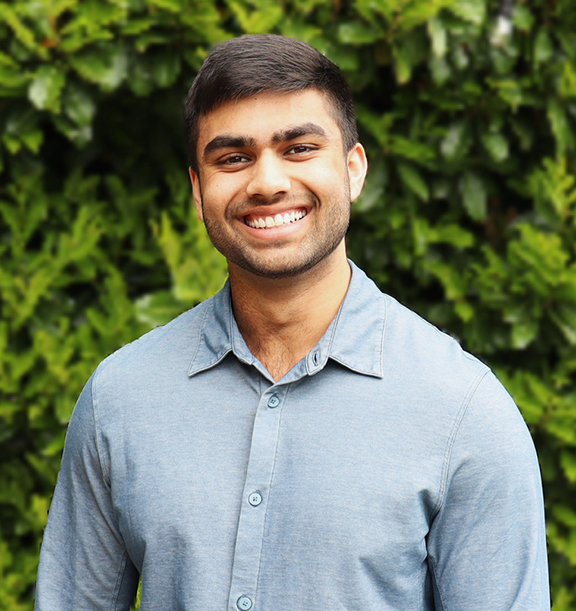
One verified co-founder, Devan Perkash, came from electrical and computer engineering. UW’s account of his 2025 graduation describes machine learning and computer architecture studies alongside his work opening access to venture knowledge and networks. His background helps explain the club’s potential audience. An engineer considering a company has reasons to understand investors, too.
The question gets a second question
By winter 2024, programming included pitch-deck development, a fireside chat and data-driven venture capital. The club also described plans for training, cases and competition opportunities. Spring brought discussions of deal terms, fundraising and what happens after an investment, with speakers including James Newell of Voyager Capital, Tanushree “Tee” Podder of Trilogy Equity Partners and Peter Mueller of Breakwater Ventures.
Then came the investor lunch. The interesting feature of At the Table is its scale as a format. A smaller conversation offers a different kind of learning from a presentation. The listener can ask what a general principle means in a specific situation. For anyone organizing a similar group, that is a useful design choice: match the room to the questions you want people to ask.
Five routes into the startup world
Another event broadened the conversation beyond investment firms. On February 16, 2024, the club and the Buerk Center’s WE Lead program hosted Women Leading Startup Accelerators Panel. The panel brought together Yifan Zhang from AI2 Incubator, Macey McGovern from Creative Destruction Labs, Ashlee Esteban from CoMotion Labs, Yuko Oaku from Jones + Foster and Sarah Studer from Techstars.
The advertised subject was practical: what these programs offer, how they support founders and what their leaders had learned. For a student with a startup idea, that is a map of possible next steps. An accelerator, an incubator and an investor occupy different places in a company’s development. Hearing their representatives together gives those differences people and programs attached to them.
WE Lead’s invitation welcomed students of any gender while centering women’s experiences in entrepreneurship and leadership. The event made that purpose visible through the people answering questions. It also demonstrated a repeatable organizing method: work with a campus program whose mission overlaps yours, then give participants a specific reason to attend.
Eventually, somebody has to do the analysis
Winter 2025 added the first Analyst Program. The same quarter’s recap acknowledged collaborations with cseed and Personal Finance at the University of Washington. Those details suggest a club extending its teaching formats and its campus relationships together.
A participant’s account provides a glimpse of the practical work. Audrey Kristiali describes evaluating three US healthcare AI startups, including due diligence, market analysis and possible exit strategies. That is one student’s description, rather than a universal syllabus, but it makes the exercise tangible. The student must move from finding a company interesting to explaining what might make an investment defensible.
This places the club in a particular corner of campus finance education. Foster describes UW Investment Group around equity research and portfolio management. UW VC Club concentrates its public programming on startup finance and venture practitioners. A student choosing between activities can begin with the question they want to investigate: an established company’s shares, or the uncertain development of a young business?
Leave room for the boba
The community programming has a lighter side. A July 2025 Summer Tech Social, supported by the club, invited interns and new graduates to meet people and enjoy free boba. Its announcement explicitly took aim at the Seattle Freeze. Even an investment education group sometimes needs a reason to gather that requires no financial vocabulary.
The transferable idea is the combination: teach the mechanics, create occasions for questions, then offer work that demands an opinion. It depends on willing practitioners, engaged student organizers and participants who return. A visitor can hear a useful talk in an afternoon. Building judgment takes repeated encounters with the subject. UW VC Club has been building occasions for those encounters, one meeting, panel and lunch at a time.