Dinner has an awkward relationship with distance. A restaurant can have admirers all over a city and still serve a disappointingly small circle of them. Ken Chong built a company around that gap. The question was deceptively domestic: how do you get the food people already love into the neighborhood where they actually live?
Chong came to the problem from Uber, where he led marketplace product teams. He was also, by his own description, a heavy user of meal delivery. That combination gave him two views of the same bag of food: the machinery required to move it and the disappointment when its contents arrived badly. An app could summon a driver. It could do rather less for a meal that had spent too long in traffic.
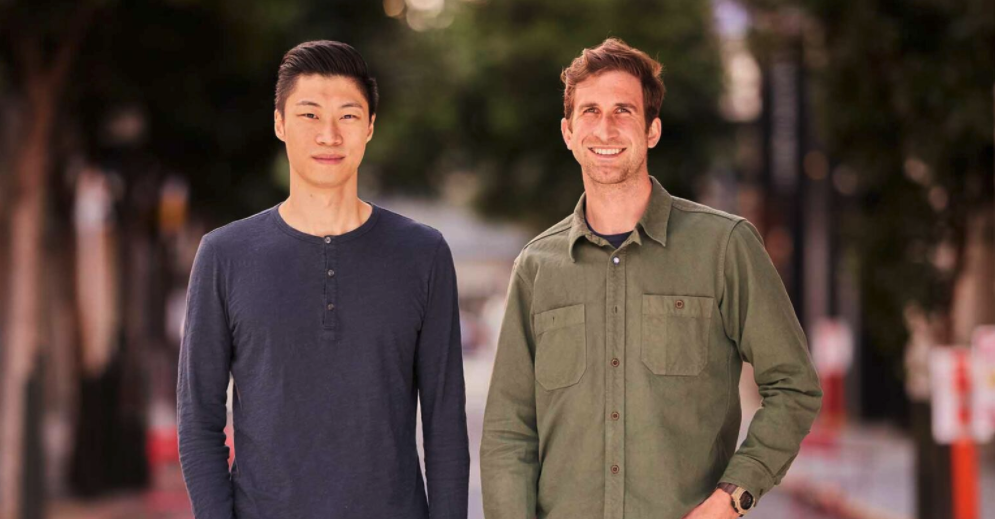
In 2018, Chong and fellow Uber alumnus Matt Sawchuk started Virtual Kitchen Co., later renamed All Day Kitchens. Chef and food-operations specialist Andro Radonich was another founding member. Their proposal gave independent restaurants a way to reach new diners through a shared kitchen network. A neighborhood favorite could travel farther without its owner having to reproduce an entire restaurant.
The lesson inside the delivery bag
At Uber, Chong had worked where software met the unruly physical world. Matching supply and demand sounds tidy until the supply consists of people, vehicles, working hours and streets. Restaurant delivery added another complication: the product changed while it traveled. A car journey could be perfectly successful while the fries suffered a small, private tragedy.
The founding team combined different pieces of that problem. Chong and Sawchuk brought product, pricing and logistics experience; Radonich brought food operations. Andrew Chen, an earlier colleague at Uber, became a backer through Andreessen Horowitz and joined the board. The connection mattered because the company needed more than a clever ordering screen. It needed people who understood what happened after someone pressed the button.
By November 2019, the young business was announcing partnerships with DOSA, Belly Burgers and Poki Time. Its pitch depended on existing local loyalties. These were restaurants with food people already wanted. The opportunity lay in making that food available beyond the original kitchen's practical reach. Data would help choose locations and identify gaps in neighborhood food selection.
The distinction is useful when thinking about Chong's work. He was building around a restaurant's reputation, something earned one meal at a time. Moving that reputation into another kitchen required a different kind of trust. A bad remote order would still carry the restaurant's name. The customer was unlikely to pause over which company had packed the bag.
A meal with a twenty-minute future
In early 2020, Chong was thinking about dishes designed for the moment they would be eaten. In a dining room, that might be five minutes after cooking. At home, it might be twenty or thirty. He wanted restaurant operators to consider how menus, assembly and packaging should change for that interval. The delivery experience began before the courier arrived.
That is a revealing detail about his approach. Packaging is seldom the glamorous part of a technology company's story, but it sits directly between the promise and the first bite. A menu can look splendid on a phone while being poorly suited to a journey. Chong's interest extended to the order of assembly and whether parts of a meal should travel together or separately.
Chong wanted food designed for when the customer eats it, including the time spent on the way.
He also talked about the people working inside kitchens without dining rooms. Traditional service gives cooks occasional glimpses of pleased customers. Delivery can remove that feedback. Chong discussed digital scheduling and software that simplified employees' work, alongside ways to make customer appreciation reach them. The operational problem included how a shift felt to the person working it.
“Great people are at the core of great food experiences.”
Ken Chong · All Day Kitchens, 2022
The kitchen network asked a lot of those people. Partners prepared food in their own kitchens, then supplied it nearly finished to satellite locations. All Day's teams handled the final steps and fulfillment close to diners. A shared location could offer several restaurant brands, and customers could combine dishes from different restaurants in one order. Household negotiations over dinner acquired an unusually practical mediator.
- 01Original kitchenRestaurant prepares its food.
- 02Neighborhood siteFood moves into the satellite network.
- 03Finish & packAll Day's team completes the order.
- 04Dinner arrivesPickup or delivery to the customer.
Why he took “virtual” off the sign
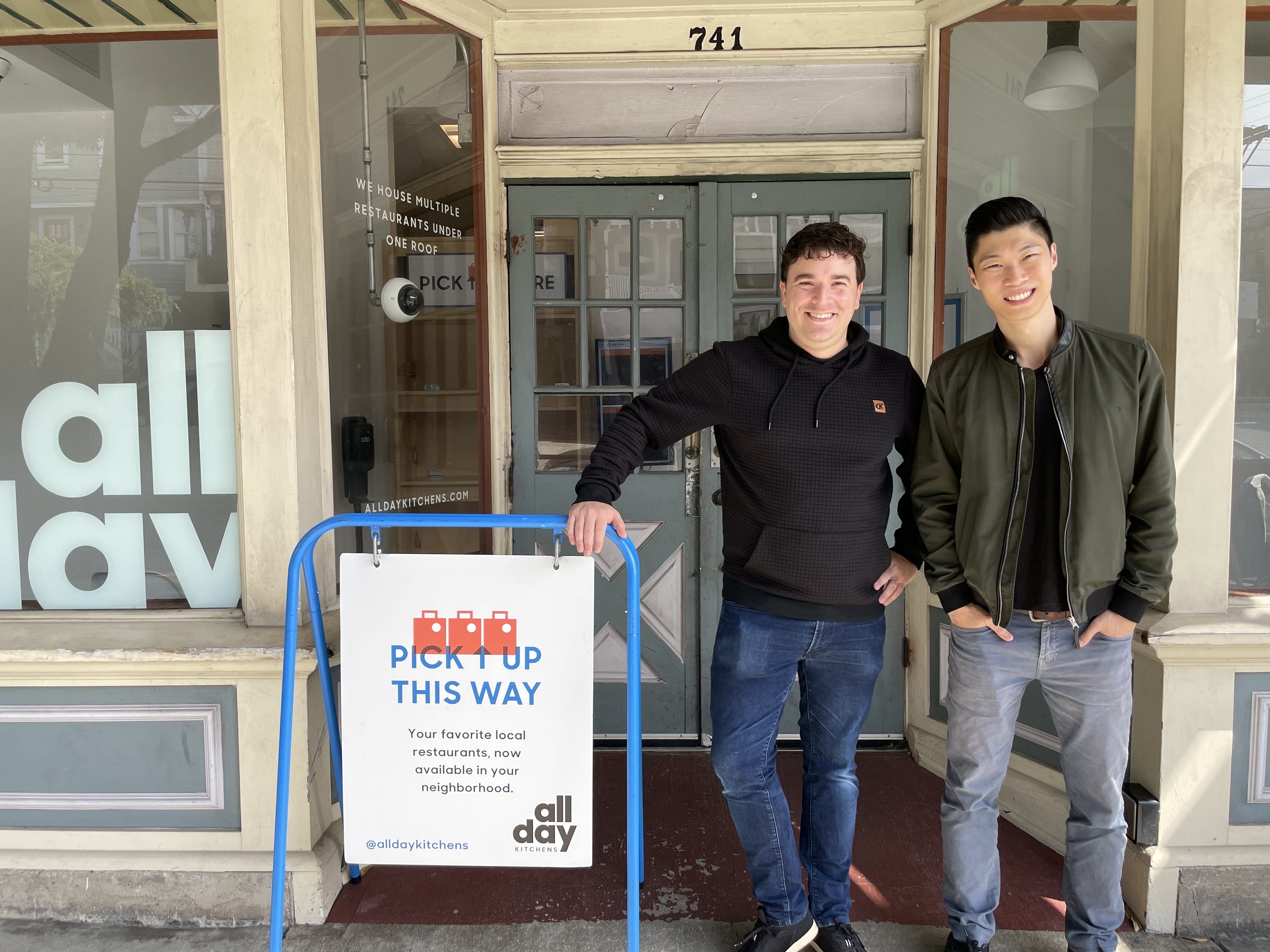
By May 2021, Virtual Kitchen Co. had become All Day Kitchens. Chong explained that some restaurant partners had found the earlier name confusing. The replacement was easier to put in front of customers and carried a meaning familiar to anyone who had worked a busy kitchen: the total quantity needed, all day.
He also reached for a basketball illustration, invoking Kevin Durant making shots all day. It was an unexpectedly loose explanation for a business concerned with fulfillment infrastructure. The name could speak to a cook and a customer without requiring either to decode a technology category. A useful brand, in this case, did some translating.
Chong emphasized proximity when discussing the business. Industrial space could offer room for kitchens, but the price of that room was only part of the calculation. Diners lived elsewhere. All Day selected sites with delivery and pickup demand in mind, using market data alongside an understanding of local food scenes. The relevant map began with the customer.
The 2021 expansion brought Chicago into the story. A company announcement named partners including ROOH, Demera, Devil Dawgs and Cheesie's. China Live founder and executive chef George Chen described the arrangement as a way to reach customers previously outside the restaurant's range. The appeal was concrete: more people could buy the food without another conventional restaurant opening.
When the map attracted the money
In May 2021, All Day announced $20 million in Series B financing led by Founders Fund. Keith Rabois joined its board. DoorDash chief executive Tony Xu and Opendoor chief executive Eric Wu participated, alongside other investors. Chong was assembling support from people whose own businesses dealt with the stubborn relationship between digital demand and physical places.
That October brought a $65 million Series C led by Lightspeed, with participation from GIC and returning investors. Alex Taussig joined the board, and GIC's Jeremy Kranz became a board observer. The announced financing total reached $102.5 million. The money was intended for research and development, hiring and entry into additional markets.
Those figures describe a particular moment. In October 2021, the company reported more than fifteen sites across the Bay Area and Chicago and a fourfold increase in restaurant partners over the preceding twelve months. Its partner list included Honey Butter Fried Chicken, Mott St and HaiSous. The proposition had traveled beyond a single city's restaurant scene.
Expansion also changed the question. Helping a restaurant avoid the expense of opening another location meant All Day took on the work of running a network. Each site needed equipment, staff and reliable execution. Geography could shorten a delivery while multiplying the number of places where something might go wrong. Operational detail, previously the subject of Chong's interviews, became the substance of the expansion itself.
The distance between a plan and a business
The later picture was smaller. By July 2024, many All Day Kitchens locations had closed. That contraction belongs in Chong's story alongside the financing and the early partner announcements. The large 2021 numbers capture ambition and a period of expansion; they do not describe the network today.
Even in his earlier conversations, Chong had spoken about a long process. In 2020, he compared the development of virtual restaurants with the continuing evolution of commerce online. Faster service, lower prices and more choice could alter customer behavior, which would then change what operators built. He expected successive phases over decades. That was a forecast, rather than a schedule that events were obliged to follow.
The tension gives his kitchen work its interest. Restaurants could see the benefit of serving another neighborhood. Someone still had to make the economics and the food work there. Chong's project put those questions in the same company. The attraction of the idea and the difficulty of executing it were both present from the beginning.
Now the meeting place is a group chat
Chong's next public chapter moves from kitchens to conversations. He is now listed as founder and CEO of Jarvie, an AI assistant for group chats. Its leadership also includes Sawchuk as co-founder and Jeff Lin as co-founder and chief technology officer. The partnership with Sawchuk continues in a business with a different kind of neighborhood.
In his launch announcement, Chong described a gap between the use of AI agents in Silicon Valley and their presence in everyday life elsewhere. Jarvie would enter an iMessage group to help arrange dinners, organize trips, find information and summarize conversations. He announced $8.3 million in seed funding from Andreessen Horowitz, Base10 Partners and Lightspeed.
There is a connection between these projects, though it is a reading of his work rather than a claim about his private motives. All Day tried to put a restaurant's food nearer the customer. Jarvie places assistance in a conversation already underway. Both begin with an existing habit and ask how much work can be removed around it.
A kitchen network must get dinner to the door. A group-chat assistant must help people agree on dinner in the first place. Chong has worked on both sides of that small human ordeal. The setting has changed; the practical test remains whether the machinery makes an ordinary evening easier.
Follow the conversation
- Jarvie · current venture
- Ken Chong · LinkedIn
- All Day Kitchens · website
- The original a16z investment thesis
- Chong on delivery design · 2020 interview
- The All Day rebrand · 2021 interview
- The $65m round · October 2021
- Alex Taussig on the kitchen network
- Chong on the evolution of delivery
- The later Bay Area picture · July 2024
- Jarvie’s leadership · Lightspeed
- Jarvie’s seed financing · June 2026
- Listen · The Delivery-Optimized Future of Food
- Watch · Kitchen executive roundtable, 2022