The next change in Keith Harvey’s career has an unusual feature: after 45 years at Kaiser Aluminum, he will still be at Kaiser Aluminum. On November 1, 2026, Fred Stephan is scheduled to take over as president and chief executive officer. Harvey will become executive chairman. The industrial engineer who arrived in 1981 is preparing to help someone else run the business he has led since July 2020. A long apprenticeship now includes the delicate business of handing over the tools.
That makes this a useful moment to look backward. Six years as CEO occupy a relatively small part of his working life. Before them came decades of engineering, selling, managing products and learning how different parts of an aluminum company depend on one another. The title at the end of that sequence can obscure the sequence itself. Promotions make convenient milestones, but the working years between them explain considerably more. In Harvey’s case, the interesting material lies along the way.
One company. An engineer’s start. A succession still in progress.
A West Virginia starting point
Harvey grew up in Beckley, West Virginia, in a family connected to coal. He initially considered mining engineering, then switched to industrial engineering at West Virginia University. Summer work in the mines helped clarify his preferences. There is a certain efficiency in discovering the career you do not want before accepting it permanently.
He completed his degree in 1981 and entered Kaiser’s manufacturing development program. His first job was as an industrial engineer at the company’s West Virginia rolling mill. The pairing is straightforward: an education concerned with how work gets done, followed by a workplace where the answer has to survive contact with machinery, materials and production schedules.
For a future executive, that is a particular kind of introduction. Aluminum arrives in public life as an aircraft component, a car part or a drinks container. Inside the business, someone must attend to the intervening steps. Harvey’s working life began among those steps, long before he was responsible for explaining the whole enterprise to shareholders.
The years between the titles
By 1994, he had become a vice president. His subsequent commercial responsibilities included extruded products, followed by aerospace and general engineering. In 2012 he became senior vice president of sales and marketing for aerospace and general engineering. These were years spent on the customer side of the equation as well as the production side. A technically capable product still needs a customer with a reason to buy it.
In June 2014, Harvey became executive vice president for fabricated products. That job brought sales, marketing, manufacturing and advanced engineering together under his responsibility. His appointment as president and chief operating officer followed in December 2015. The promotion announcement made a revealing point: the new title recognized work he was already doing. The organization chart had caught up with the assignment.
Jack Hockema, then Kaiser’s CEO and chairman, credited Harvey with helping the company’s growth and transformation over the preceding two decades. When the board announced Harvey’s elevation to CEO in 2020, it again emphasized the operational and commercial team he had built. It also credited him with a leadership development program spanning disciplines. The recurring subject was preparation, both his own and other people’s.
- 1981Industrial engineer
West Virginia rolling mill - 1994Vice president
Engineering meets commerce - 2014EVP
Fabricated products - 2015President & COO
The operating business - 2020President & CEO
A company-wide brief - 2026Executive chairman
Scheduled for November 1
Harvey took over on July 31, 2020. Hockema remained executive chairman, giving the incoming CEO an experienced colleague through the transition. Years later, the arrangement would acquire a familiar shape in Harvey’s own succession. A company can preserve knowledge through relationships as well as through manuals, though the relationships require rather more care than a filing cabinet.
A rolling mill with a $670 million price tag
Within his first year as CEO, Kaiser completed a transaction that expanded the job considerably. On March 31, 2021, it acquired Alcoa Warrick LLC, including the rolling mill and associated assets near Evansville, Indiana. The approximately $670 million consideration included assumed employee benefit liabilities. Alcoa retained the smelter, power generating units and its land holdings, with supply and lease arrangements connecting the businesses.
The transaction’s industrial boundaries matter. Buying a rolling operation brings specific capabilities and obligations. It also leaves a buyer dependent on arrangements beyond the factory gate. The polished phrase “acquisition completed” marks the end of a transaction and the beginning of a much longer operating relationship. An executive with an engineering background has plenty to occupy him on either side of that date.
For Kaiser, Warrick brought beverage and food packaging into its portfolio of served markets. Harvey described an experienced workforce and an established customer base. The mill could supply coated and bare aluminum products. Customers wanted more supply, and Kaiser anticipated further investments to develop the operation. The opportunity lay in using an existing industrial business to serve a growing packaging market.
It also changed the range of conversations a CEO had to hold. Aerospace, automotive applications, general engineering and packaging place different demands on a supplier. The common material does not make every customer interchangeable. Harvey’s earlier responsibilities across commercial and manufacturing functions offer a useful way to understand the assignment: decisions about equipment and decisions about customers have to meet somewhere.
When the supply chain writes the agenda
Warrick subsequently provided a less comfortable lesson in that interdependence. In 2022, a magnesium supply shortage disrupted production, and Kaiser sought alternative supplies of the alloying metal. Harvey discussed efforts to qualify replacements, reduce reliance on external metal sources and increase scrap use. Alloy chemistry had become a matter for the executive agenda. Manufacturing has a habit of refusing to stay inside departmental boundaries.
That July, a new coated scrap melter began operating at Warrick, with capacity to process more than 100 million pounds of painted and bare scrap annually. Kaiser was also testing alloys with lower magnesium content. These were concrete responses to an operating problem: change the available inputs, change the process, or develop a material that asks less of a constrained supply chain.
The episode gives substance to the broad language surrounding industrial strategy. A plan to serve customers must eventually contend with the ingredients on hand and the equipment available to process them. A company’s aspirations encounter their working conditions there. The work is exacting, occasionally frustrating and difficult to improve with a more attractive slide deck.
The people who carry the knowledge
Harvey has identified mentors as central to his progress, including Hockema and WVU teachers Jack Byrd and Donald Gochenour. He advises people to approach their work with humility and give their colleagues room to contribute. It sounds particularly serviceable in a factory. A title does little to improve a decision if the person with the answer cannot get a word in.
“Be humble and park your ego at the door.”
Keith Harvey
His public argument about developing people extends beyond those who followed his route. At the Association for Women in the Metals Industry’s 2025 conference in Phoenix, he called for more women in the industry and in leadership. He also recognized Terri Zanutto, a Kaiser treasury and risk analyst with almost 50 years at the company. Institutional memory had a person’s name attached to it.
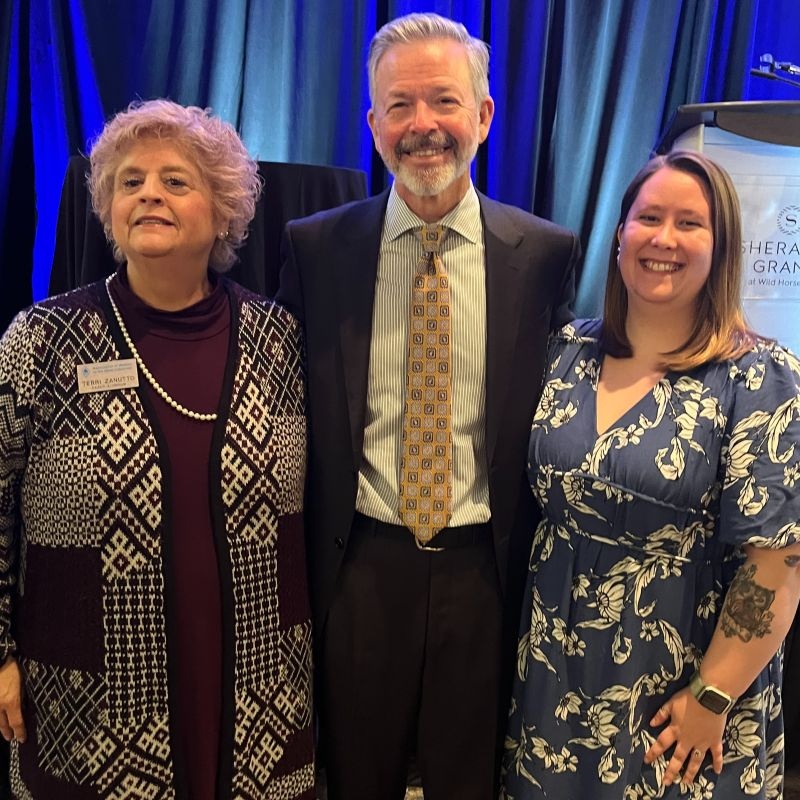
There is a connection between that argument and the less visible work of preparing future managers. A leadership development program only becomes useful when people get to enter it, take on meaningful responsibilities and learn enough to move forward. Recruiting the next generation and preparing the next executive are different tasks, but both require an organization to think beyond the people already occupying its senior offices.
A different kind of return on education
Keith and his wife, Cindy, have also made that concern tangible outside Kaiser. In 2021, they established the Cynthia and Keith Harvey Engineering Scholarship at WVU with a $50,000 donation. Both are graduates. Cindy studied social work. Both had relied on student loans, and they wanted to reduce the financial difficulty facing students seeking an engineering education.
“We are hoping to ease the burden for students to reach their full potential,” Cindy said. The phrasing keeps the ambition at a human scale. A scholarship helps with a bill. Behind that bill sit the classes, friendships and opportunities the couple remembered from Morgantown. Giving back can become a vague expression; a specified gift for students has a rather more practical address.
The handover has a date
The business approaching Harvey’s handover remains a working industrial concern, with gains and complications arriving together. In the third quarter of 2026, Kaiser reported $439 million in conversion revenue, up from $351 million a year earlier. Net income was $31 million, compared with $40 million. Stronger demand and pricing shared the quarter with operational costs and a less favorable metal price timing comparison.
More conversion revenue.
A different profit picture.
For the next CEO, those figures describe a business still requiring judgments, rather than a finished project ready for display. Stephan brings his own manufacturing experience, most recently as chief operating officer of Amcor’s global flexible packaging business. His appointment puts another operator in charge, with Harvey available as a special advisor through October 31, 2027.
Harvey became chairman in January 2025, following Hockema’s retirement from the board. Now he will occupy the supporting position that Hockema once held beside him. The symmetry is pleasing without settling the outcome in advance. Succession becomes real in the decisions that follow the announcement. For an engineer whose first Kaiser assignment began in a rolling mill, there is one more process to help work properly: allowing the next person to take responsibility.