Patricia Cook's father had a reasonable question. His daughter had studied education. Both her parents were teachers. Now she wanted to go to business school. “What do you know about business?” he asked. Cook's answer was a small declaration of independence: “I'll figure it out.” She took two classes, did well, and enrolled full time. The career that followed would include investment portfolios, mortgage companies and a public listing. It began with permission she gave herself.
Cook, known as Patti, was born in West Islip, New York, on March 5, 1953. She graduated from Saint Mary's College and earned an MBA at New York University's Stern School of Business. There was a brief stretch of teaching before finance became her work. A classroom and a trading floor make an unlikely pair of career destinations. Both, however, reward someone who can keep learning while everyone else expects an answer.
She did not describe herself as a child with a corporate destiny. The absence of a grand plan was part of her account of her success. Reading her career backward makes each job look like preparation for the next. Living it forward required accepting opportunities before their eventual purpose was visible. That distinction mattered to Cook, who resisted the suggestion that she had mapped a route to the chief executive's office.
The mortgage market becomes a classroom
In 1979 she joined Salomon Brothers, where she would spend 12 years. Women with MBAs were still unusual on Wall Street. Cook remembered finding a firm interested in energy and hard work, and a fixed-income market busy inventing new ways to finance things. She began as a strategist, explaining mortgage investments, then became an investor, and later moved into running businesses. The same underlying market kept presenting a different job.
Her fascination was specific. Mortgage-backed securities, collateralized mortgage obligations and real estate mortgage investment conduits were part of a developing financial vocabulary. She liked being close to that development. To follow her working life is to follow the mortgage through several sets of hands: the people analyzing it, the institutions investing in it, and the companies responsible for serving the borrower.
Her subsequent roles included managing director at Fisher Francis Trees & Watts and chief investment officer positions at Prudential and JPMorgan. The titles suggest authority. Their variety suggests something else: repeated exposure to how financial decisions travel through an institution. A mortgage can look quite different from an investment desk and an operating office. Cook eventually had experience of both.
Different desks. A wider view.
- 1979Salomon Brothers
Strategy and fixed income - 2004Freddie Mac
Investments and business leadership - 2009Green Tree, then Ditech
Servicing and operations - 2016Finance of America
Senior managing director; later president and CEO - 2021New York Stock Exchange
Finance of America begins trading
When the lesson became urgent
Freddie Mac brought another vantage point. Cook joined in 2004 as executive vice president of investments, part of a rebuilding senior management team. Its annual reporting described her division as bringing the sourcing and investment sides of the business together. That detail is revealing. Long before Finance of America, she was working at the junction between finding assets and deciding how to hold them.
She later served as executive vice president and chief business officer, remaining through 2008, the year Freddie Mac entered conservatorship. Looking back, she described working with officials from the Federal Reserve, Treasury and other parts of government to restore market stability. The immediate task absorbed the attention. Questions about the eventual duration of conservatorship belonged to a more distant horizon.
The episode deserves a place in her story without being polished into a victory lap. A crisis is an education with other people's money at stake. Cook's later reflections emphasized the absence of a ready procedure and the need to respond. Her work afterward would take her closer to the daily operation of lending: executive vice president at Green Tree Servicing from 2009 to 2013, followed by president of Ditech Financial from 2013 to 2016.
A collection of companies needs an operator
In March 2016, Cook joined Finance of America as senior managing director. A year later she became president. In October 2020 she became CEO. The progression put her experience to work across a business assembled through acquisitions, with lending operations and services that needed to function together. Buying a company produces an announcement. Integrating it produces a rather longer to-do list.
Finance of America's proposition during her tenure covered mortgages, reverse mortgages, commercial lending and associated services. The aim was to serve different borrowing needs and reduce dependence on any single part of the mortgage cycle. Cook explained the case publicly, including in a March 2021 television appearance with Jim Cramer. She was selling an operating argument as well as introducing a company to investors.
On April 5, 2021, Finance of America began trading on the New York Stock Exchange after its combination with Replay Acquisition Corp. The transaction had been announced the previous October. Founder and chairman Brian Libman, Cook and president Graham Fleming were identified as the continuing leadership team. The public listing gave the company another route to capital; it also made the performance of its strategy a matter of public examination.
By the announcement of Cook's planned retirement in February 2022, the company reported more than 5,000 employees across 300 global offices. Those are figures from her period of leadership, a snapshot of the enterprise she helped run. They convey the scale of the coordination problem. Thousands of people could share a corporate name while still bringing the habits, systems and assumptions of different businesses.
More than one way to lend
A diagram of the business mix she described, not a breakdown of revenue.
The stock ticker cannot tell the whole story
Cook's diversification argument was concrete. A lender providing ordinary home loans could also offer reverse mortgages and commercial loans, while related businesses supplied services such as title and appraisal. Different activities were supposed to give the company more ways to earn as demand changed. The logic was understandable. A collection of businesses still has to prove how well it works when conditions turn.
The public company subsequently faced losses and changed direction. In October 2022, after Cook had left the CEO position, Finance of America announced its withdrawal from forward mortgage originations. That later history belongs beside the listing, too. Taking a company public is a dated achievement. The continuing durability of its business model is a question that keeps receiving new answers.
Cook herself had a useful sense of proportion about the daily share price. In an interview around the listing, she explained that experience had taught her to avoid watching it every day. That was a leader's perspective, rather than a guarantee about investment returns. Her more durable contribution to the company may be easier to assess in the recollections of the people who worked with her.
A company has homework, too
Colleagues remembered someone who engaged with employees and mentored women. Bill Dallas, who had led Finance of America Mortgage, connected her broad financial experience with her ability to relate to people. The company later recalled the time she gave to individuals throughout the organization, including people whose potential others might overlook. That is a different form of allocation from managing a portfolio, though attention is a limited resource as well.
She brought a belief in education and an approachable manner to her management work. She also oversaw the company's philanthropic work through Finance of America Foundation and Finance of America Cares. Her volunteer work included chairing the board of Higher Achievement, an organization providing academic enrichment for middle-school students. Education had remained part of her life after she stopped teaching.
In a 2022 leadership conversation, Cook set out practical obligations for an employer: clear expectations, fair compensation for meeting them, a workplace where contributions count, and a career path. She discussed leadership training and opportunities for employees to participate in work beyond their immediate responsibilities. In that account, developing people was part of running the business.
The former education major had retained a fondness for a report card as a way of thinking. She encouraged people to consider the whole set of roles they occupied, including their work and family responsibilities, rather than expecting a perfect result in every category every day. It is a humane correction to a familiar management fantasy: a capable person with unlimited time.
“Am I happy with the whole package?”
Patti Cook, on taking stock of work and family
Beyond the office, an itinerary
Cook stepped down as CEO on June 30, 2022. Fleming became interim chief executive the following day. HousingWire had named her a Woman of Influence in 2021, recognizing a career that had crossed capital markets and lending operations. Her retirement brought a formal ending to that sequence of executive jobs, while leaving plenty of room for a less formal calendar.
Her family described travels that included crossing the Drake Passage to Antarctica, cycling in Vietnam, whale watching in Canada, ranching in Montana and skiing in Utah. The itinerary does not suggest someone who regarded retirement as an instruction to sit still. It also gives the financial biography a welcome change of scenery. After years of watching markets move, she had places of her own to get to.
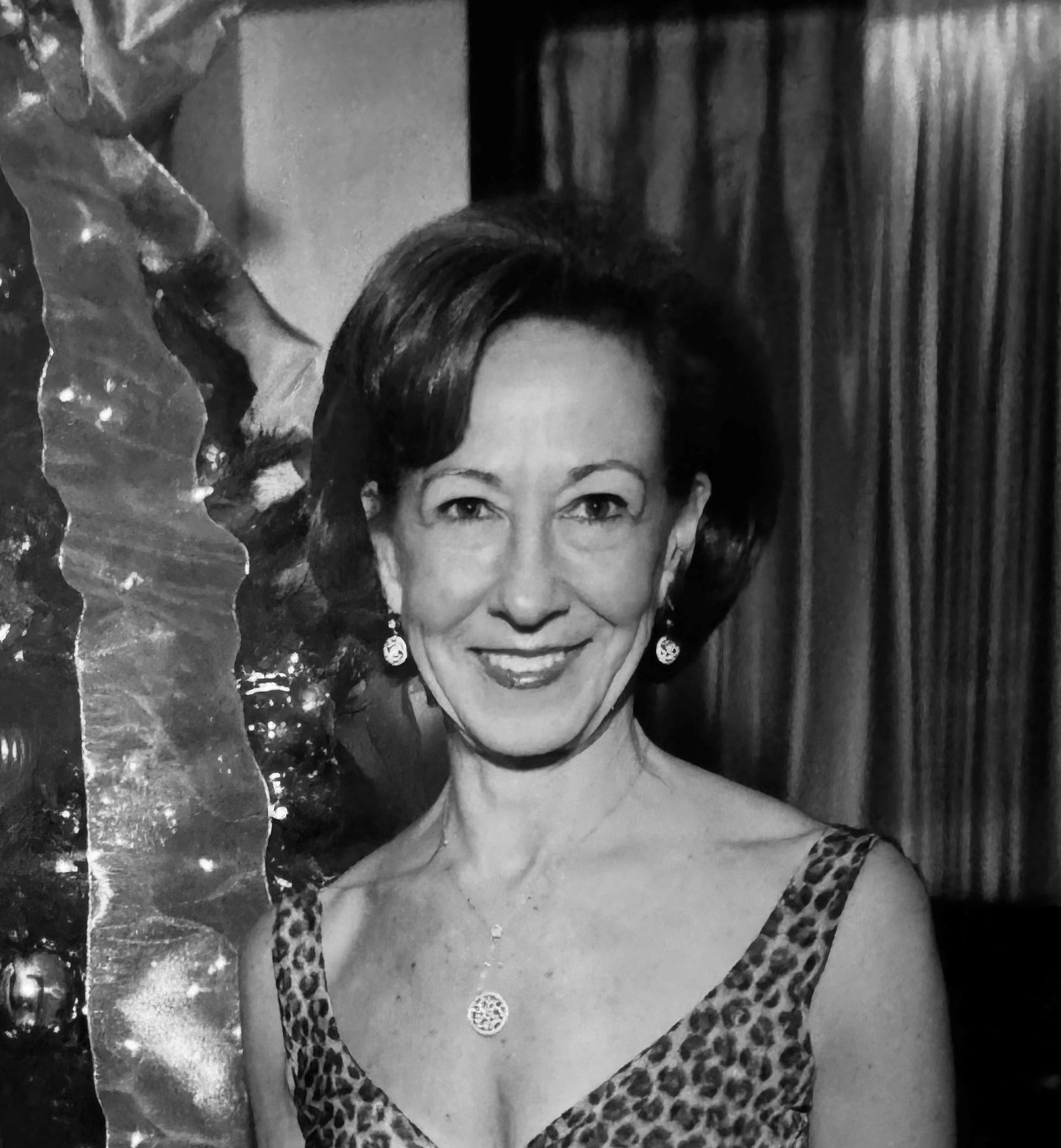
Cook died at home in New York on November 3, 2023, aged 70. She was survived by three daughters and six grandchildren. Her family established a scholarship appeal in her name at Saint Mary's College. The choice fits a life in which education offered both an initial profession and a route into another one.
A résumé can record the moment she became CEO and the day her company began trading. It takes a little more space to explain the teacher, the learner, the parent and the mentor who arrived at those dates. Cook's career offers no tidy instruction for predicting the next four decades. It does offer a starting point: take the classes, learn the work, and make room for somebody else to do the same.