A résumé can be an awkward instrument. Put “naval officer” on one, and a recruiter may see courage, discipline, perhaps an impressive ability to arrive early. Put the same officer beside a trader trying to understand a security crisis, and the experience suddenly has a different use. Academy Securities has built a financial business around that change in perspective.
- It raises capital, trades securities and finances public-sector projects.
- Military and security specialists supply geopolitical analysis alongside financial research.
- Veteran recruitment includes mentoring, internships and securities-license sponsorship.
The company’s proposition is practical: sell financial services that clients need, while making military experience useful inside the organization delivering them. There is a pleasing economy to the idea. A corporate mission usually occupies a separate paragraph in the brochure. Here, it can occupy the next chair at the desk.
A bank founded in an unpromising year
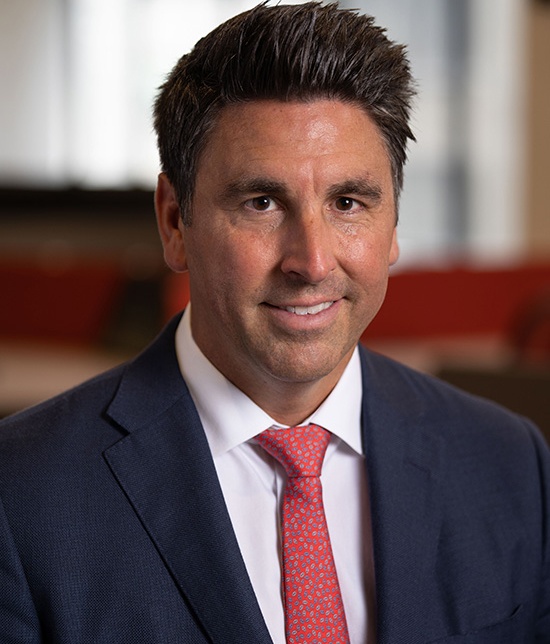
Chance Mims founded Academy in 2009, after serving as a US naval officer. He had worked aboard the USS Sentry and USS John Paul Jones, enforcing sanctions against Iraq and participating in the initial strikes into Afghanistan. His subsequent civilian career included Home Depot and a real estate business. The route to investment banking had several ports of call.
Academy’s own account places its beginnings between two contractions: a financial industry shrinking after the 2008 crisis, and the winding down of the post-9/11 wars. Experienced servicemembers would be seeking civilian careers. Wall Street was hardly preparing a welcoming committee. Mims established a business intended to bring military veterans together with people who already knew financial markets.
In September 2012, JPMorgan Chase announced a $4 million subordinated loan to help Academy expand and hire and train veterans. It also entered a four-year Mentor-Protégé agreement, supplying training and consultation on business management. Capital mattered; so did access to an established institution’s operating knowledge.
A Series A round followed in November 2014. Investors included John Mack, Stephen Friedman, Joseph Grano, Denis Nayden and Howard Milstein. Those names brought experience from Morgan Stanley, Goldman Sachs, UBS PaineWebber, GE Capital and financial-market infrastructure. The pairing of military newcomers and financial insiders extended to the people backing the firm.
What the client actually buys
Academy operates in the machinery of institutional finance. A company needing debt can receive advice on pricing, covenants, structure and timing. An equity issuer can use the firm for an IPO, a follow-on offering or convertible debt. Academy often participates alongside other banks, including as a co-manager. Underwriting is collaborative work with a commercial price attached.
Public finance, launched in January 2012, brings a different cast of clients: governments, school districts, higher education institutions, healthcare organizations, utilities, and transportation and housing agencies. Their projects require financing structures and investors willing to buy the resulting securities. Academy helps connect the two. In September 2026, it appointed Michael Hayes to lead municipal trading and Brian Curci to lead municipal sales.
Investment managers and pension funds can use its trading desks for equity and fixed-income execution. Services include block trades, portfolio transitions, buybacks and access to multiple liquidity venues. Pershing clears its equity and fixed-income trades. Beneath the distinctive recruiting story sits the familiar, demanding work of finding buyers, completing transactions and settling them.
The business earns underwriting fees and brokerage commissions, with advisory work providing another commercial service. Its published deal totals describe the size of transactions in which it participated. A trillion-dollar tally is consequently a measure of market involvement, not a bank balance, revenue figure or claim to have supplied every dollar itself.
The person who asks a different question
Academy’s Geopolitical Intelligence Group is the unusual ingredient. Its specialists cover matters including supply-chain risk, cybersecurity, alliances and aerospace defense. Deliverables range from monthly reports and podcasts to webinars, individual meetings and immediate event analysis. Major General James “Spider” Marks, its head of geopolitical strategy, previously commanded the Army’s intelligence school.
Consider, as an illustration, a company exposed to an overseas supply route. A financial analyst can estimate the cost of interruption. A military specialist may help interrogate the assumptions behind that estimate: regional capabilities, escalation and the behavior of governments. The useful conversation occurs between those disciplines. Neither résumé is sufficient by itself.
“We are Wall Street experienced, military trained and client focused”Academy Securities
Peter Tchir’s macro strategy work supplies the market side of that conversation, with attention to fixed income and credit. Against a large bank’s research department or a specialist geopolitical consultancy, Academy offers a particular combination of interpretation and transaction services. The sensible test is whether that combination improves a client’s decisions. Rank and decorated service cannot make uncertainty disappear.
A mission with some plumbing attached
The veteran transition programs show how the cultural claim becomes work. Academy offers mentors, internships and fellowships that sponsor securities licensing exams. Fordham approved its veteran-focused internship program for educational credit in 2019. The firm has been an approved Department of Defense SkillBridge provider since December 2021.
These are details another employer could copy: introduce candidates to departments, help them obtain credentials, and give them experienced people to question. A general invitation to “bring your leadership skills” leaves much of the transition unexplained. An internship and a licensing pathway give the candidate something concrete to do on Monday.
The mission also enters products. Academy share classes of J.P. Morgan money market funds connect institutional cash management with the firm’s veteran employment purpose. Separately, Academy Asset Management sub-advises VETZ, the Academy Veteran Bond ETF. Its policy directs at least 80% of net assets, plus investment borrowings, toward fixed-income securities backed by loans to military-connected borrowers.
About $35 per $10,000 annually before changes in value and separate trading costs. November 2025 prospectus.
VETZ is an investment product with interest-rate, prepayment and extension risks. Its military purpose does not exempt it from bond arithmetic. Likewise, Academy’s institutional services suit issuers and professional investors with real financing or execution needs. The appeal depends on matching the expertise to the problem.
Academy’s most portable idea is that an unusual background deserves a specific assignment. Give military experience a place in research, client conversations and the recruitment pipeline, then surround it with financial competence. The business becomes interesting at the point where the biography starts doing useful work.