At about twelve, Alberto Casellas found himself helping organize the sort of event that makes adults reach for a clipboard. His father was the volunteer director of the Pan American Games’ yachting competition in Puerto Rico. For two years, father and son spent weekends traveling to Ponce, roughly seventy miles across the island, preparing for the arrival of hundreds of sailors.
There were meals to arrange, hotels to coordinate, volunteers to organize and people to transport. When his father was unavailable, the boy became someone people approached for answers. A sailing competition, it turns out, offers a fairly brisk introduction to management. The boats may be elegant; the arrangements that get everyone to the water are decidedly practical.
His father had a saying: “barriga llena, corazon contento.” Full belly, happy heart. Casellas remembers the lesson as an obligation to do the work properly and check that people were satisfied. Before he had a corporate title, he had encountered the awkward little fact beneath most leadership theories: someone has to make sure everyone gets fed.
The memory is a useful place to begin with Casellas, known as Beto. His career would take him through General Electric and Synchrony, across operations, commercial relationships and customer engagement. Alongside those jobs runs another line of work: helping people gain entry, find guidance and acquire the confidence and connections to move forward.
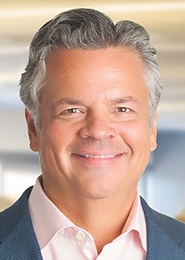
A shorter title for a long career: Beto.
Press portrait: LEADERS Magazine.
San Juan, then a much larger classroom
Casellas was born and raised in San Juan. He left Puerto Rico at eighteen to attend college on the mainland, eventually earning a bachelor’s degree in economics from Yale. Yale identifies him as a member of the undergraduate class of 1989. He speaks Spanish and English, a background that later became part of his argument for bringing different experiences into business decisions.
At Yale, he encountered people whose backgrounds, nationalities and religious beliefs differed from his own. He has described that experience as opening his eyes to the value of varied perspectives. A university education gave him an academic qualification; the people around him also broadened his understanding of who might have a useful answer.
That distinction matters in his later work with employee networks. A room full of capable people still contains limits if everyone approaches a problem from the same direction. His case for widening participation begins with the work itself: different people notice different things. An invitation can improve the conversation before anyone has changed a single line on the organizational chart.
An apprenticeship with several addresses
Casellas joined GE in 1990. The early career that followed was geographically restless and functionally varied. From 1997 to 1999, he led GE Supply’s South American operations in São Paulo and Buenos Aires. Between 1999 and 2002, he led an e-business initiative at GE Structured Services. Next came a site operations leadership assignment in Charlotte, from 2002 to 2004.
From 2004 to 2014, he was a vice president and general manager overseeing retail card portfolios and client relationships from the San Francisco Bay Area. In March 2014, he became senior vice president of Synchrony’s Retail Card Client Initiatives Group. He moved into the chief customer engagement officer position in November 2016, serving through December 2018, before taking on platform CEO responsibilities in 2019.
Put those assignments side by side and a pattern emerges: operations, technology, clients, customers. Each asks a different question of a manager. Can the work run? Can a new channel function? Can a commercial relationship endure? Can a customer understand and use what a company provides? The sequence helps explain why his career reads as an education in several parts of the same business.
He has continued in platform leadership since June 2021. The dates mark promotions, but the changes of assignment are the more revealing part of the record. Responsibility kept requiring a new vocabulary. For an executive who advocates continuing to learn, his own résumé supplies a succession of occasions when learning was part of the job description.
- 1990Joins GE
- 1997South America operations
- 2004Retail card portfolios
- 2016Customer engagement
- 2019Platform CEO
A plus sign with a practical purpose
In 2013, while at GE, Casellas was national co-chair of the company’s Hispanic Forum. That July, the forum hosted a leadership workshop for Hispanic students in Chicago. The program addressed professional networks, presentation skills, science and technology careers, and the ways bilingual ability could become a professional asset. The forum then comprised 3,500 GE employees.
The workshop is an early, concrete instance of a theme that would recur: careers depend partly on knowing how an institution works and knowing people within it. A degree is easier to put on a résumé than a helpful introduction. Both can affect what happens next. Bringing students together with professionals makes some of that unwritten knowledge available sooner.
At Synchrony, Casellas became executive sponsor of the Hispanic Network+. The plus sign had a specific purpose. People could join to support colleagues or learn about a culture, whether or not they shared the identity around which a network was organized. A small piece of punctuation carried a fairly generous invitation.
He also described making time for employees who wanted twenty-five minutes to discuss a decision. That is a refreshingly ordinary unit of executive attention. It can accommodate a question, a hesitation, a possible next move. Mentoring acquires substance when someone can actually get time in the diary.
His advice to younger professionals emphasizes continued learning and acquiring new skills. In his account of Synchrony’s approach, internships, immersion programs and access to executives help build an earlier connection with emerging talent. Across these efforts, the practical problem is similar: an opportunity is more useful when a person can see how to reach it.
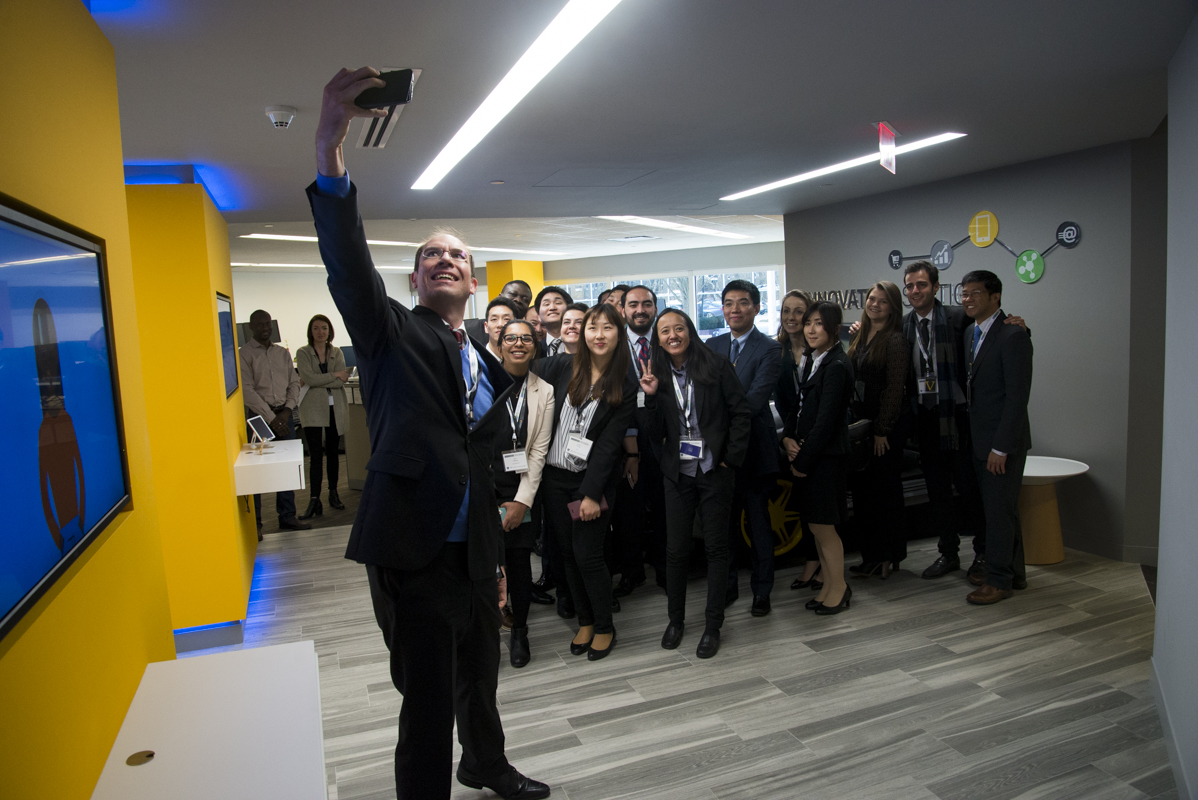
In March 2018, students participating in Yale’s Global Network Week visited Synchrony in Stamford and worked on a business case with its leadership. Casellas welcomed the exchange as a way to gain fresh perspectives. Alumni relations had become an opportunity to listen: a group of visitors could bring ideas that the people inside a business might otherwise miss.
Taking the network beyond one company
In October 2021, Synchrony launched the Latinx Executive Alliance. Casellas helped co-found the coalition, which brought executives from different companies and industries together to advance Latino talent. The inaugural virtual event, Impacto, was scheduled for October 18. Speakers included Casellas, Synchrony director Fernando Aguirre, people leader DJ Casto and McKinsey senior partner Lucy Perez.
The launch identified a specific imbalance. Using the figures cited at the time, Latino people represented eighteen percent of the U.S. population and held four percent of Fortune 500 executive leadership roles. Those were the historical figures behind the initiative. The ambition was to improve the routes through which talent becomes visible, develops and advances.
By September 2022, the alliance had announced an advisory board spanning several industries. Casellas was its board chair. Its programming addressed sponsorship, mentorship, investment in future leaders and deliberate networking with decision makers. Advisors included Pitney Bowes finance executive Ana Chadwick and ALPFA chief executive Damian Rivera, extending the conversation beyond a single employer’s promotion process.
The distinction between a mentor and a sponsor is useful here. Advice helps someone decide what to do. Sponsorship can put that person’s name into a conversation they have yet to enter. The alliance’s stated program makes room for both, linking the development of individuals with the involvement of people already close to consequential decisions.
The alliance reported more than 1,110 LinkedIn followers in Synchrony’s 2022 diversity report. That number describes an audience, rather than a count of promotions. The more consequential question remains what participants do with the relationships: whose work gets noticed, who receives guidance, and who is considered when the next opportunity appears.
“Global Network Week is an opportunity for Synchrony to interact with Yale School of Management in engaging and pragmatic ways.”
Alberto “Beto” Casellas, 2018
Eight years before the chair
Casellas joined the board of Domus Kids in June 2015. The Connecticut nonprofit works with young people who are disengaged or disconnected, with programs focused on education and preparation for work. In September 2023, after more than eight years on the board, he became its chair, succeeding Rob Minicucci.
He was the organization’s first Hispanic chair and took responsibility for a fifteen-member board. By the time of the appointment, Domus credited him with helping increase funding, develop partnerships and improve organizational practices. Those are unglamorous verbs with substantial consequences. A program needs money, people and a workable plan long after an announcement has passed.
The appointment placed a different kind of institution alongside his corporate responsibilities. At Domus, the concern is whether a young person can find a workable path toward independence. At the alliance, it is whether professionals can advance into positions of leadership. The circumstances differ considerably, but both make the availability of guidance and connections a practical concern.
Domus’s board list, dated August 13, 2026, continues to identify him as chair. The persistence matters to the story. Joining in 2015 and still serving in 2026 puts years between an initial commitment and the current record. It gives the word involvement a duration.
The promise that comes due
There is a domestic counterpart to all this organizing. Casellas enjoys cooking and has jokingly described himself as a “chef in training.” He has spoken of wanting to share lunch with José Andrés, drawn to the chef’s humanitarian work as well as his food. His reading includes biographies and history; in 2020, he was reading Doris Kearns Goodwin’s Leadership in Turbulent Times.
The cooking detail sits comfortably beside that childhood memory of meals and sailors. Feeding people produces an unusually clear verdict. The guests eventually sit down, and the promise becomes dinner. Leadership offers fewer such convenient tests, which may explain the appeal of his recurring advice: “Keep your promises.”
He has also acknowledged the help he received from parents, mentors and colleagues. His own shorthand was “I’m not a lone ranger.” That admission gives his networking work a personal logic. Having benefited from other people’s attention, he has spent part of his career arranging ways for attention and opportunity to travel further.
The boy in Ponce had people looking for answers when his father was busy. Decades later, the scale and setting have changed, but the question is recognizable. Someone has made a commitment. Someone else is waiting for it to be kept. Casellas’s account of leadership begins at that meeting point, where a promise acquires a name and a person has to answer.