Sonia Millsom thought Trevor Price was another recruiter with another opportunity. She was considering her next move, and the messages were coming in. Her reply to him was playful: his inquiry would be answered in the order it arrived. Then the founder of Oxeon clarified the opening. He wanted her to take over his own job. She took a screenshot and sent it to her partner. Some messages deserve an audience of two before they deserve a board meeting.
That exchange, in January 2022, became the beginning of her first chief executive role. By September, Millsom was announced as Oxeon’s CEO and Price was moving to board chair. A firm accustomed to helping other companies choose leaders had chosen its own successor. The assignment came with an unusual symmetry: she would lead a business whose work included helping people make precisely this sort of decision.
Price had founded Oxeon in 2011. Eleven years later, he wanted it to grow beyond what he could personally build. He described the incoming job in terms of managing, operating, and scaling the platform. Millsom was being invited into an established culture, with its loyalties and habits already in place. Starting with a blank sheet might have been simpler. An occupied chair has a history.
Her story is interesting because she had already learned that a career rarely follows the clean line drawn in retrospect. She had helped companies grow, worked inside a large corporation, lost a job, and taken a position with a smaller team. Being next would ask her to use all of it.
A smaller team, a larger possibility
Before Oxeon came growth roles at Iora Health and Maven Clinic, and earlier leadership work at Best Doctors, Health Dialog, and UnitedHealthcare. Her experience crossed organizations with very different sizes and sources of capital. At Maven she was chief commercial officer; at Iora she became chief growth officer. Those titles describe responsibility. They leave out the less orderly business of acquiring it.
At Best Doctors, Millsom was hired as vice president of payer strategy. She worked on the company’s route to market and helped identify an acquisition. When the company later struggled, a substantial round of layoffs included her. She has described that moment as humbling. Work had occupied a large part of her identity; suddenly she had to consider what gave her energy beyond the position she held.
Rushika Fernandopulle, Iora’s co-founder and CEO, had known her for years. He contacted her during that transition. She joined as vice president of business development, with one direct report after previously managing a much larger team. The move made sense to her because of the people and the business they were building. It offered room to contribute even if the reporting structure looked less impressive.
This is the sort of career decision that refuses to behave on a résumé. Counting direct reports would make it look like a contraction. Looking at what followed tells a different story. She moved into the chief growth officer role, and Iora was eventually acquired by One Medical in a transaction announced at approximately $2.1 billion. The achievement belonged to a company and its team. Her contribution was part of that collective work.
The layoff matters alongside the acquisition. A leader who has been on the receiving end of an unexpected exit has something concrete to consider when decisions affect other people’s livelihoods. Millsom’s account makes room for the disruption as well as the result. The pause between jobs becomes part of the career, rather than a gap to be hurried past.
Announced in June 2021; completed that September. Millsom had served as chief growth officer.
The invitation came through people
Oxeon had entered her professional life before it became her employer. At Iora, the firm helped place executives on her team. She also participated in Break into the Boardroom, a program designed to connect women executives with governance opportunities. It helped her reach a board seat at Clever Care. The future CEO had experienced the firm’s work from more than one side of the table.
In her own explanation of choosing Oxeon, Millsom emphasized the connection between leaders with different perspectives and ideas worth building. At the time of her arrival, the platform combined executive search, investment, and a venture studio. Its current public description centers on executive search and investment. The continuing thread is the relationship between who leads a company and what that company can accomplish.
Those relationships also appear in Duncan Reece’s account of joining Oxeon as president in September 2023. He called Millsom a friend, a longtime mentor, and a colleague for the third time. While he was living in Spain and considering his next step, she called to explain the business and her vision for it. A professional connection survived changes of company, geography, and circumstance.
Reece’s account offers a practical view of mentorship. It can mean knowing someone’s capabilities well enough to see where they might fit next. That is a patient form of recruitment: the conversation begins years before the vacancy. The eventual offer carries the accumulated knowledge of previous work together.
For Millsom, the boardroom connection runs in both directions. She is an alumna and sponsor of Break into the Boardroom. The program has since evolved into Bridge, with an alumni network of more than 400 women and over 90 board seats filled. Those are program totals, rather than personal placements credited to her. They show the scale of the network in which she participates.
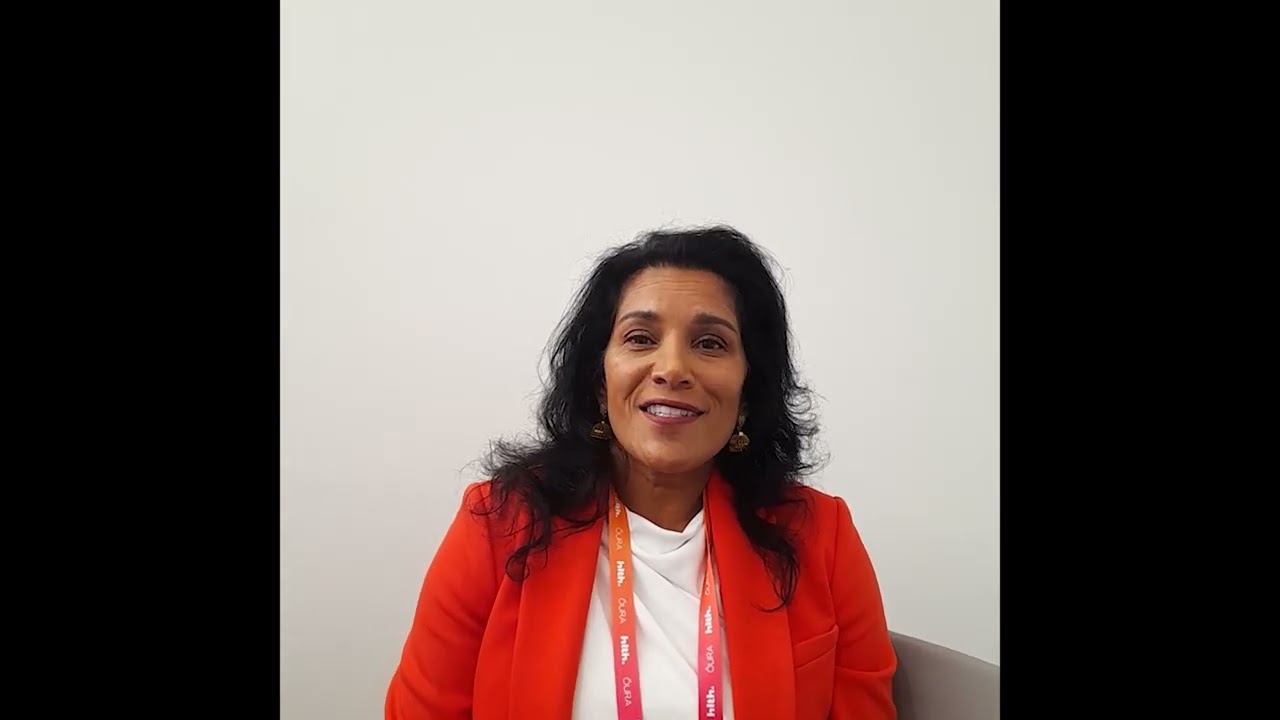
The chair changes the conversation
A promotion can change the information reaching a person before it changes their daily calendar. In her first CEO role, Millsom found colleagues less ready to tell her what was happening. She had been used to direct collaboration. Now the title could make an ordinary admission feel more consequential. Authority was creating distance from the very people whose knowledge she needed.
Her response included a small, useful question: “What did we learn from that?” It shifts attention toward understanding an event. There is still a decision to make and a business to run. But the first response gives the conversation somewhere to go. A leader who needs accurate information has a practical reason to make people comfortable delivering it.
A single question cannot settle every difficult conversation. Its value is in what it invites next: an account of what happened, what surprised the team, and what might be done differently. An organization can have excellent reporting systems and still depend on someone choosing to say the awkward thing aloud. The chief executive sets part of the price of that choice.
The same issue follows leaders into hiring. A new colleague brings expertise, judgment, and the possibility of disagreement. That possibility is part of the value of appointing someone experienced. If every important conversation merely confirms the chief executive’s first view, there is little reason to assemble an expensive team. Agreement is pleasant company; it is a limited management system.
“What did we learn from that?”Sonia Millsom
Recognition with room for other people
Millsom lives in East Greenwich, Rhode Island, with her partner and two daughters. Her education includes a bachelor’s degree in political science from Boston College and a master’s degree from Columbia University. Before her corporate career, she spent two and a half years as a Peace Corps volunteer in rural Morocco. That early period put her in a place whose daily assumptions were different from the ones she had grown up with.
She has continued to speak about discomfort as a setting for learning. In a 2025 conversation with Laurie McGraw, her advice included “Life begins at the end of your comfort zone.” The phrase is familiar. Her earlier career gives it a specific application: a new country, an unexpected departure, a smaller team, and eventually a founder’s invitation. Each required a decision before the outcome was visible.
In 2025, Forbes included her in its 50 Over 50 investment list. Her public response gave credit to Oxeon’s team and its combination of search, investment, and employee ownership. She also highlighted her connection to Break into the Boardroom. An individual recognition became an occasion to talk about the organization and the people alongside her.
There is a connection here to the job she accepted in 2022. Price had wanted the company to last beyond his own period at its head. Millsom’s emphasis on shared work keeps attention on the institution rather than concentrating every achievement in the chief executive’s office. Succession is easier to imagine when a company’s story has more than one central character.
Fourteen conversations about what comes next
By April 2026, Millsom had turned her experience of succession into a white paper informed by interviews with 14 leaders who had taken over founder-built companies. The question that began as a personal opportunity had become a subject of study. She wanted to understand what made these transitions work, where they became difficult, and what incoming CEOs wished they had known.
Her own handover supplied a wonderfully unglamorous detail. She and Price used a spreadsheet to establish decision rights: which matters needed his approval and which she could decide independently. Hiring, departures, promotions, and daily operations were among the issues it covered. A spreadsheet is an unlikely supporting actor in an executive story. It does have the advantage of answering questions that charisma leaves open.
The paper identifies clarity, credibility, and space as recurring conditions for successful handovers. These are modest words for substantial work. People need to understand where authority sits. The incoming leader needs to learn the operation well enough to earn confidence. The founder needs to give that person room to lead. Announcing a successor is only one moment in this process.
There is no universal timetable hidden inside those observations. A company carries its own history, people, and commercial pressures into a transition. Millsom’s decision to interview other successors acknowledges that variety. Experience gives her a starting point; other people’s experience gives her something to compare it with. The inquiry continues beyond the boundaries of her own job.
The screenshot from 2022 now has a second purpose. It preserves the surprise of an invitation, before the responsibilities had acquired their full shape. Four years later, the work includes helping others consider the chair they are about to occupy. Millsom’s place in this story is both particular and recognizable: someone accepted the next job, learned from the people around her, and began passing that knowledge along.
Clarity
Make decision rights explicit.
Credibility
Learn the business. Earn trust.
Space
Give the successor room to lead.